UK
UK  United States
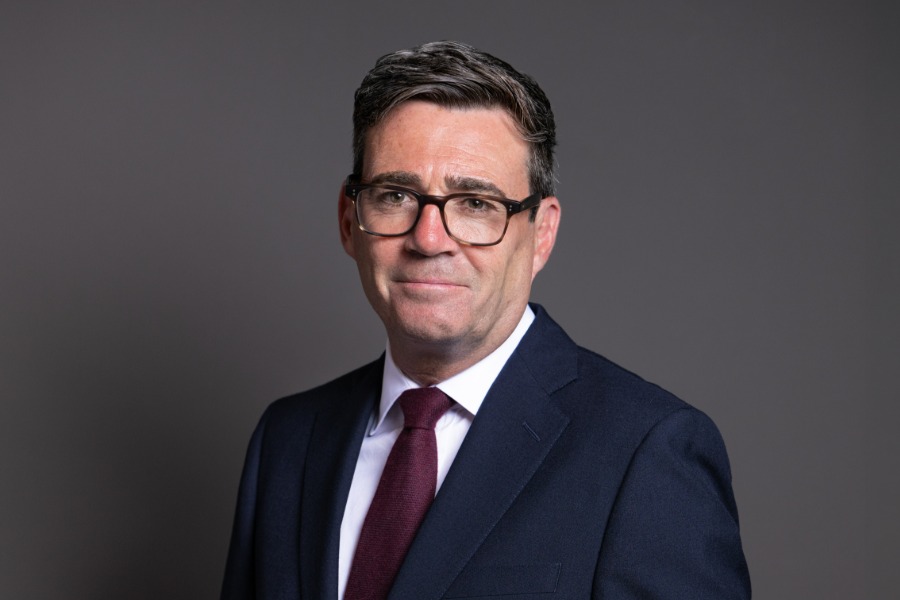
Recruitment leaders spend a lot of time trying to predict what tomorrow's workforce will look like. At L'Oréal, Michael Kienle has something of an advantage.

Michael Kienle
Global Vice President of Talent Acquisition, L'Oréal
As Global Vice President of Talent Acquisition, he oversees hiring for one of the world's most recognisable employers, with more than two million job applications landing every year. At that scale, patterns quickly emerge. Candidate expectations, changing attitudes towards work and the skills employers increasingly value all become impossible to ignore.
For Kienle, that volume of applications has become far more than a recruitment challenge.
"First of all, receiving over two million applications is incredibly humbling, but it's also a fantastic radar," he tells HR Grapevine. "It gives us a real-time map of what the next generation actually wants."
What that map reveals, he argues, is that many employers are still misunderstanding younger workers, relying too heavily on outdated hiring methods and failing to appreciate just how quickly expectations around careers are changing.
Employers are reading Gen Z wrong
Few workplace debates have become as polarising as the one surrounding Gen Z. Depending on who you ask, younger workers are either redefining work for the better or lacking the grit and perseverance of previous generations. But Kienle believes many employers have reached the wrong conclusion.
"I hear this debate a lot, and honestly, I think employers are getting it wrong," he says. "When people accuse Gen Z of lacking 'resilience' or 'professionalism,' what they are usually seeing is a generation that simply refuses to accept bad leadership or a lack of purpose."

Failing forward | How HR can build a culture of experimentation
Rather than questioning young people's willingness to work hard, employers should be asking why they are prepared to walk away so quickly when expectations are not met. Kienle points to research showing that in markets such as Mexico, younger employees who fail to develop a meaningful connection with an organisation often leave within 11 months.
"That's not a lack of resilience; it's a healthy demand for meaning," he points out. "They aren't afraid of hard work, but they are highly impatient with empty promises."
That mindset requires employers to rethink career development. Instead of viewing younger workers' appetite for change as a retention problem, L'Oréal has attempted to build that variety into the organisation itself.
"If they want to change jobs every two or three years, our challenge is to offer them those new experiences within our organisation."
The company's SeedZ Management Trainee Programme reflects that philosophy, with participants spending 18 months rotating through three different parts of the business.
"If you treat them as partners, give them room to grow, and show them genuine trust, their drive and creativity are absolutely remarkable," says Kienle.