UK
UK  United States
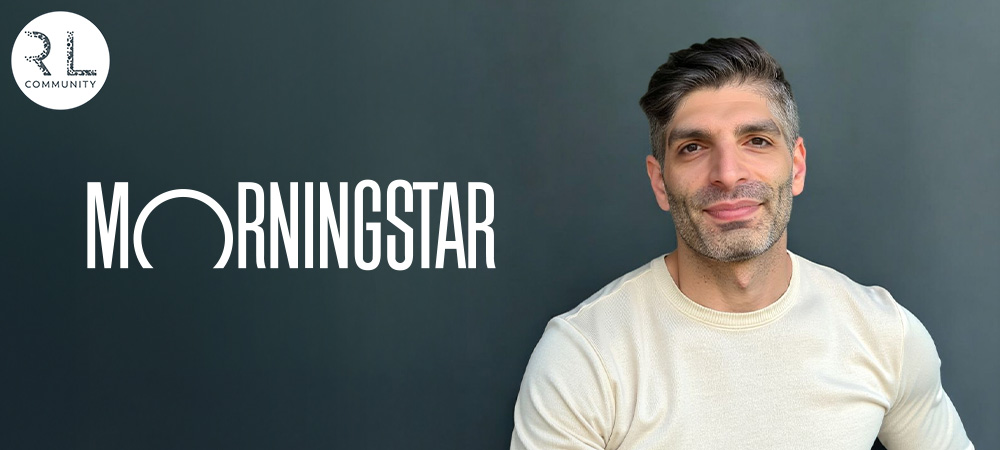
Joe Shahmoradian, Director of Talent Acquisition (TA), EMEA at Morningstar, knows exactly what artificial intelligence (AI) can do for his team – but also what it must not do.
Tools and agents deployed across Morningstar’s team have reduced repetitive workload, increased recruiter efficiency and capacity, and improved the candidate experience.
However, it is humans who ultimately own all judgment and decision-making, preserving quality and ensuring AI is used safely, ethically, legally, and transparently.
In the first instalment of HR Grapevine’s interview series in partnership with the Resourcing Leaders community, Shahmoradian offers first-hand guidance and insights for fellow TA leaders.
From a training academy and agent build-a-thons that help inspire, educate, and shape careers, to reducing recruiter admin by 75%, his in-depth advice covers practices that set the benchmark for all TA teams to follow, wherever they are on their AI adoption journey.
How is AI transforming your approach to talent acquisition at Morningstar?
It's changing how we deliver, but not how we decide.
We're delegating the administration and the task-related work, leading to various speed and efficiency gains, and reducing the manual work and repetitive recruiter workload. This is increasing our team's capacity without reducing our quality bar, because humans are still the ones making the decisions.
We have deployed AI sourcing agents, which run in parallel to our traditional search. We're finding they work best with candidates who have a large digital footprint, because they're more easily able to be found
It enables work that we previously could do but couldn't scale. For example, our market intelligence, hiring insights, and research-driven hiring manager updates. I created a custom GPT called AMIRA – ‘A Market Intelligence Research Assistant’ – as a cost-effective, efficient way of levelling up our service. We can now provide those research-driven updates quickly to hiring managers without recruiters needing to do all the heavy admin work.
Any leaders working on AI transformation should see this as part of a broader people and culture transformation, not just the transformation within their own discipline. I also lead AI innovation and governance across people and culture in EMEA, and the work I'm doing goes beyond talent acquisition.
Take us through your innovation process – how are ideas about AI applications turned into measurable tests?
Our innovation model is inspiration first, governance second, and measurement always.
To inspire, we’ve built an educational AI academy and created ACE, our AI Champions Exchange. A colleague and I interview AI innovators across Morningstar to show the best ideas across the business. It enables, for instance, the sales team to see what the HR team is doing and the software engineering team to see what the sales team are doing by breaking down those barriers. We also have our educational stipend, which people are using for AI education.
Governance comes in the form of a clear process on how to navigate the approvals for third-party tools needed to bring ideas to life, and published guidance on AI implementation best practices. That includes a whole host of things, but as an example, it goes into detail on when to retrofit AI into an existing process or when to redesign the entire process with an AI core – there are advantages and disadvantages to each. Regional people and culture AI transformation leads also oversee governance.
The Importance of Hiring Right First Time
For measurement, we have various trackers for the different agents that are created across HR, and the different third-party tools that have gone through our procurement process. We'll use them for a ‘go or no-go’ decision-making process. AI innovations are no different to any other process redesign. We don't adopt AI just because it's new; we adopt it when it measurably improves the outcomes.
Do you have any examples of improvements to interview quality or recruiter efficiency?
There's a strong live use case, which is AI recording, note-taking, and summarisation of first-stage recruiter interviews. It resulted in a 75% reduction in post-call administration and 25% faster screening calls, which obviously improves our efficiency, but also our team capacity.
Anecdotally, we get great feedback on that as well from hiring managers on the quality and form of the notes and the greater depth and detail that we're able to go into.
We have deployed AI sourcing agents, which run in parallel to our traditional search. We're finding they work best with candidates who have a large digital footprint, because they're more easily able to be found. It acts as research assistance, helping us scale some of the deeper market scanning that historically would only have been viable for priority roles requiring executive search level talent mapping.
We are also exploring more advanced AI capabilities in our control pilots, particularly around interview quality analytics and capturing knowledge, but always with strict human oversight and governance before anything moves into production. Again, in all these approaches, recruiters are the decision owners. They're accountable for their decisions. There's no outsourcing of judgment.