UK
UK  United States
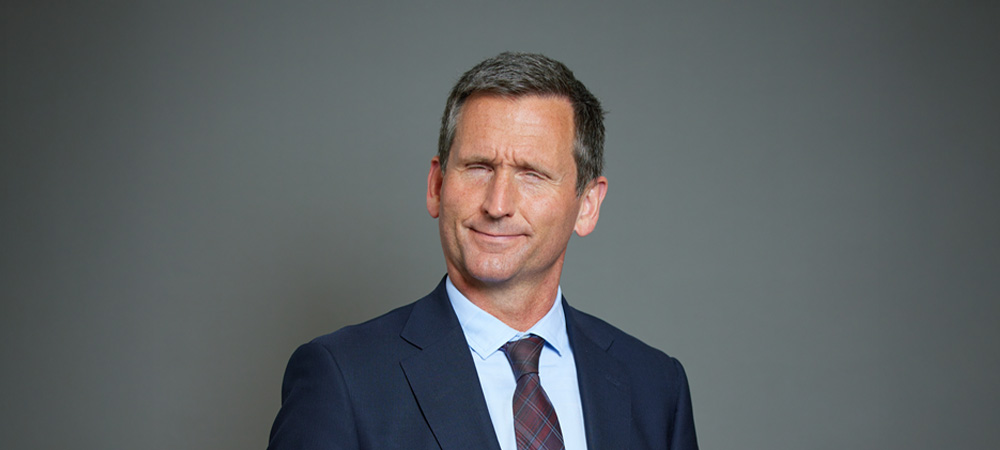
Former Paralympic gold medal winner and swimming World Champion, Chris Holmes, has fought many a battle in his life. His current mission is perhaps his most important: getting government to do more to reduce the employability gap blind people experience:
You don’t get to win nine Paralympic swimming gold medals (including a recording-breaking six at a single Games, in Barcelona), by being a quitter.
Richard Holmes MBE – now Lord Holmes of Richmond (a life peerage given for his contribution to sport, and for his later work as Director of Paralympic Integration for London 2012) – is not the sort of person who lets life’s knock-backs derail him. Aged 14 Holmes suffered the biggest of his life – when he suddenly, (and unexpectedly), went blind overnight. But not even this could deter him from realising his dream of going to Cambridge University, eventually becoming a journalist, then latterly a lawyer after retiring from the pool after 17 years, breaking 35 world records long the way as a member of Team GB.
So it’s with typical steely resolve (but also with real purpose in his voice), that Holmes, sitting in his office, his guide dog dutifully beside him, is discussing his next plan of action.
Taking discrimination to the government
It’s late January, and the dust is settling over a motion that he presented to the House of Lords chamber on the previous 17th December. Here he called on the government to establish a dedicated taskforce to specifically investigate why the employment prospects for blind and partially-sighted people have remained stubbornly unchanged in a generation. This is in spite of employment prospects for people with other disabilities seeing huge improvements.
In parliamentary terms, a taskforce is a specific measure – calling as it does, cross-party members to report on a specific or urgent issue, who have to report within a certain timeframe and produce recommendations for the government to action. But in the New Year, he received feedback that a taskforce will not – for the time being – be instructed.
It’s unacceptable that there is this forgotten but highly talented group of people that are still excluded from the workplace
“What I was asking for, was ministerial-level attention of this issue; for the government to take action at the pernicious employment gap that still persists,” he says slightly deflated. “For not only has the employability gap remained unaddressed, it’s actually getting worse rather than better, and it should rightly be an issue of national concern.” He adds: “I want to government to have a real, and sharp focus on this.”
So what now? Well, Holmes says that rather than feeling defeated, he remains undeterred, and in true picking-himself up style, he says he’s decided to take it upon himself to produce his ‘own’ report into the matter – one that he intends to present at a ministerial event in a couple of months time.
Putting his own dossier together
“It’s unacceptable that there is this forgotten but highly talented group of people that are still excluded from the workplace,” Holmes says. “Why wouldn’t employers want to draw from this talent pool? It was disappointing to hear the response I did, because the answer is always the same – that ‘we know there’s a problem…but…” He continues. “It’s the ‘but’ I want to deal with. I’m going to be drawing up my own report, detailing each issue succinctly, a page devoted to each issue, in the hope that I can get this on a ministerial agenda.”
The employability gap Holmes talks about is not insubstantial.
According to analysis from the latest Labour Force Survey, the employment rate for those with sight loss has actually been falling since 2018. This is despite the fact employability is increasing for the broader population. Overall, the employment rate for blind and sight-impaired people now stands at just 27%, compared to 83% for the general [non- disabled] population as a whole. “The reality is that we have significant ground to make up,” he says.