UK
UK  United States
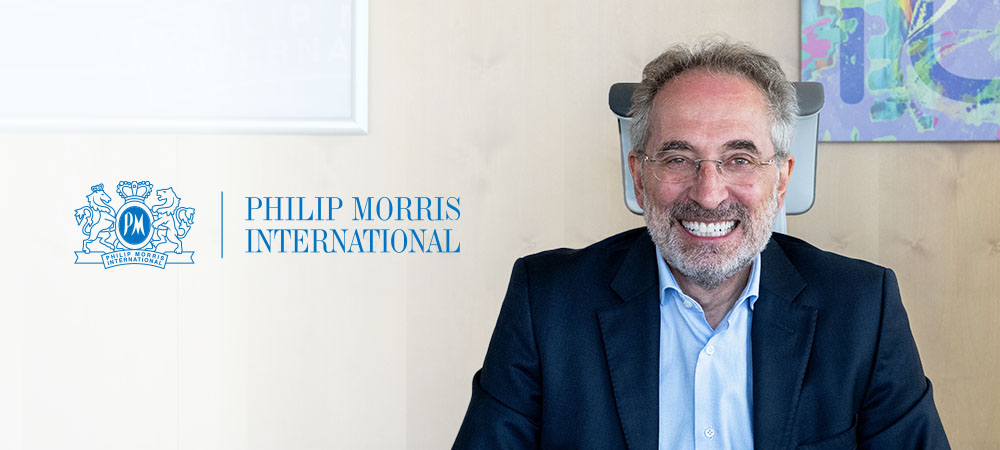
It takes guts to pivot a tobacco giant away from its core product. Tasked with supporting this monumental shift, Frederic Patitucci, Chief People & Culture Officer, is championing a two-pronged approach: embedding a new culture to support the strategy and meticulously mapping the skills of 83,000 employees to upskill them, thereby strengthening their future employability.
Early immersion into different cultures gave Patitucci a global outlook
Born in Morocco, Patitucci was immersed in a multilingual and multicultural environment from a young age. This early experience, which became a fundamental part of his DNA, paved a clear path to his current role as Chief People & Culture Officer at Philip Morris International (PMI). For Patitucci, fostering inclusive environments where diverse perspectives thrive is not just a profession - it has been a way of life.
“I lived in an environment surrounded by Arabs, Jews, Christians, Americans, Italians, Portuguese, French and Spanish – there was no racism or discrimination. I really enjoyed that as a child and I remember it vividly,” he says.
The CEO was reported in the media in a statement saying we are entering a smoke-free world – at the beginning no-one in the company understood it because it was going to kill the cigarette business – it took a bit of time to understand it
At such a tender age he didn’t of course realise that it would shape his career. After school he studied for a masters in economic science at the Universite de Rouen in France – this was followed by a post-master’s in human resources at the NEOMA business school.
For the next decade he worked in HR roles in France including the Kraft Heinz company in the coffee division and in 1998, the year that Google was launched, he joined the company which was to become his employer for the next 27 years, PMI. Today it is an employer of 83,100 employees globally with a net revenue of USD 37.9 billion at the end of 2024 and is best known for some of the top international cigarette brands.
PMI offered Patitucci a breadth of roles
His appointment as HR Director for Romania involved setting up the business from scratch in Bucharest. “We were a bunch of 20 ex-pats developing a greenfield site and along the course of this assignment I made a vow to never go back to France,” he says.
It was a decisive move. His next stop was to Lausanne in Switzerland where he became HR Director in 2000. It was a move that saw him go onto lead the HR operation worldwide, but it was when he was offered the position as Vice President for Eastern Europe, Africa, the Middle East, and China that he really began to find his sweet spot.
“Around the same time, we were facing headwinds in Russia, and I was asked by the CEO to go and fix it in 2011. I spent almost six years in Moscow,” he reflects.