 UK
UK  United States
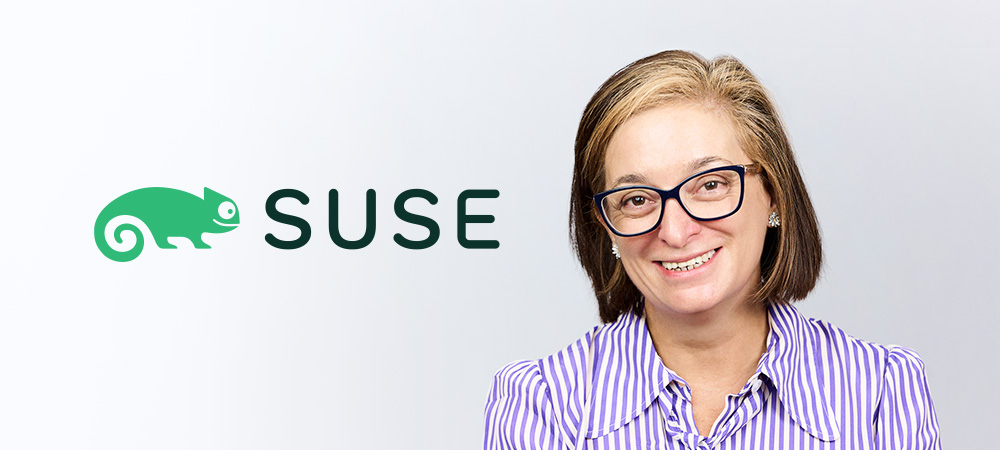
In her 25-plus year career, Lisa Sherwell has held some pretty impressive and pretty important jobs. She was once a global account director at SAP. Before that she was a global sales director. She’s also been an IT manager, a business development manager, oh, and a general manager too.
But her first – and so far only – foray into the world of HR is the role she occupies now. And she hasn’t messed about – going from no formal HR background whatsoever to landing the chief people officer role at her very first attempt.
So what on earth is going on, and does this uncharacteristic background actually mean she’s a better CPO for it? Here’s a clue – actually, she thinks yes.
“Starting in IT was what gave me my launch pad into sales,” says Sherwell, who now runs the people function for the near 2,600-strong global workforce of open source software company, SUSE. When SAP came knocking, the chance to work for a big corporate was too big for her to ignore, and she spent a year there looking after one of its biggest clients, Unilever. But like all eventual HR folk, the call to do something she says was more “purposeful” was strong, and it was when she joined her current organisation – initially as VP of Transformation, that she says things really started to fall into place.
“Before SAP, I’d actually spent two years working in South Africa managing an outsourced call centre for EE,” she explains. “When you’re looking after a headcount of 800 this very quickly gives you a feel for people. And even though I went back into a sales role, by the time I joined SUSE – which had recently just been acquired by new owners, and had a full-on need to transform – it was probably here that the wheels for transitioning to HR started to slide into motion.”
I didn’t really know what HR did and I didn’t feel like I had the skills necessary to be in this job long-term
Although her transformation remit was not specifically a people one (it involved organising more cross-functional change), the job did, she confides, rely on people buying into it. At the time there was a CPO already in-situ, but that person eventually left and by then (2023), her own strategic role was coming to an end. “That’s when I started to have conversations with the CEO about what to do next,” she recalls. “I think he didn’t want me to leave, and so said ‘give me 24-hours for me to come back to you’.” She continues: “The following day he did, and said ‘how would you like to look after the HR function whilst we look for a new CPO?’ I said yes. My thinking was this: if I could help find the right person to safeguard the company, that would be a good legacy to leave.”
A role she was made for
By her own admission, Sherwell said she had no expectations about staying in this interim CPO role permanently.
“I didn’t really know what HR did,” she confesses. “And I didn’t feel like I had the skills necessary to be in this hand-holding job long-term. But because the HR function simply needed good leadership until a new person could be found, that’s what gave me confidence I would be OK temporarily.” She says: “All I needed to do was lead.”
And yet here she is, nearly two years later. Having started out in her role interviewing for her own replacement, after three months the CEO (who was also involved in interviewing), came to a seismic conclusion. “He just said I want you to stop interviewing – there’s no point. He realised what I’d been starting to sense myself – that people we were talking to didn’t have what I had; plus my passion for our employees, and the chemistry the CEO and I had would be sufficient.”


