Share this article:

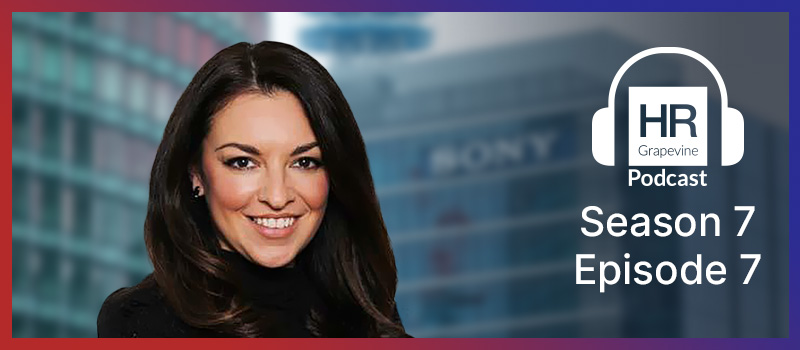
Podcast | SVP of PX, Sony: 2025 was a year of 'difficult moments' and 'incredible highs'

SVP of PX, Sony: 2025 was a year of 'difficult moments' and 'incredible highs'

2025 has been another monumental year for Sony Music Group’s People Experience Team, from the “difficult moments” to the “incredible highs.”

Last year, in the final HR Grapevine US podcast for 2024, we spoke to Maria Neve Brownlee, SVP of People Experience for Sony, hearing how her team reimagined HR with a 'global people promise’ and outlining ambitious plans for 2025.

Brownlee returns for our final HR Grapevine US podcast episode in 2025 to reflect on another 12 months of activity, from deep culture listening surveys to the launch of an all-new career hub – and how the team have navigated the success and challenges with resilience, agility, and anti-fragility.

It has also been a fantastic year of podcasts on HR Grapevine US, with people leaders and CHROs joining us from a swathe of backgrounds – from PR giants to tech start-ups, and everything in between.

We’ve covered everything from a 100-year-old firm modernizing its employee experience to game-changing neurodiversity programs, with innumerable insights and brilliant advice from our guests on all things AI, culture, talent, and skills.

Thank you to all of our guests who joined us in 2025 to share their insights, advice, and guidance; to those behind the scenes who helped coordinate guests, set up recordings, and fine-tune episodes; and to all of you who have listened!

We look forward to bringing you more fantastic episodes in 2026.

Host: Hello and welcome back to the HR Grapevine podcast. I'm Benjamin Broomfield, head of content here at HR grapevine. And this is our final US episode for 2025. And caps a fantastic year of podcasts with people, leaders and CHROS joining us from a huge mix of backgrounds, from giant PR firms to tech startups and everything in between, we've covered everything from one hundred year old firm modernizing its employee experience to game changing neurodiversity programs. And, of course, the brilliant insights and advice from all of our guests on everything AI, culture, talent and skills. To cap off, this year we have a very special episode. But at the end of 2024, we wrapped up by speaking with Maria Neave Brownlee, Senior vice president for People Experience Americas for Sony Music Entertainment, and she took us through the amazing progress her team had made to elevating Sony's people experience in 2024, including the launch of its Global People Promise and some of her plans for 2025. One year on, we're delighted to welcome her back as she joins us to catch up on the past year. And once again, all that's been achieved and see what is coming up perhaps as well in 2026. So a very warm welcome and welcome back to you Maria. Thanks for joining us.

Guest: Thank you Benjamin, great to be back with you. And I can't believe it's been a year has passed already since we last spoke. Flown by hasn't it.

Host: Oh one hundred percent. I think that's one thing we can agree on, is that we've literally blinked after the last episode finished, and here we are recording another one. So thank you, as you say, for joining us. Perhaps we can kick off by just a real whistle stop tour of how 2025 has been for you. Maybe you can take us through how Sony Music's strategy has evolved over the last year.

Guest: Yeah. Happy to. And I kind of encapsulate I think I mentioned it at one point with you with you earlier, I kind of encapsulate 2025 as the year of the of and for us really. And it's been a year of growth and learning and change and real transformation for all of us. With that, we've had some real incredible highs and some great wins and as I'm sure we all have in different moments throughout the year, we've navigated some difficult moments. Yeah, I always say, you know, in those difficult moments whilst in when we're in the moment and it can be hard to navigate every part of that of this year. The highs and those difficult moments has really pushed us to sharpen our people experience strategy further and to keep us to up with adjusting and adapting as we go through. So I think that kind of high level will take you there. And one of our biggest focuses from this year was really continuing our journey to redesign our PX foundational pillars. And as I've mentioned to you, when we were connected last year, integrate and that we launched the Global People Promise, this year was about integrating it further into all aspects of our talent journey, whilst really ensuring it stays truly people centric and reflects our the world that our employees are living and working in today. We really want our values and our culture and our commitments to match the pace of transformation that's happening around us and as and help us as we guide and navigate those difficult moments and stay resilient through change. So I think one great example of this resilience and adapting through tough moments. A great example was really early in the year with the US wildfires, and our teams really moved quickly to support employees and provide resources for those that needed it. That moment, along with some other crisis and social moments in the US and around the world, has really helped accelerate our work around safety and wellbeing this year, and it's directly informed our new safety initiative and approach that we'll be launching next year, which will include resources, education and more preparedness tools to support employees globally around the world in all elements of safety and wellbeing at work. And then I guess alongside that, we've doubled down this year on talent attraction, talent development, internal mobility, inclusion and maintaining creativity at the Centre of our culture. Of course, this really has been a year to kind of bookend this as supercharging our strategy, elevating our culture further and really ensuring our people feel supported, connected and able to grow.

Host: Fantastic. Well, thanks for taking us through some of the highlights. I'm going to be diving into a couple of others over the course of the episode, so I know another big focus for you, and it really beds into a lot of what you've already discussed, has been really diving into employee feedback, into the insights that employees have to share. And I know that there was sort of that launch of the culture survey. And so firstly, love to hear if there was a real common theme that stood out, perhaps from some of the feedback that you heard and maybe why some of those insights have felt particularly important right now, especially as leaders, people leaders were navigating more challenges than ever, more change than ever. And teams are being asked to be more agile than ever as well.

Guest: Yeah, it's a it's a really great point. And I think, you know, the our employee listening strategy has only just deepened further and further. We co-create. One of our shifts in our approach is co-creating a lot of what we deliver based on feedback. So the culture survey is one of those ways, and we get a lot of rich data from that. So after launching last year's culture Survey, again doing it this year, The clearest theme that surfaced both last year and is showing up again this year as we've just reviewed the results and this is across geographies, levels and functions, was really this strong desire for career growth and development. I think people are seeing the rate of change that's happening and how what does that mean for me and how am I growing and what do I need? How do I need to develop? They want more clarity on their paths, more access to skill building, more opportunities to stretch into new or different roles. We also heard that people want more clarity and communication on where we're going as a business, and our strategy to get there. And so these insights are really powerful for us because they reflect exactly what people are feeling right now. Our industry is changing quickly. And technology, as we all know, with AI and just technology in general, is evolving even faster. And as you said, teams are being asked to stay agile and adapt while also navigating uncertainty around what's coming ahead. So with that listening, both in the culture survey and other moments where we listen. Throughout the year, we leaned heavily on analytics and then the insights behind that data to help us really storytell and understand what's going on for people. This data has helped us identify patterns, understand where the gaps were, and really come up with some concrete actions that, as you mentioned, it really started with listening and really listening to our employees, our leader, our leaders to across the business. And from there we took a hard look at how technology is reshaping learning. As we come back to that kind of career focus, how social and collaborative based learning is still wanted and needed, and how our programs really need to evolve. And where can we help people shift and focus on career growth that is connected to the skills that are needed for today, but the future ahead? Also, one of the areas I think we're looking at from that to come is in not only enhancing our technology through the learning experience. So looking at where AI can help even more with learning, yet also shifting away from career paths which sometimes can be feel very linear and restrictive, and also may look different today and in the future than what they perhaps did in the past. To more of an agile approach that we're starting to call career maps, where that co-design with the employees and leader people leaders to different routes for growth, and really prioritizing skills development experiences to get a career map rather than just a linear pathway. So a lot of this work over this last year, and the culture survey feeding in has really informed our redesign also of our global LED function. And that's been a real big focus this year, making it more relevant for today, more accessible for folks and more focused on real time capability, skill building needed for the next phase of our industry, as well as developing what we call the power skills of emotional intelligence, leadership, creativity, resilience, change, agility, to name a few. And you'll start to see the first wave of some of those programs within the team have been working hard on, along with our new approach to learning, performance and growth rolling out in the new year.

Host: Absolutely. I think that's what you're seeing from a lot of organizations, perhaps over the last twelve months, the last couple of years, is that shift to really rethink how careers look within the organization, bringing together perhaps some of those departments from performance learning and development talent, really uniting them under one roof to kind of focus these efforts together. And, you know, as we love here a case study here at HR grapevine. So I'm getting excited about the idea of hearing a bit more about that in the future. But part of this was launching a new careers hub as well, which you know, is a major piece of work. We covered it on HR grapevine shameless plug, but I'll include a link to that in the description in case anyone wants to read a bit more about that. But maybe you could talk us through that journey and what the impact has been over the last few months since it went live?

Guest: Yeah, absolutely. And this has been an exciting launch again this year. And I thought we might go there. So held that to talk about. Now the Career hub truly was a global co-created effort between talent acquisition, employee branding and other teams across the business. And as I said, that's our approach here in for Sony Music is making sure we're co-designing things with the people that will be using this as well. So we wanted to tell a story with our career hub around what does it mean to work at Sony Music Group? Who are we? What do we value and how can people build their careers here, whether they're already with us internally or looking externally going, what's going on over there? We wanted to make sure that it was also accessible both for internal and external candidates and for many candidates, especially early career talent. Our old site. If we, as we held the mirror, really didn't make it easy to understand our world, it didn't reflect our creator voice enough. Now, after great work from the team that have kind of co-created this, it's much stronger. It's more of a transparent gateway into careers at Sony Music Group and a peek into our creativity and our culture too. And of course, with everything, we don't just launch it and leave it. We've launched and we've got some great responses and connection rates as well with it so far, but we are continuing to iterate and build on this. Yeah, we're really pleased with the first phase of it.

Host: Fantastic. Another big shift as well that I wanted to dive into. You mentioned when we were planning this episode is a shift from talent management to talent optimization. Always keen to find out exactly what that means in practice when we're sort of dealing with the change in language. So what's that look like for Sony Music Group over the last twelve months?

Guest: Yeah, this has been a build and we'll continue to build over the next few years I think. First, let's talk about the shift in language. And I think we were being really intentional with a lot of our programming and really redesigning, moving from HR to PX and really looking at language using for programs. Language really matters. And as neuroscientists will share, words don't just communicate, they actually physiologically shape our brains. So certain words can trigger the amygdala and the stress hormone narrow the brain's ability to think creatively or problem solve if they come across as negative words. Other words that maybe come across more supportive or more empowering language. Activate the prefrontal cortex, release dopamine, and then strengthen trust and connection and expand our cognitive flexibility and creativity. So when we understood that and understanding that we took talent management and performance management, and if you just say those words, it feels like very transactional. It's like a process. You tick off something I must manage and can have some negative connotations to it. Talent optimization. So if you have to optimize talent or manage talent, it opens it up and it shifts from something you must manage to something you can positively impact and influence. And so for us, it's about intentionally creating the conditions where people can thrive. It's about looking at a holistic approach to how we optimize talent with performance, with the conditions that impact people's performance and their experience. And for us, that looks at reimagining how we set goals, How we define success. How we develop skills. How we lead. What's the feedback and culture like, and how is it showing up? And how are we designing systems that enable growth, not just manage it? And I think just to double down on this one example of this change in terms of how it showed up for us in practice this year as we continue to develop it, is our approach to performance management. It has shifted and we moved again to performance optimization. And from Pip's, most people will know in the um, the world is performance improvement plans. We shifted with language again and approach to PEPs performance enhancement plans, which includes not just a change in the words. It's a change in our approach. So a holistic review of how we support people when their performance is dipping transparently sharing where the people leader and the employee can see progress. Throughout. There are skills assessments. There's an accessibility review. There's someone's performance dipped because maybe they need a different level of support or resources that maybe we weren't aware of. What's the skill level of the and feedback on the manager or the people leader supporting them, and then clear accountability and goals that attract and everyone can see how people are progressing. This approach doesn't solve everything. And again, it's very new for us. So we're still iterating and evolving it, yet it's rooted in people centered approach, holistic and a real open, objective approach where we're setting people up for success versus going through this tick box approach where both the people leader and employee aren't always connected or committed. And we've definitely had feedback from employees where they're like, as soon as I get a Pip, it's a way that managers are managing us out. We know it's different, and we know we want to really set this up as a way to set people up to succeed. So that's an example of how we've shifted.

Host: Absolutely. Now, I really like that. I think so much, so much of the time on these episodes or the interviews that we do on HR, grapevine, whatever the program or policy is, a lot of the frustrations of where it's coming unstuck comes down to that communication. And you sort of think, well, we know HR loves a buzzword, and there's all of that conversation with how much of a shift is there in language? Obviously you need to have other things going on underpinning that, but it does count for a lot and that communication of the change really matters. And obviously last year with the people experience and the new people promise and this year obviously really starting this focus and that shift towards talent optimization and some of those other changes you mentioned are great to hear about. I know we've already covered a huge amount, enough probably to make you personally want to lie down in the dark room for, for a year. But were there any other notable highlights for you from 2025? Anything else that you're particularly proud of that your team managed to tick off this year?

Guest: Yeah, absolutely. There's a lot. Um, I think just getting through the year is definitely one. Um, as well and celebrating that, I think a few other standouts I would kind of want to highlight. The team have been excellent in collaborating and co-creating together and delivering and adjusting include one include redesigning our approach to onboarding. So we talked about the career hub and how we're getting more access to roles and hiring. But also once people join, what's that experience like? So we had a project called Project Welcome, where we actually took the approach from design thinking, the approach that we build when you're making products and really took it from the user experience and collaborated and co-created with core teams who all impact the onboarding experience, including people, leaders and recent new hires. And together, we co-created and reimagined a creative, first people centered and tech forward approach to our onboarding. So that's one definitely really proud of. And some other highlights include really expanding our well-being and safety initiatives, reviewing accessibility, growing our work in neurodiversity and inclusion, and supporting our business leaders and teams to be set up for the future through organizational design, deepening our people relations approach, and rolling out change workshops. And we have more to come in the new year. And of course, not everything went exactly as planned or has been easy. Yet, as I mentioned, and I think one of my articles earlier in the year around anti-fragile teams, every lesson has really helped build our muscles further, refine our approach and shape where we're heading next. And I want to just shout out where I'm most proud of is the team. The team has not just been agile and demonstrated that resilience and adapted, but really been leaning in and taking care of each other. And I think sometimes, particularly in PX or HR, we can forget to put that mask on ourselves in moments. And so a lot of focus has been on doing that. How do we take a beat? How do we take care and lean back on each other when we need it, when we're all carrying so much and also trying to balance or blend our life with our work world too. So really, really proud of the team and the impact they've made.

Host: Absolutely. Well, fantastic and great to shout them out. And now you just mentioned that that article that you wrote for HR grapevine on Anti Antifragile . We'll include a link to that in the description as well. Just as then perhaps a final look ahead to next year. Again, it's been a monumental 2025. Lots of what you mentioned is going to carry on into next year. But what's on the what's on the agenda? What's on the to do list for 2026? Any key highlights there that you're looking forward to?

Guest: Yeah I think yes and lots with that. So I think definitely looking forward to we make sure. I just want to shout out that we shut down at the end of the year and give our team some time to switch off for a couple of weeks and reset and really connect with themselves. And I think that's really important as we get ready for next year and as we reimagined every aspect of the talent journey this year, as you mentioned, we're continuing that work. So a lot of next year will be a continuation of deepening. We started this year with our approach to hiring, onboarding, inclusion, and support for those moments when we may need it, whether it's in crisis moments or when performance dips for us in twenty six, we're continuing that journey, deepening our approach to safety and wellbeing and how we support, grow, and optimize talent at every stage. What that means. What does that mean? Maria? I can hear you say. Well, what we'll see from us is a big focus on leadership development, I think, as well as navigating a new world of technology and skills that are needed. We also need to lead differently. And so helping our leaders develop new skills around leadership, skills based learning for everyone, compassion and candid feedback both because existing together, redesigning our goal setting and measurement, and building environments where people feel equipped to stretch, to innovate further and to lead through this uncertainty and change. This isn't just for our leaders and employees, it's also for our PX team as well. So one of the big focuses that we'll also be doing while supporting leaders in the business and all employees through these upskilling is also, as I mentioned just a moment ago, making sure we're supporting our team too. So ensuring they feel supported, developed and upscaled to navigate the pace of change and partner in an even stronger, more curious and with more compassion. And if I was to summarize it, I guess it is about taking what we've learned this year, deepening it further, operationalizing it, and bringing things to life in an even more connected, creative and of course, more human way.

Host: Fantastic. Well, I'm looking forward to catching up with you in late November 2026 to have a bit more of a detailed look at how everything went, but I'm sure it's going to be another fantastic year and a lot to tick off, but a lot to be excited about as well. So Maria, a huge thank you for joining us once again on the HR grapevine podcast. It was wonderful to sort of hear all about that last year in action and some of the highlights and really the fantastic work that the team has been doing. So really appreciate you joining us here today and looking forward to catching up with you again soon.

Guest: Absolutely. Have a great end of year.

Be the first to comment.

Sign up for a FREE myGrapevine account to have your say.

Share this article:

You are currently previewing this article.Create account

This is the last preview available to you for the next 30 days.

To receive our daily newsletter and access HR features & insights, create a free account today.