UK
UK  United States
If there’s one thing that’s a nailed on certainty for 2026, it’s the fact that chief people officers/HR directors won’t be doing less; they’ll only be doing more. In recent years the widening of the responsibilities of CPOs/HRDs has accelerated at what some might consider an alarming pace. Whether it’s assuming ESG oversight, or DEI leadership, or digital transformation, or change management, performance management, or wellbeing, the role simply isn’t what it used to be. Add in data mining, analytics and AI and it’s no wonder more HR heads report burnout and only 64% of HRDs say they’re confident executing their strategies (Source: State of HR report 2024).
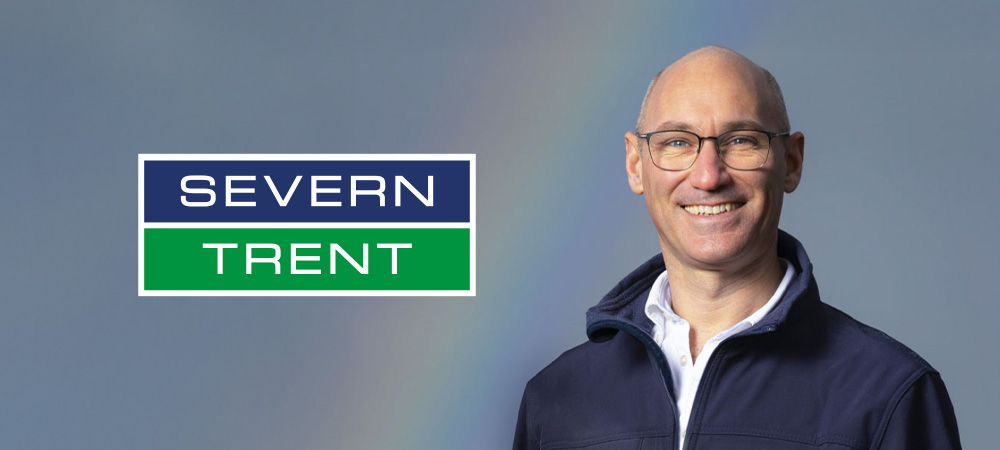
For Neil Morrison however, HR director at the UK’s second-largest water company, Severn Trent’s, he’s successively managed to have his remit significantly widened – by having internal and external communications added to his role since 2020 – but to compensate, he’s actually ‘reduced’ the time he now spends doing dedicated HR. So much so in fact, that as of right now, he estimates his day-to-day activities are now pushing 60% comms and only 40% HR.
You go to where you need to put your time
“Like most executives, you go to where you need to put your time,” says Morrison of his higher-weighted communications role. “I’ve been here [at Severn Trent] nine years now, but I’ve managed to develop my role to work in the way I want it to work.” He adds: “Right now, reputation is the thing water companies in particular are less able to control and it’s where I’ve had to divert most of my energies to.”
Whether it’s responding to the predictable ire that surrounds executive pay, or the downright bizarre (last year Reform UK councilor, Michael Squires, blamed mass immigration for the lower than normal water levels at its Cropston Reservoir in Leicestershire), it’s easy to see why communications and HR has natural overlap – intersecting as it does at the point where business operations meets employer branding, meets reputation and the human stories behind it.
I’ve managed to develop my role to work in the way I want it to work
And it’s not like he hasn’t got experience doing this. Morrison was formerly Chief Human Resources Officer at book publisher, Random House (including dealing with much of the UK corporate communications associated with its merger with Penguin during 2019-20), and so despite arriving at Seven Trent in 2017 as HRD-only, he says he leapt at the chance to combine his first interest of people, with – as he puts it: “being able to create same sort of authentic narratives to staff with the wider UK population.”
In fact, the longer one speaks to Morrison, the more one senses he’s found his groove promoting the people side of the business first, while maintaining more of an oversight of the other more traditional HR functions.
“I have talented people around me who are HR experts in their field,” he says with a tone of confidence that says he is OK not needing to meddle to directly in other people’s work. Which leaves him, he argues, with the ability to pursue what is very clearly his passion – telling the work that Severn Trent does; why it is different;, and ultimately the behind-the-scenes stories of the people who are responsible for it.
Social responsibility first
“The social aspect of this company really gets me going,” Morrison asserts unapologetically. “Since I’ve been here, we’ve increased the number of people we employ from 5,000 to 11,500 – people from across a surrounding area that is still quite socially deprived. I see it as my mission to help bring as many people into our business as we can, and I want to do this by telling stories, and positioning us as an employer that really is different.” He adds: “We’ve got so much to show – our employee volunteering; outreach with schools, infrastructure projects, natural environment improvements and so on.”
As an example of this, Morrison last year penned an article in what many might think is a very unexpected title – The Big Issue. The piece was specifically about how Severn Trent is creating employment opportunities for those who have come from the care system. This has all come about through a partnership with Leicestershire & Rutland NHS, with support from the Care Leavers Covenant, where Severn Trent has publically committed to creating 400 work experience placements over the next four years in the Midlands, specifically for care leavers. “While we can’t promise all these people jobs at the end of it, we’re providing them with employability skills, and some have joined us,” he says. “There’s a very real problem of young people going straight into unemployment. I believe it’s business’s place to try and make a difference here.”
This same outlook is also why promoting apprenticeships are also a huge part of Morrison’s work too.