UK
UK  United States

The CPOs at the World Economic Forum, B&Q, Radisson Hotel Group, Morrisons and Travel Chapter explain exactly how they communicate with their people – from knowing when empathy is not the right choice to engaging frontline workers who aren't online.
The power of turning empathy off - Uxio Malvido, CHRO and Head of People and Culture, World Economic Forum
Malvido is a chemist by training, but his communication philosophy is ruthlessly pragmatic. He knows that empathy is a tool – and unlike many senior HR professionals, he is not afraid to say when it's not appropriate and hard decisions need to be made.

Uxio Malvido
CHRO and Head of People and Culture, World Economic Forum
During a reputational crisis at the WEF in 2024, while simultaneously leading a massive internal cultural transformation, Malvido found himself overwhelmed: "We suffered a possible reputational crisis while going through an enormous amount of internal change – it was tough."
His solution was counterintuitive for an HR leader. He didn't double down on listening. He deliberately did the opposite: "I learned how to reframe my emotions and turned down my empathy, because at the time I had a lot of people turning to me with a combination of hopes, complaints, and personal stories. It was overwhelming."
His insight reveals a critical truth about workforce comms - you cannot absorb everyone's emotional state and still lead effectively. Sometimes, the right communication is not more listening – it is clearer, calmer, more structured direction.
Malvido also explains how his scientific background shapes his style: "I have a strong scientific background which informs the way I think and structure documents. I'm not afraid of spreadsheets." He doesn't rely on charisma. He relies on structure, clarity, and consistent frameworks.
I learned how to reframe my emotions and turned down my empathy, because at the time I had a lot of people turning to me with a combination of hopes, complaints, and personal stories. It was overwhelming
What this means for workforce comms: Not every employee crisis requires an empathetic ear. Sometimes, people need a steady hand and a clear plan. Employers need to know when to dial empathy down to solve the problem instead of drowning in the emotions around it.
Trust is built on the shop floor - Andy Moat, People Director, B&Q
Moat left B&Q and then returned. That outside perspective gave him a clear view of what actually matters in workforce comms: trust, care, and meeting people where they are.
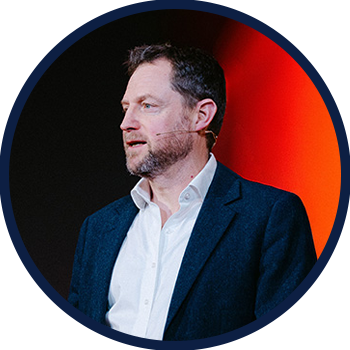
Andy Moat
People Director, B&Q
On the fundamental principle of leadership communication, he said: "I don't care how much you know until I know how much you care."
Resilience borne through challenging times fine-tuned the importance of trust: "I think our communication in the business has been one of the keys to how we've coped during Covid and I believe that the connection and trust between the board and all leaders and colleagues is the best it's ever been."
That lesson hasn't been lost: "Fundamentally, it means continuing to listen to our leaders and colleagues."
B&Q understands that many colleagues aren't looking at emails all day. Bringing comms to them is the right way round, "I was out in the shops – talking to customers and colleagues."
What this means for workforce comms: Trust is not built through emails but through visible care, consistent listening, and being present where the work actually happens. Employers should remember to get out from behind their screen and go onto the shop floor.
Making work easy: Iñigo Capell, Global Chief People and Resources Officer, Radisson Hotel Group
Capell's entire communication philosophy rests on one principle - simplicity. He doesn't just say it once. He builds it into every process, every policy, and every message.
"Our third criteria, one of my favourites, is that less is more. We are obsessed with making things easy for our team members."
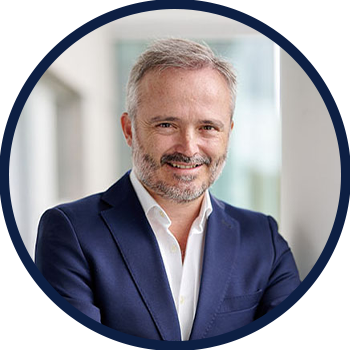
Iñigo Capell
Global Chief People and Resources Officer, Radisson Hotel Group
He applies it to the performance evaluation: "Take a performance appraisal, for example; the employee would be following a form and not understand it – we've made all the statements easier and simpler."
Capell insists that communication must be designed for the frontline, not the head office. He calls this being "hotel centric": "Too often, hotel businesses design policies and procedures with office employees in mind – it's not the right way around; we need to define things for hotels."
He also has a non-negotiable rule for global consistency, "Another important element is that our global DNA, whatever we deliver, has to work everywhere, no matter whether it's in China, Singapore, Australia, South Africa, or Germany."
We are obsessed with making things easy for our team members
What this means for workforce comms: Before any policy or update is sent employers must evaluate whether a frontline employee would receive the message in the way that’s appropriate for them. If not, Capell would advise that it needs to be simplified.