UK
UK  United States

New research is sending a clear message to UK employers - the menopause support gap is pushing experienced women out of the workforce, and most HR leaders don’t even realise there is a problem.
According to a comprehensive new study by not-for-profit healthcare provider Benenden Health, a staggering 92% of HR leaders believe their organisation is meeting the needs of staff going through menopause. Yet the lived experience of employees tells a very different story. The survey of 2,000 working women aged 40-65 found that 40% are unaware of any menopause policies in their workplace, and almost a third (28%) are considering leaving their job because of their symptoms. Perhaps most alarmingly, 7% have already handed in their notice.
There’s a sink hole in UK employment – women going through menopause and as they go under so does their vital experience and talent.
The hidden cost of ‘managing on’
The symptoms driving this exodus are significant yet also at times sidelined as being ‘what’s all the fuss about’. The Benenden Health research identifies ‘brain fog’ and memory issues - 46%, hot flushes - 46%, and fatigue - 43% as the most common workplace disruptors. Should these women just ‘put up and shut up’? Despite the ‘employer branding’ corporate messages what’s actually happening in many organisations is that these seemingly inconvenient symptoms are thought to fall into the bracket of those that should just be suffered in silence.
Yet the financial implications for businesses are stark. Almost half, 47% of women have had to change the way they work to cope. This includes reducing hours - 18%, cutting responsibilities - 12%, and turning down promotions or training opportunities, 6%. Productivity has dropped for 31% of respondents, and women are losing an average of 5.5 working days a year to menopause-related illness alone.
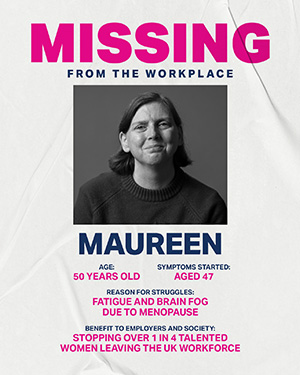
Benenden Health highlights a case study which illustrates the real issues. Maureen, a 50-year-old from London, told them, “There came a point where I was mixing up names, forgetting figures and feeling utterly drained by midweek – and that’s just not who I am as a leader,” she said. “The brain fog, migraines and exhaustion made even simple decisions feel heavy.” Maureen considered quitting, but crucially, she didn’t. Her story had a positive outcome because she opened up to a supportive manager who implemented flexible working. “Having a midweek reset day was a game-changer,” she added. “I’m still in the role I love.”
Maureen’s experience highlights the solution - but it also highlights the rarity. Currently, only a third (33%) of organisations provide menopause training for managers. Fewer than half offer practical measures such as workplace adjustments - 45% or paid leave - 41%.
The stigma barrier

Dr Amy Pressland
Head of Talent and Performance, Benenden Health
Why aren’t more women asking for help? The research points to a persistent culture of silence. Nearly two-thirds - 63% of women say it is still awkward to discuss menopause at work. Only 45% feel comfortable raising symptoms with their manager. The fears are deeply human - being judged - 17%, not being understood - 16%, or being treated differently - 12%.
Dr Amy Pressland, Head of Talent and Performance at Benenden Health, warns that this gap between employer confidence and employee reality is dangerous. “Too many women are being forced to make impossible choices between their health and their careers,” she said. “Our research reveals a gap between employers’ perceptions of support and the reality women face. Businesses have a responsibility to close the gap. Menopause should never be a reason for someone to step back from work they love.”
The retention opportunity
If the Benenden Health research sounds the alarm on the problem, a second study - the Midlife Divide Report from LiveCareer UK - reveals the scale of the opportunity.
The report found that a remarkable 91% of women would be more likely to stay with an employer that actively supports their midlife health needs. In a tight labour market where retaining experienced talent is paramount, this statistic should be a wake-up call for every HR leader.
Too many women are being forced to make impossible choices between their health and their careers
The report also underscores the intersectional nature of the issue, finding that 68% of women believe their gender and age affect how seriously their health concerns are taken. Nearly one in four feel menopause is still misunderstood and insufficiently addressed.
So, what do women actually want? The LiveCareer study provides a clear roadmap for HR teams – over half, 58% want flexible schedules, 56% want paid leave or mental health days, 54% want more women in leadership roles (highlighting the need for cultural change, not just policy) and 37% want manager training on menopause.