UK
UK  United States
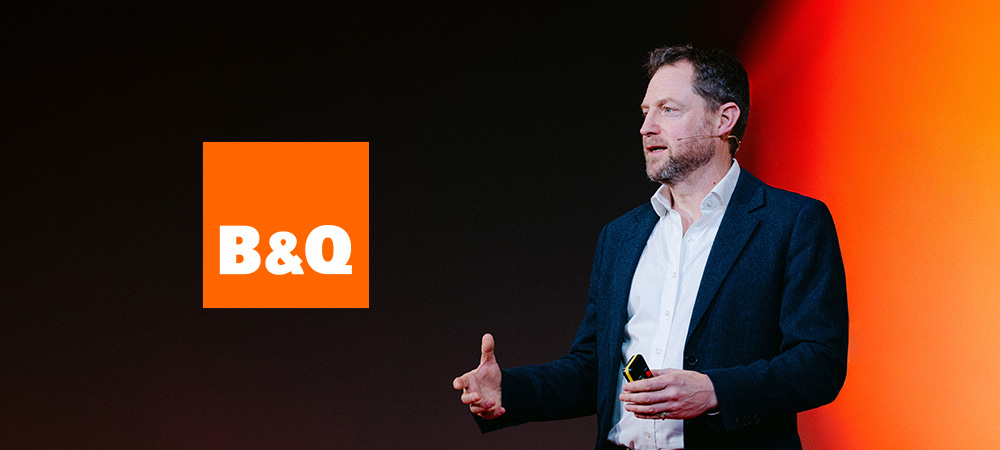
They say you should never go back, but for Andy Moat, leaving B&Q was the best career decision he ever made. His return as People Director armed him with a vital lesson from the outside world: culture isn't soft, it's strategic. Now, he's applying that insight to steer the retail giant through its next iteration - from pandemic response to a progressive, modern, multi-channel retailer including a radical new trust-based approach to hybrid work.
‘I was a reluctant accountant’
“I specialised too early - I studied accountancy at Manchester Metropolitan University; I wouldn’t advise anyone to do that!” he laughs. It wasn’t a completely ludicrous choice; Moat had always been good at maths and economics. “I missed out on studying politics and history at the University of Warwick by one point,” he adds, with a touch of self-deprecation. Yet Moat is far from a professional who “didn’t quite make it” - he very much has. He explains that the degree provided vocational training, but not the broader ‘learning about the world’ he craved, admitting he enjoyed it so little he swore never to study finance again!
I was the classic B&Q kid - my dad was heavily into DIY.
To reset, he took a wild card and worked in Canada for nine months - the circuit breaker he needed. “After that, I volunteered in Chile with Operation Raleigh. It was an amazing, life-changing experience,” he says. But the time came to find a career, and he was determined to lean into his passions. “I took a role as a sports centre administrator.” His numerical aptitude soon led him to manage the finances and fully qualify as an accountant, even though the work still didn’t ignite his passion.
Ultimately, the qualification unlocked the door to B&Q - a place that would become his life’s work. In hindsight, it feels less like coincidence and more like fate. “I was the classic B&Q kid - my dad was heavily into DIY,” he laughs.
‘I joined B&Q, which was founded locally and where their head office remains to this day.’
It was 2001, the year the world grieved as the September 11 attacks hit the Twin Towers. Moat became part of the strategy team. “I did a lot of work on the ten year financial modelling plan. Even though I was junior I got exposure to many of the board directors,” he explains. He grafted and impressed when he re-built the financial model from scratch – even taking it to France, a period he loved although he laughs that he, ‘failed to learn French’.
Ripe for management he moved seamlessly into it. It was a time of change for the business that went from high to slow growth. “I observed directors failing to work as a team. It’s what got me interested in HR because I kept wondering who was appointing them,” he says. In many ways while it appeared to be the ‘new’ it wasn’t as Moat had always been interested in coaching, it began as a child when he was captain of several of the sports teams he played in.
We accelerated fast, rolling out click-and-collect from car parks, and made the decision to send colleagues over 70 home on full pay for their safety. That was a multi-million-pound decision in itself.
“I wondered how I would get into HR, but I knew the reality was that I didn’t want to become a Finance Director, but I could become a business partner,” he explains. Being proactive was to his advantage. “I went to find the person that ran reward for HR at B&Q, we had coffee and I learnt about what the job entailed,” he says. It was a shrewd move and his interest resulted in him being appointed in that role to replace him when he left. Another stroke of luck saw him work for Martyn Phillips who was at the time the HR Director and eventually left the business as its CEO. He taught him a lot.
After a few years he began to move up the HR tree taking on a wider remit including learning and development, recruitment, engagement and communication. “I was fairly accelerated, it wasn’t as normal to move jobs every two years or so at B&Q at that time,” he says.
“I was Director of Retail HR – a job I describe today as the finishing school for my HR apprenticeship!” he says. It was a role he loved. “I was out in the shops – talking to customers and colleagues,” he reflects.
In 2012 it was all change again.