UK
UK  United States
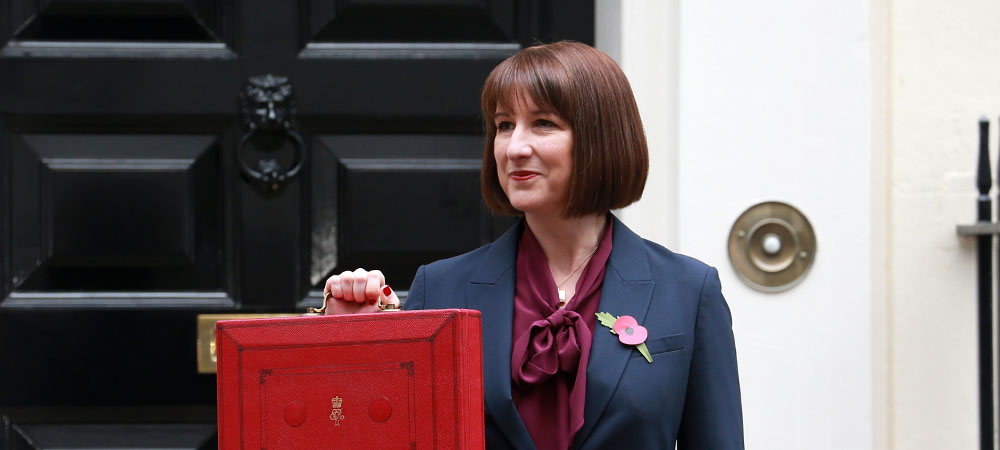
If employees thought things were already financially precarious for them [data shows that more than a quarter of UK adults have less than £1,000 in savings, while one in six adults have no savings at all], then this year’s Budget will feel like a hammer blow.
If early calculations are correct, analysts suggest that 1 million more working people [the cohort Labour promised it would not burden] will pay higher rates of income tax this year – a bitter pill to swallow in these already tough times.
The problem for employers, however, is that with their own costs of employment already going up too, the Budget doesn't exactly leave them with much room for making a difference either.
Financial worry: The stats
- More than half of workers are concerned about being able to financially support their everyday needs
- One-third of workers say finances or economic conditions are their primary sources of personal stress
- Non-parents are 30% more likely than parents to feel confident they can comfortably meet their needs
- Two thirds of workers lack confidence in their financial future, with women more likely to feel vulnerable
- Women are 40% more likely than men to feel financially vulnerable
- More than three in five workers have reduced their spending over the last two months due to financial concerns or economic uncertainty
- Seven in ten (70%) workers have reduced spending on dining out or takeout, 55% have reduced spending on clothing and personal items, 53% have cut back on entertainment, 41% have cut back on travel/vacation, 36% have reduced spending on groceries, 33% are spending less on home improvement, and 25% have cut back on savings or investments
With a newly introduced cap on salary sacrifice pension contributions thrown in by Rachel Reeves for good measure, one of the few tools employers had to manage rising costs has gone and is already being predicted to see employers forced to cut pension contributions - meaning staff’s finances will be impacted by this Budget even in their retirement.
According to Lisa Tuck, chartered financial planner, and Head of Business Services at Smith and Pinching, the assault on employees incomes is now so great, that she fears there’s a real danger workers will be forced to opt-out of their pension schemes altogether, just to claw back cash for the here and now rather than the future: “I’m seeing rising numbers of people wanting to draw tax-free cash from their pension pots, which is not a good idea for their long-term financial security,” she says.
So against this background, and with many employers saying they’re unable to boost wages directly, what are employers doing (or even ‘able’ to do), to try and alleviate the penury of their staff?
Tuck says she’s been running financial planning courses for employers, as well as workplace pensions sessions, to try and give employees a feeling of control. She says: “Cash plans are also a relatively cheap benefit to provide, and these specifically offer staff discounts on things like prescriptions or high street purchases.”
But will interventions like this be enough? To see how employers are responding to the financial pressures being felt by staff, HR Grapevine spoke to a selection of HR heads to see what they are doing.
1) Paying the Real Living Wage – seven months ahead of time
In October 2025, the Living Wage Foundation set the new hourly wage for those working in London and those working outside it to be £14.80 per hour and £13.45 respectively.
These are the hourly rates it believes workers need to cover their basic living costs, and also have a little something left over to meet unexpected costs. Normally, employers signed up to the Living Wage get six months to prepare for these changes, but at 290 employee-strong company, Eland Cables, which supplies electrical cables for critical infrastructure projects – it decided not to wait till then if it could give staff this increase now.
Says Executive Director, Jean-Sébastien Pelland: “The 7% pay rise doesn’t officially come into effect till May 2026, but we decided that if we could afford it – which we can (we turn over more than £300 million per year), then we should not wait.” A full-time worker earning the new, real Living Wage will earn £2,418 a year more than a worker earning the current government minimum.