USA
USA  United Kingdom
Today's headlines abound with companies firing Gen Z graduates months after hiring them.
Surveys cite issues about this entry generation of workers lacking soft skills, professionalism and work ethic. Worrisome think-pieces ask whether young people are ‘trapped by AI’ with endless concern that not enough entry-level roles exist for those entering the workforce.
As someone who has spent my entire career in human resources and as a mother of two college-aged children, I read these headlines with equal parts concern and optimism.
Concern about the role we, the generations before, have played, and optimism for how we pivot to make this incredibly positive.
Multiple ways to build a career
We instructed this generation of young people to believe that the most important thing they could do was figure out who they wanted to be. A decision course that they were supposed to determine before they had lived enough life to know anything at all.
When you bag groceries, you learn who society is; you meet the elderly woman who comes in every Tuesday and just wants someone to talk to; you figure out how to manage a difficult customer without making it worse
That pressure did not prepare them. It has paralyzed them. The pressure to pick the right major, the right internship, the right first job, as if the plans determine the ‘right’ destination. Often, these decisions are based on a formulaic approach and a traditional path. The result is a generation experiencing anxiety, competing ferociously for opportunities they are not sure they want, and arriving at workplaces unprepared for the one thing no algorithm can simulate: How to effectively interact with people.
I went to high school where both college prep and vocational tracks were offered.
I took the college prep path as that was the expectation and the assumed direction. I witnessed my classmates in the vocational programs learn skills that I now recognize as foundational: How to make something, to work with their hands, how to connect a skill to a real outcome. What struck me after so many years in HR is how quietly brilliant that model was.

The school had it right. It made it known that there are multiple ways to build a life and a career, and none is worth less than the other. Somewhere along the way, we lost that. And right now, we need it more than ever.
The beauty of craft, connection, & community
As a starting point, we as parents must advise our young people simply to ‘go to work with people and learn a skill.’
Not in the abstract, but quite literally: Bag groceries, wait tables, work a register. These are masterclasses. When you bag groceries, you learn who society is; you meet the elderly woman who comes in every Tuesday and just wants someone to talk to; you figure out how to manage a difficult customer without making it worse; you learn to read a room in under thirty seconds; you develop patience, resilience, and the ability to be present with a stranger.
These are skills that no classroom curriculum has yet figured out how to teach and that every employer is desperately looking for. The soft skills crisis we keep reading about is not Gen Z’s fault, but a proximity problem – too many young people have been insulated from the challenges and richness of everyday human interaction.

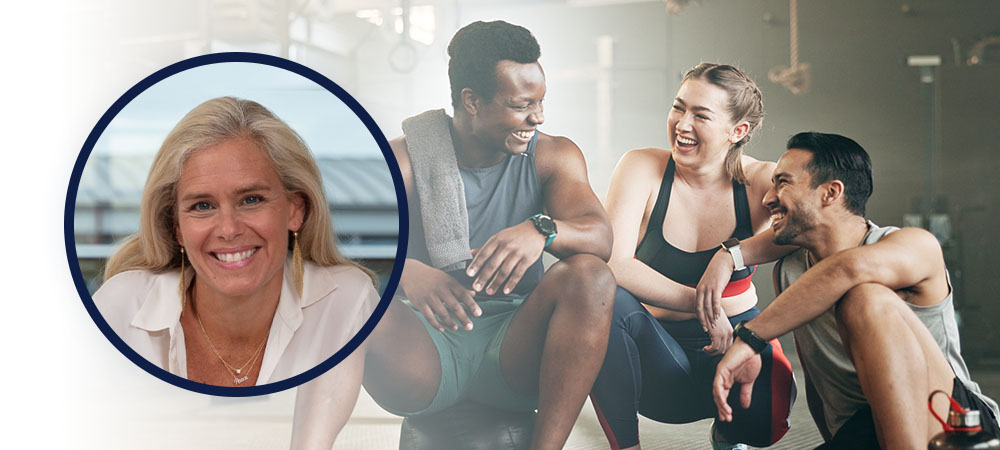
One of the greatest privileges of my career has been working alongside people who sincerely love and take pride in what they do. At Tiffany, seeing the bench jewelers who could hold a piece of metal and visualize the finished piece before it existed. At Wella, the chemists and hair stylists who understood that color is both a science and an art, and that the person in the chair is trusting them with something personal. Now, I'm beside the personal trainers at Equinox who show up every day and help someone become a stronger version of themselves.
What strikes me about each of these groups is not just the skill involved, but the community they build. They interact with the same people almost every day. There is a depth of connection afforded by this kind of work that is increasingly rare and increasingly valuable.
Why HR still struggles to reach Deskless Employees
Most young people do not even know these paths exist. Or worse, they have been quietly told that these paths are beneath their potential. That is one of the most damaging lies we tell, and we must stop.
We’re wrong about AI & work
We all know that AI will change work. It already has. But I think we are having the wrong conversation about it.
The anxiety tends to focus on what AI will take away. I am more focused on what it can give back. For too long, talented people have spent the better part of their working hours behind spreadsheets, processing information, and managing repetitive tasks. AI can handle that now, and if we think about it, this can be a good thing.
It creates space for the work that no algorithm can touch. The trainers whose members show up at 6 am not just for the workout but because of their dedication to the client’s health; the jeweler whose craft required a decade to develop; the stylist who knows what someone needs before they say it; the human who makes another human feel seen.
I believe this is the new competitive advantage. The companies that will win are not the ones that replace humans, but the ones that deploy humans more meaningfully. That means investing in craft, in skill, in the kind of connection that makes someone choose you over every other option. Human presence, done well, is becoming rarer. Which means it is becoming more valuable.
For too long, talented people have spent the better part of their working hours behind spreadsheets, processing information, and managing repetitive tasks. AI can handle that now
We are living through a moment of genuine reconfiguration that is disorienting, especially for young people who were given a certain set of directions they were told to follow. But the landscape looks different now.
I like to think of the advent of AI as permission to veer from the traditional path, get curious and say ‘yes’ to trying new things; things that enable you to tap into your creativity and innovation; things that involve a trade, a craft, and working with other people. Elemental truths that have been lost along the way.
This moment, for all its uncertainty, is also a permission slip. Permission to try something unexpected and allow the inspiration to make you better.
Gretchen Koback Pursel is Chief People Officer of Equinox Group, a portfolio of luxury lifestyle brands including Equinox, SoulCycle, and Equinox Hotels. In this role, she leads the enterprise people strategy for approximately 12,000 employees across corporate, hospitality, club operations, and field organizations. Gretchen partners closely with executive leadership to build the organizational, talent, leadership, and operating infrastructure required to support growth, scale, and transformation across the multi-brand platform.