USA
USA  United Kingdom
It is universally agreed that managers play a vital role in shaping employee engagement and performance – and yet many find themselves in the role without the training or support needed to lead effectively.
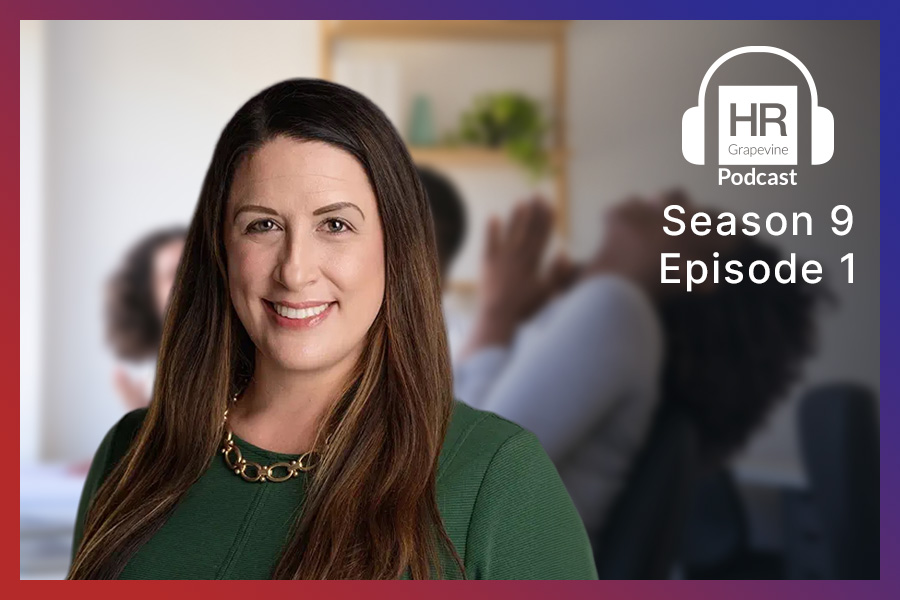
But at SugarAI, formerly SugarCRM, things are different. Shana Sweeney, Chief Human Resources Officer, joins the HR Grapevine Podcast to discuss how her team are equipping managers to lead with intention and care.
The CHRO reveals how SugarAI built and rolled out manager enablement toolkits and change management playbooks, and explains how these individuals – as well as the firm’s wider workforce – are given all the support they need to thrive.
Host: Hello, everyone, and welcome back to another episode of the HR Grapevine Podcast. I'm your host, Benjamin Broomfield, head of content at HR Grapevine, and I'm joined today by Shana Sweeney, chief human resources officer at SugarAI, formerly SugarCRM. Shana joined SugarAI in 2015 as director of human resources, and in that role led the global HR operations team, serving as HR business partner to Sugar's technical teams and providing proactive and strategic guidance and support for organizational planning and development initiatives. In 2019, she was promoted to the VP level with responsibility for leading the long term global strategy for the entire organization before taking on the HR post later that year. And here she leads the global HR facilities, security and compliance teams, serving Sugar A's internal customers and providing them with the best experience possible. And she's deeply passionate about creating meaningful and efficient experiences across all stages of the employee lifecycle. Today, we're going to be discussing how SugarAI is equipping its managers to thrive with manager enablement toolkits and change management playbooks. So a really great episode lined up. But firstly, Shana, a very warm welcome to the podcast and thank you for joining us.
Guest: Thank you and thank you so much for having me.
Host: Okay. Well, maybe we can kick off by setting the scene a little bit. I'm sure this is a challenge that's going to be familiar to many of our listeners. And I know there's a lot of great sort of studies out there that do a lot of research into this area, but why do you think that there's a current challenge with lots of managers, perhaps going into that management role and not necessarily feeling equipped or sort of really supported to do so?
Guest: I think there's a couple factors at play that are really influencing managers, how they manage. One is just the pace of change, the pace of technology, the pace of work these days. I feel like has really sped up. And for managers specifically, I think they are dealing with trying to manage up, trying to manage across organizations while also trying to manage their teams. And there's just not enough hours in the day to do all of those. A lot of times also, managers end up in these player coach roles these days, whereas I would say historically managers only managed people and didn't have any kind of, you know, hands on work that they had to do. And now the managers are doing work while they're managing, while they're trying to do all the things. And I think it's just really hard for them to do what they need to do effectively. And then additionally, I also think that when we promote people into management roles, we don't always do a great job at teaching them everything they need to know because it's a wide breadth of information and you can't learn it that fast, and sometimes you have to learn it through trial and error. You have to learn through experience. And I think a lot of companies have pulled back, especially smaller companies have pulled back on learning and development just because of scarce resources. And I feel like a lot of times we just are like, oh, this is a great individual contributor. Let's promote them into a management role and good luck. Have fun. And it's sink or swim.
Host: Absolutely. And perhaps as well, I think maybe the other part as well is just a lot of managers going into that role because it maybe represents a, you know, a step forward in their career ladder or a promotion or a pay increase rather than, okay, this is actually work that I want to complete and I feel called to, to do this kind of work and feel like it's something that will excite me day to day. I suppose I'd be interested to hear your thoughts as well on, on maybe some of the impacts that that can have on, on the organization and the workforce as well. Again, I know there's lots of great sort of studies out there into this, but in your own words, really where managers aren't given that necessary, whether it's the initial training, ongoing training, whether it's the tools to do their job or just sort of support day to day. How do you think that that can impact the organization and the workforce?
Guest: There's a lot of research, a lot of studies. I've proven it out through some of our own data, but people's relationship with their manager really drives whether people stay at a company, their engagement levels, their contribution levels, and, and the two biggest things that kind of drive people staying is, do they have a work friend and do they like their manager? Those are like the two biggest things. And so when you have managers that are ill equipped to really have meaningful conversations with their employees, whether it's about their career growth, whether it's about, you know, what's going on, whether it's translating strategic initiatives down into how does this impact you tactically on a day to day basis? When managers aren't equipped to have those skills, have those conversations. You can see it visibly throughout performance data. If work's getting done KPI metrics, you see it across the board.
Host: Fantastic. Well, let's dive into some of the work, the great work that you're doing around really enabling and supporting managers at SugarAI. I know it's an area that you're really invested in, so I'm looking forward to, to hearing more about it. Take me through the manager enablement toolkits. What sort of involved there and what really kind of prompted you to, to roll that out as, I guess, a solution to some of the challenges that we've just run through?
Guest: Yeah. So from an HR perspective, our team, our HR business partners, we kept seeing the same types of topics come up over and over and over again. And they were kind of more advanced things that that often frontline managers don't necessarily have, have exposure to, but people were contacting us about organizational design, how to communicate change, like how to build career pathways or think about career conversations, how to think about retention. And we kept getting these same questions over and over and over again. It didn't matter where in the world someone was, it didn't matter what function. And the managers really were struggling with how to have these, these conversations. The other ones that kept coming up were around effective communication when there was conflict. And a lot of like a lot of HR teams, we have a fairly small team. We're global, we're in, I think, twelve countries directly, twenty eight countries. It goes up every day indirectly. And so we have people all over the globe, and there's not always someone awake when someone has a question and we can't be everywhere at once. So we were like, how do we enable these managers? We had tried training, but that's point in time. And unless people really use those skills, they forget them or they can't find their notes. And so we're like, okay, well, how can we build some tool kits that are just like short, quick, topic sensitive things that a manager can look at and be like, oh, here's my step by step guide of the things I need to think about before I am dealing with a change, or here's what my employees are looking for me, or even here's what my senior management above me is looking for to help them really tactically be able to do some of these more complex things without having to have someone hand-holding them. And really, I don't know, there's an old adage about, you know, if you give a man a fish, he eats for a day. If you teach him to fish, he eats forever. I don't think that's exactly it, but something along those lines. And so we're really trying to teach people to fish and give them the tools that they can take with them, whether it's here at SugarAI or in the future, because the more we can make better managers globally for the world, I think the better it helps everybody.
Host: Wonderful. Well, I'd like to hear a bit more about, I suppose, sort of rolling out the toolkits. Again, I think a lot of times from especially kind of from the HR side of the fence, we come up with these really great, you know, kind of solutions to, to some of the challenges within the business. And then it can be that disappointment when they're kind of they're rolled out. And although people are asking for them or they feel like they were going to be really useful in principle, they're not quite as widely adopted in practice. So how do you kind of go about really building them out and rolling them out? I guess to obviously to, to your managers, how do you sort of expect them to, to, to use the toolkits day to day and kind of make it easy and accessible for them to do so. So that uptake is there.
Guest: Yeah. So when we, um, so we built them out and initially we put everything in the kitchen sink in them. They were too long. They weren't practical, and we tested them out with a couple managers, because you can get great feedback from your managers where you're like, hey, we built this tool. You're having this issue. Can you take a look and see if this helps you? And so we got some feedback from managers that it was too long, too complex, and they needed it short, simple. And so we took some of the toolkits that we made that were like seven to fifteen pages and got them down to no more than three pages, which that is very hard to do as a psycho, trying to take change management and be like, okay, here's a three page change management tool book to walk you through. But we really condense things down to what was absolutely necessary. And then we tried again with, you know, the next set of managers that had similar questions. And they were like, oh, this is really helpful. And so we use the managers to talk to other managers, to tell them and use them to kind of amplify the message that the toolkits were out there. Obviously, we launched them as well and told everyone about them and shared them. We shared them in a manager meeting. We showed everyone where they were, but having the managers talk about them to other people helped. And then the other thing we did is in our HR system, at certain points in time, we set specific triggers that would send the playbook out to the manager because it's always you only need it when you need it. Like if there's not change management, you're not going to pay attention to it. If you're not working on work design, you're not going to pay attention to it. And even like a hiring, we did a little hiring playbook. And so we attach those to triggers in the HR system. So it just sends an email out to the manager and says, hey, you might, you might want this, this might be helpful for you.
Host: Brilliant. And you mentioned obviously that kind of slight bit of trial and error, at least just going out and testing them and getting that feedback and in changing them. And that I suppose kind of leads on to, to making sure that they're obviously that useful tool and perhaps sort of changing how they're structured and how they're rolled out over time as well. So I guess when you're looking to kind of review their impact is that you sort of just looking at the uptake or amount that they're used, are you looking at, I guess, sort of more measures around, I guess, from the managers themselves around their confidence and experience, or even from employees and the relationship that they have from their from their managers. What have you kind of been looking at, I guess, to sort of look at uptake and usage and hopefully the success of this approach.
Guest: Yeah, obviously we're looking at, you know, general usage, like how many people are clicking on them because only managers have access to them. So like how many people are clicking on them to access them. We're also using our survey data to look at how people are viewing the relationship with their manager. Is that going up? Is that going down? Does that have any tangible impact on that. I think those are the two biggest measures. And then kind of on the softer side, which is more of like a vibe check than anything else, is like, how many questions are we getting from an HR standpoint that show that people are asking less of those types of questions and kind of self-serving? And similarly, like one of our, our org design playbooks involves people building out a little presentation to give to HR. And how many of those presentations are we getting back from people?
Host: Yeah, definitely. And would you say sort of on the whole, that general sentiment towards manager relationships is going up and presentations going up, questions coming down?
Guest: Yeah, those are all definitely trending in in a positive direction. I think there's still more work to do right now. We're this month, we're actually launching an AI manager coaching tool where managers can have more of an online live, like back and forth with all of the tool kits to try to help them push out data more and make it a little bit more accessible. Because sometimes, you know, because we have so many playbooks, sometimes searching for the right thing, people don't want to scroll. And so we're like, how can we make it a little bit more accessible? And so now we're working on accessibility.
Host: Definitely. I think we're seeing a lot of interesting conversations at the moment around that, that AI coaching side and how it can be used. I think, again, anyone and no one's sort of sitting there and saying, yeah, we've got it cracked and we've figured it out. But it's just that that initial experimentation is going to be interesting, I think, to see how, how that can really help with, with kind of personalizing that experience for, for the managers and making sure they're getting the support that they need.
Guest: And, and also personalizing it to your specific company, like policies, rules, all of that. And so part of us kind of building all of these and rebuilding the materials was, well, if you're using AI, you have to train it on something. And we wanted to make sure we had a good, solid base of what to train it on so that, you know, my managers do interact with it. They're getting our information, our data, how we do things, our culture, because otherwise it's just random coaching.
Host: Yeah, definitely. One of the playbooks specifically you mentioned was around change management. And I know that's obviously I think that our listeners will probably resonate with a lot. I think there's obviously so much uncertainty for all organizations at the minute in terms of where they're going and, you know, future direction and the impacts of all of these kind of technological changes and socio economic geopolitical changes as well. It's a lot, obviously, for organizations to figure out, but that's a lot for employees to deal with too. And then being able to kind of manage that uncertainty from the perspective of, of a manager and drive that change forward in the right direction, while not having all of the answers is certainly really difficult. So what are some of the things that are going into that change management playbook? And why is that sort of something that's being really important for, for you to roll out at the minute, would you say?
Guest: Yeah. So we we've gone through a lot of change as a company. We've changed our name recently. We've had we've had new leadership across our executive team. The world's changing. Uh, whether it's like I said, whether it's technology, there's been a lot of geopolitical uncertainty and change just across the world. The world's a changing place, a very changing place. And the pace and scale of the change is difficult. And it's causing a lot of change. Fatigue, I think with a lot of employees, I think with a lot of HR people who are spearheading a lot of this change and are exhausted from it as well. So we were finding from our employee surveys and kind of sentiment analysis that we were doing, that employees weren't understanding enough why changes were being made, what was actually changing?
Host: Yeah.
Guest: Because I think there's like a studies that have shown, like you have to communicate things somewhere between seven to nine times before people like really understand what you're trying to communicate. And so we were realizing we were missing a lot in our change management around communicating the why, the what, the how, where to get more details, ensuring that the right stakeholders were informed. Because in lots of companies, you know, you have a lot of different departments and functions and people don't always realize like, oh, these people need to know this because this touches their work here. And then there's also a lot with answering the unknown, unknown questions that managers have and equipping managers to be able to say, you know, here's what I know, here's what I don't know, but here's what I need you to focus on for now while I work on getting these answers in this clarity And helping people like ride the waves of change. Because change is so constant now that managers almost have an obligation to get people used to constant change. And so it's how can they build some resiliency and some understanding of change into their own small functional areas? And so we built up a playbook to try to help them with the communication aspects, with connecting with the employees on here's what you need to focus on, on learning. Yeah, I don't have all the answers, but here's what we can do. And then on building change in their day to day workflow to get employees used to it.
Host: Definitely. I can think of quite a few leaders that I've spoken with who would appreciate that kind of playbook, I think, and having that in front of them. But it sounds like a really useful resource. And like I say, I think for all managers and leaders at the minute. It's just getting that that extra level of support in terms of being able to manage that uncertainty, to manage those unknowns, especially when that that change fatigue is there perhaps as a final question. Obviously, we've spoken quite a lot specifically about, you know, the playbooks and how impactful they've been. Is there any other sort of advice or guidance or things that have proven really useful for you as an HR leader in terms of supporting managers, helping them feel effective in their role, but also engaged with that position as well. Any sort of final pieces of advice that you would share there?
Guest: I think don't be afraid to try things and check in with your managers, because a lot of them are really struggling, whether they're saying it out loud or not. And I think it's important that we really spend time making sure that our managers are doing okay. Their jobs are very exhausting right now, and they're the ones driving the day to day execution of all of our companies. And if they're not okay, then the company is not going to be okay. And so the more that we as HR leaders can do to check in with people in different ways and ask them what they need and ask them specifically what support they need versus guessing the better off they're going to be, and the more they're going to appreciate what HR can do and, and how we can support them.
Host: Lovely. Well, it's a great message to end on. So we'll wrap up the episode there. But Shana, thank you so much for taking the time to join us on the HR Grapevine podcast. It's been wonderful hearing all about the toolkits, but just more broadly, that culture of support you've got in place for managers at SugarAI. Really wonderful to hear about and a lot of great insights there for our listeners. So thank you so much for taking the time.
Guest: Thanks so much for having me.