USA
USA  United Kingdom
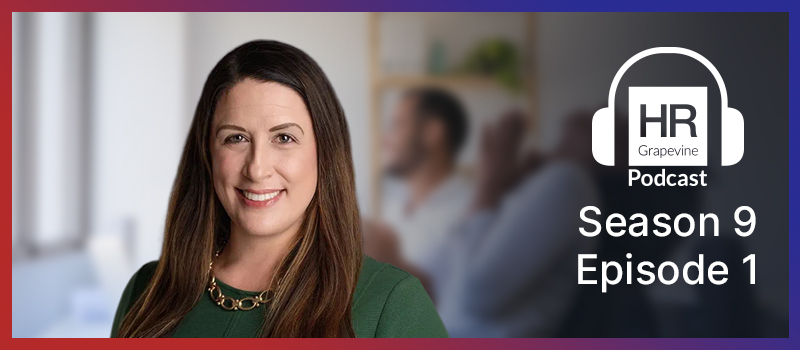
Building an outstanding, people-first culture is tricky enough – but what about at a high-growth organization that has already brought together 13 firms and counting?
At Springline Advisory, Chief People Officer Erin McAuley is leading this complex task, building a unified “Scale With Soul” culture that serves as a differentiator for business performance and talent retention.
McAuley shares key steps on the journey, including “culture analysis” and “culture discovery” projects, co-creating with staff and leaders, and driving a “big small firm” approach that preserves humanity and local identity.
Host: Hello, everyone, and welcome back to another episode of the HR Grapevine Podcast. I'm your host, Benjamin Broomfield, head of content at HR Grapevine, and I'm joined today by Erin McAuley, chief people officer at Springline Advisory. Erin is responsible for leading talent, strategy and developing a meaningful and rewarding organizational culture for the firm's most important assets, its people. And she's recognized as a visionary builder and talent multiplier. Together with the spring line leadership team, Erin is committed to co-creating one of the most irresistible employee experiences in the industry. She's been deeply involved in bringing organizations together through M&A as a part of the role, thoughtfully building one unified people first culture while keeping teams engaged and performing at a high level. And we're going to be talking all about that journey today. So a very warm welcome to you, Erin, and thank you for joining us.
Guest: Thank you. I'm excited to be here.
Host: Well Springline is a rapidly growing, private equity backed accounting and advisory firm that I think on the last count, is brought together thirteen firms and growing. So could you share a bit more about the journey, and maybe what about what attracted you to the CPO role here as well?
Guest: Yeah, absolutely. For me, I've spent a little over two decades in people and transformation, primarily in tech, which is a bit interesting. And then I moved into having my own fractional chief people officer business. What drew me to Springline, and particularly to the professional services industry, is there's so many similar inflection points to what we experienced in tech. So the whole industry is being reshaped by AI talent scarcity, evolving workforce expectations, consolidation in the industry, and really the need to scale leadership and culture more intentionally. So it stood out to me about Springline and about Tim's leadership and the vision of where we wanted to take Springline was culture wasn't an afterthought. So in a relationship business, in a people business, people strategy is business strategy. And so being able to combine both that scale of coming together with thirteen and growing firms and the humanity, which we call scale plus soul feels really differentiated in how we operate.
Host: Absolutely. I think you make a great point. I feel like I talked to plenty of HR and people leaders across the professional services sector at the minute, and I think that's partly because it's such a challenge that's drawing people to the industry. And you sort of finding that interest in solving and talking about these challenges. Certainly I can imagine culture, obviously, as you say, has been a really big part of what you do when you're dealing with perhaps just one organisation. That's enough of a challenge. But obviously we're talking about all of these sort of different mergers that have taken place, the different organizations coming together under one roof. So I'd imagine for you that culture and people challenge has been about that scale, but integration and co-creation as well. So what are some of those challenges been in practice, and how have you gone about managing and building that culture as the organization has taken shape?
Guest: Yeah, I think one of the things that really differentiates our approach is that we think of it as founding a firm together. So each of these firms that we've brought in, they may have people who were there at the founding, they may be named partners on the firm. And so they have that entrepreneurial mindset. And so we've really taken that to the next level by having them found this firm with us. So an example of that would be culture. So rather than coming right out of the gate and saying, here's what Springlines culture is, we leveraged our first five founding firms. We had three hundred and sixty five responses. And we did basically a culture analysis of how do you describe your personal values, your firm's values, and what you would like the desired values to be. And from that, we co-created together what we call our grove values. So grounded, reimagined ownership and wholehearted. And so because we created them together, they obviously feel very innate to everybody involved. And then we doubled down on them by leveraging that same technique in what we call culture discovery. So every single firm coming after went through that same type of analysis. And we bring in that culture intelligence to make sure that as we're bringing folks in and bringing firms in, that it's going to be a match because that's what's going to allow us to cross, sell, share talent, get after client expectations in a different way. All of these different pieces, if we don't have that, then we haven't. We've done a disservice to the people business. We've really commoditized accounting and professional Services. And I think especially in the light of AI, we need to lean into the things that make us uniquely human of how we can capitalize those. That's one example. Other examples are we did the same thing around whether it be culture or technology or financial practices, or even thinking about how we go to market. So it's really a strong co-development culture. So at this point in our journey, we're looking for managing partners, firms, partners, etc. that want to be part of that founding versus being acquired, if you will.
Host: Fantastic. I think you made a really important point in there about obviously that that people first side of it and that really being such an important part of the conversation, I suppose, especially for those individuals going through that transformation sort of with relation to the organization. There's also all of that in sector wide change that you mentioned as well at the top of the episode. So how tangibly do you sort of manage staff through that change and through those transformation journeys, and especially, how do you prepare? Perhaps the leaders and partners in the business who are going to be doing so to help them, I guess, navigate their role in supporting people through that change also?
Guest: Yeah, I think the first piece is not waiting until the deal closes, right? Which is why we do culture and leadership discovery very early on pre LOI through LOI, etc., because we are looking for a group of a managing partner and a group of partners that want to have that ownership mindset, right? They want to found a firm. And so there's that willingness and readiness that's already there, right? So that helps. That's a great starting point. And then from there, we give different moments to be able to bring the group together. So we have what we call an advisory council, which is a group of our managing partners that help to direct some of our decisions. They help to guide us to say, here's what our benefits platform should look like, here's how we think about our talent, strategy, etc. and we also bring them together in what we call Keystone. So that is to bring all of our partners together once a year to do strategy work. And then on top of that, sort of the next level down, we have a program we called leap. And leap is basically a firm builder readiness or partner readiness program that starts to develop that next generation of talent, because this role of a partner is rapidly evolving in the industry. And so helping to get them out ahead of how this will evolve and helping them shape it also becomes important in that. And I think because we've stitched together so many different pieces of the leadership web from pre deal close through integration of all different kinds, that really helps set us up for success when it comes to managing change.
Host: Fantastic. One of the parts of the conversation I'm always really interested in when it comes to organizational culture is the measurement side of it, because obviously we're dealing something with something that is fairly abstract, but also, you know, very human and a lot of these things, in many ways, it doesn't feel right to boil it down to a single metric or KPI. And that's never fully going to capture the culture that you're creating. At the same time, when you're being very intentional about the culture that you're building and shifting people towards, you want to have an idea of, of sort of success and what good looks like, and make sure you're achieving the work that you're setting out to do. So is that something that you measure and track? What are some of the ways you might kind of go about doing that to, I guess, get that barometer for whether or not you're being able to drive culture in the direction that you want to.
Guest: Yeah, absolutely. I mean, I think especially this audience, right from HR grapevine, I think this audience more than others recognize that when it comes to culture, there's the qualitative piece, and then there's the quantitative piece. And so being able to actually gather analytics. So we use, we use and have tailored a tool called Barrett Values survey. And so Barrett Values has been around for decades and they only focus on culture. And so we leveraged that to be able to create both our current culture and how we bring in to the culture discovery process. The other piece from a quantitative perspective is we use various different types of engagement surveys and listening strategies to be able to get a sense of how it shows up, right. Because from a qualitative perspective, the way that it shows up is in employee referrals. It shows up, right? I guess that's more quantitative, but it shows up in people really feeling this is a great place to work, whether it shows up on the Great Places to Work survey or best accounting firms, etc. because at the end of the day, good culture is really behavior. It's how we make decisions. It's how we show up for clients each day. It's how we show up for each other each day. It's how we show up for the community each day. And so those become signals. And so I think the great part about doing this work in a professional services industry is that whether they call it culture or not, your leaders and your partners are listening for that because they recognize that our people are our product, right? So you have a different type of engagement from all of the leaders. Then you may in other industries.
Host: Fantastic. One of the really, I think, exciting transformations that we've seen over the past few years, not just in professional services, but beyond, is perhaps this increasing appreciation that investing in culture, investing in these people focused practices is a really important part of shaping commercial value and the value that an organization can bring to its clients. So how do you see that manifesting at Springline? How do you see culture shaping the value that you can create as an organization and really serving, I suppose, as differentiator for your performance as well?
Guest: Yeah. I think one of the things that's really unique about Springline is that culture shows up in in many places. And one of the places that it shows up is when our new firms join, we lead a value creation session. And so that is both focused on the revenue side, the profit side, you know, looking at talent density, looking at culture. And so it really shows up in how we measure the client experience, the employee experience, etc. in a relationship business, as I mentioned, you can see it right away. So when, when you don't, when you have really low culture score. So value is actually gives you a score. When you have a low culture score, it shows up in the way you deliver to a client when you have really poor cultural entropy, which is what they measure around inter-team conflict and concerns and fear and mistrust and those type of things. It shows up in people's willingness to maybe ask for a client referral, or recommend somebody to join a project, or even pitch a new idea for how we could innovate, right? So it really does show up directly in the business when you don't have a great culture or you don't have great engagement. Examples are, like I said, cross firm referrals, expanded client relationships. So it quite literally shows up in the bottom line. And what's great about Springline and great about how we're approaching it is that these managing partners, these partners, these leaders that I get to work with really, really get that.
Host: Excellent. We've spoken a little bit about some of the challenges and the opportunities facing the sector at the minute. Obviously, a huge amount of transformation and upheaval. AI is changing a lot. We've spoken obviously about talent scarcity as well, offshoring going on a lot of a lot of things that are reshaping the sector currently. So how is investing in in culture and some of the areas that we've spoken about today, helping you to, I suppose, navigate and sort of deal with some of those challenges.
Guest: Yeah, I think especially for, for our strategy, which is to be a big, small firm, it shows up in our approach, right? We want to be big in terms of the breadth of services we can offer to a client, big in terms of how we can leverage AI to supercharge and power the humans. Right? But small as in local around the individual conversations. So we would not want AI to replace the trusted advisor relationship. I like to say that what I find fascinating about hunting in this particular industry is people keep their accountants longer than they keep a doctor, and often longer than they keep a spouse or significant other. So if that's not a relationship, I don't know what is. Right. I mean, that is a relationship. And so I do think that the strategy of a big, small firm is to really keep that local so that we you know, I believe that the firms that win will not approach AI as cost arbitration or, you know, ways to be able to simply cut cost, kind of like how many people have approached offshoring and then nearshoring and onshoring. Right? But really evaluate what truly is the business strategy and how do we best serve our clients and how do we use this to elevate our people? Because if the trusted advisor is at the center of the thesis of a big, small firm, then how do we make sure we don't lose that by over tech-ified things? And I think coming from tech, I feel like I can comfortably say that because I have definitely been in situations where I believe we have over tech-ified things that should be more uniquely human.
Host: Definitely. I love that big, small, firm description. Just to kind of touch on the last point and really to bring it back where we spoke at the start of the episode, obviously, you know, thirteen organizations and growing their plans to expand. And I'm sure for many of many of our listeners in the audience, that's the challenge, right? When you're working in an organization, you've worked really hard to build and nurture that culture, but you also have plans to scale, plans to grow, whatever the extent is that that technology will play a part in that as well. So what final sort of tips or guidance would you have on being able to, to scale that, to scale the big, small, firm approach, but without losing that humanity, that that humanity, that local identity or that really clearly built sense of culture?
Guest: Yeah. I think when it comes to a big, small firm, I think too often people see scale and soul as opposing forces. And I think it's really that there's a plus, right? So if you can focus on what are the things that make the most sense for us to scale, right? Certainly going to market to be able to get better vendor pricing, right? Being able to negotiate benefits in a different way, all of these things. That's great for scale, that's great for big, right? But when it comes to the soul piece or the mall, the local people joined these firms that they joined originally because there was something really special about them. There was something special about the type of people that they got to work with. The, the fact that they were so close to the partners and people knew them as humans, and they got to really work in that type of environment. So I think it is incumbent upon us to preserve that. They didn't join a big they didn't join a big firm for firm. Right. That is not the experience they want, but they'd sure like to be able to have access to some of the scale, whether it be for learning and development, whether it be for talent, mobility. All of these types of things. So I think the big, small, firm kind of plays into both the client experience, the colleague or employee experience and then the community experience. So client in terms of big with services, big with breath, big with capabilities, but trusted advisor for the employees, access to different types of learning and development services, better benefits, whatever it may be, but still having that really personal local development and connection and not losing some of those rituals that make it really fun, right? Whether you have a softball team or you do a barbecue and you go to the Chiefs game, all of those things are important and they need to stay in that local culture, right? And then with the community, right. All of our different firms have some type of community outreach and involvement and connection, right? And I think it is secular. It powers the employees. It powers the clients. It gives clients a different experience and consideration of you. And then it goes back into the community. And so being able to, to have that big, small, firm kind of approach to community is also really important. So we believe that this strategy of scale with soul and big, small firm is what will ultimately differentiate us, especially in the SMB, in the midsize market in particular.
Host: Amazing. Well, thank you so much for taking the time to join us on the HR Grapevine podcast. It's been wonderful to hear all about that journey you've been going on. And yeah, I love the big, small approach. It just yeah, it's fantastic to hear about. So again, a massive thank you for, for joining us and best of luck with, with all the plans to, to grow and keep preserving that identity in the months and years to come.
Guest: Thank you Ben. I really enjoyed being here.