 UK
 United States


Talent Acquisition
How can you inspire and support your hiring managers to deliver great onboarding?
Promoted by CA3
HR Grapevine
Create a FREE account now and you'll be able to access the latest HR news and resources.
Plus you'll get our daily newsletter and can read this month's issue of our magazine.
Career management is an important part of the employee experience and personal development. There are a number of essential career management skills and approaches to individual career management that HR teams should be aware of an attempt to foster and encourage in their employees.
Career management is both the active management and considered planning of an individual career. This will be achieved by a activities undertaken by the individual and support at the organisational level by employers. It will usually incorporate the development of career objectives as well as the pursuit of those objective through training, proactive exploration of the job market, and continuous appraisal of individual progress towards their objectives.
The basic elements in the process include:
Alignment – ensuring an individual’s interests, existing skills and personal values are right for a career path.
Research – investigation of the professional, personal and advancement opportunities available to an individual.
Personal fit - ensuring that the profession development path an individual wishes to take fits with your personal circumstances.
Revision – individuals should be able to continuously fine-tune work and learning plans to help manage the changes in both personal life and the workplace.
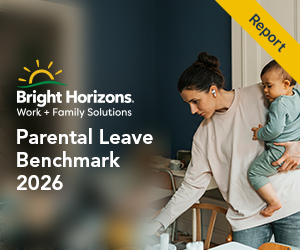
Enhanced parental leave is now standard practice, with most enhanced maternity policies offering at least 12 weeks’ full pay. Yet only half of parents say their return to work was easy, and the gap rarely starts with the policy itself.
Bright Horizons surveyed 250 UK employers and 620 recently returned parents to find out what shapes whether parents return, stay and thrive. The answer lies in what surrounds the policy: access, manager support, the return itself and how outcomes are measured.
The report’s benchmark tables show which practices most employers already have in place and which only a small minority offer, so you can see where your approach keeps pace and where it could lead.
What’s Inside:
The policy is only the starting point. The experience around it is what keeps parents.
Empowering employees with a clear view of their own career development and the skills to achieve personal career goals will help an organisation in a number of ways, including:
Greater engagement – an employee who has more appreciation of their professional path will have a higher engagement with their current role, understanding how it will contribute to their future success.
Better retention – when an organisation is seen to be actively supporting individual career management employees remain with the organisation for longer.
Improved wellbeing – having more clarity over where their career is going should decrease the level of stress that they feel over this area of their professional life. Reducing stress will contribute to a better level of wellbeing.
Increased performance – an employee who is actively managing their career will be more motivated and driven, this should manifest itself as more productivity day -to-day.
HR teams should be making sure that career management is an integral part of organisational culture and a core part of the employee experience.


