UK
UK  United States
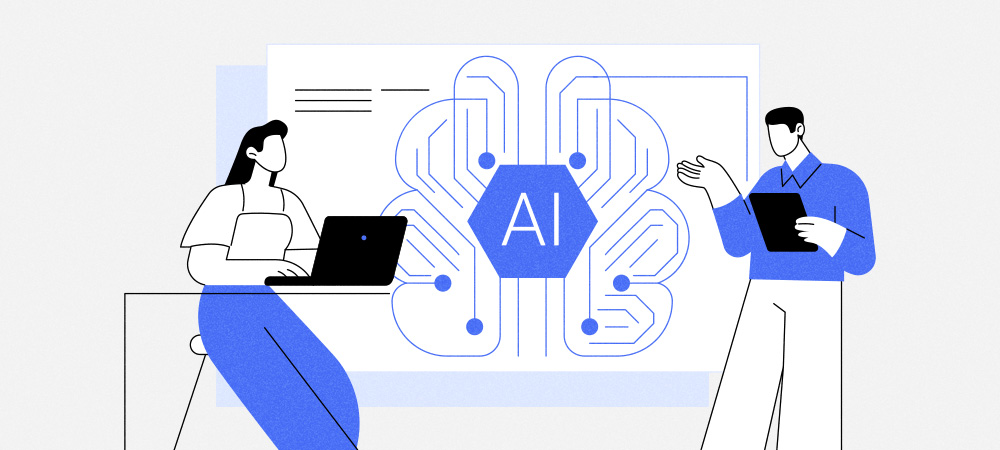
AI is the loudest conversation in every boardroom right now, but for HR leaders it lands differently than it does anywhere else in the business. They are not just rolling AI out - they are often the ones deciding how cautiously, quickly, and with what guardrails everyone else gets to use it too. We spoke to senior HR people leaders, across logistics, engineering, financial services, law and consumer goods, about what AI actually looks within their businesses and the picture that emerges is far less dramatic than "AI versus jobs”.
AI should provide the win-win

Emma Symons
MD of HR Services UK & Ireland, FedEx
Emma Symons, MD of HR Services UK & Ireland at FedEx, oversees a workforce of around 9,000 people, the majority of whom are frontline drivers and couriers rather than desk-based staff. For her, AI's value is inseparable from the realities of that workforce. "Everyone recognises that AI is the biggest talking point in HR and business at the moment and we want to embrace it. A big focus is how to do that, to make it really effective," she says.
But embracing AI, for Symons, does not mean replacing the basics that already work. "We have to be realistic - some of our people aren't sitting at desks all day. Traditional ways of communicating, such as notice boards, can be just as important and effective as an email." There's a desire to be futuristic by embracing all the technology when often the most traditional methods work really well.
Everyone recognises that AI is the biggest talking point in HR and business at the moment and we want to embrace it. A big focus is how to do that, to make it really effective
Her real test for any AI tool is whether it protects, rather than replaces, human contact. "We're very focused on ensuring our employees can pick up the phone and speak to a real person when they need to. Some of our staff have complex problems and they want to speak to someone. AI should provide the win-win - employees can access the information they need quickly and when they need further support, they can speak to a real person."
Augmentation, not replacement

Cherry Sheng
Head of HR for the Motion Business Area, ABB
Cherry Sheng, Head of HR for the Motion Business Area at ABB, puts the same idea more bluntly. She recently asked Abby, ABB's internal AI tool, what impact AI might have on the workforce. The answer: augmentation, not replacement. "The current news cycle is dominated by predictions of looming job losses due to the increased use of AI, so Abby's verdict seemed unusual. But it also happens to be true," she says.
Across ABB's engineering, accounting and customer service teams, Sheng has watched AI take on the repetitive load rather than the decision-making. Anomaly detection tools have cut manual fraud-check effort by roughly 90% in the accounts team, freeing people for judgement calls that machines can't make. In customer service, AI routes tickets and suggests responses, but doesn't have the final word.
We see that multi-generational teams are an asset in AI adoption, with younger colleagues bringing digital fluency and curiosity, and seasoned colleagues bringing experience and context. Together, they make better decisions than either group could make alone
She's also seen off a common assumption - that AI adoption splits teams along generational lines. "We see that multi-generational teams are an asset in AI adoption, with younger colleagues bringing digital fluency and curiosity, and seasoned colleagues bringing experience and context. Together, they make better decisions than either group could make alone." At ABB, that philosophy is captured in four guiding values - courage, care, curiosity and collaboration - that Sheng says keep the technology in service of people, rather than the other way round.