UK
UK  United States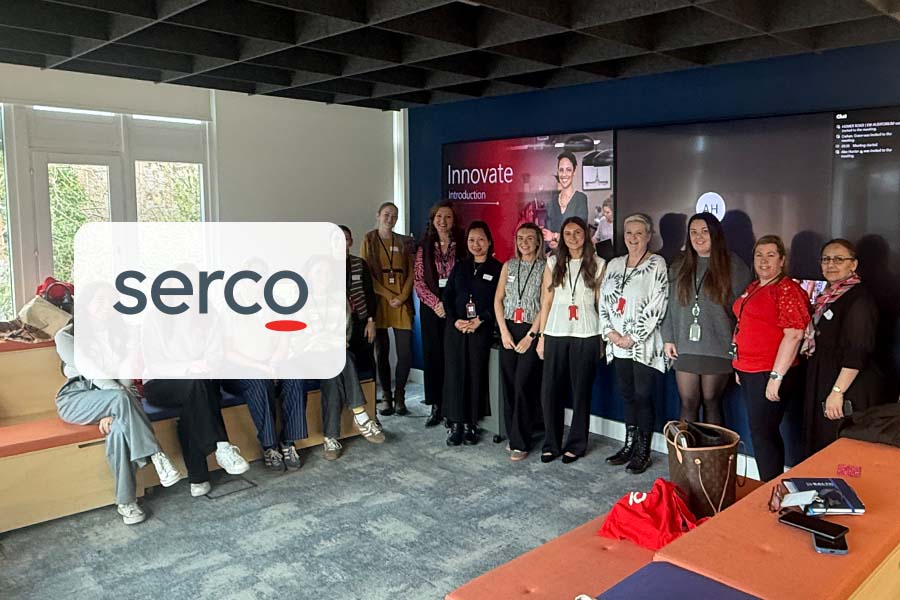
Serco – the multinational defence, health, space, justice, customer services and transportation business – is no stranger when it comes to supporting its 50,000 employees with apprenticeships.
Last year, the organisation – which overseas everything from multi-billion, multi-year engineering contracts with the Royal Navy, to border securities and immigration removal centres – funded hundreds of apprentices. In fact, it is so committed to the principle of apprenticeships that in 2025 it also gave 50% of its unspent apprenticeship levy money to help a further 54 SMEs fund a further 274 apprenticeships rather than give it back to The Treasury.
Recently, however, the business has begun to use apprenticeships to address an industry-wide problem it is impacted by – a lack of good female talent coming through the ranks. This was specifically tackled from a leadership perspective through a recent initiative called ‘Empower’, Serco’s women-only, Level 3 and 5 apprenticeships programme – which aims to identify more women leaders, and better formalise progression into higher-end roles and long-term career growth.
But earlier this year, its focus on supporting women was enhanced further, with the launch of ‘Innovate’ – Serco’s women-only Level 3 Data & Business Insights apprenticeship programme, delivered in partnership with Baltic Apprenticeships (which also developed the content for Empower).
Explaining the initiative is Karl Reed, SERCO’s Head of Apprenticeships:
“Empower was about changing the narrative of how females get into senior leadership,” he says. “But what Innovate is about is something much more fundamental – getting gender representation in technical roles improved and then building confidence and clearing progression barriers that still exist.”
Tackling low confidence
Like many organisations who operate in the data and technology space, Reed says the availability of good talent isn’t just affected by a shortage of skills, but also a lack of confidence amongst women, to actually put themselves forward into technology roles – often because they self-select themselves out of applying if they don’t think they are 100% suitable.
Says Reed: “We know there are women already in our business that are eminently suitable to transition into tech roles, but often they lack the confidence to put their names forward. What this apprenticeship does is seek to redress this, by demonstrating that they should raise their hands for development, and that there is a pathway at Serco for them if they want it.”
what Innovate is about is something much more fundamental – getting gender representation in technical roles improved
The journey to creating the scheme was in partnership with Baltic Apprenticeships
“Originally, the plan was to do some form of ‘technology boot-camp’ – where we and Baltic would run a full week’s worth of intensive tech development,” recalls Reed. “At that point (2024), it was also conceived of as being an external-looking event – targeting women in the local area that weren’t Serco employees.”
Over time though, the plan evolved, and Reed says he realised the learning should be an internally-focused initiative – aimed at existing staff. As such, the apprenticeship route – with learning happening over a longer period of time, with staff still able to do their existing job, was the natural progression.