UK
UK  United States

According to a recent Future CEO report by Livingston James, that surveyed business leaders across the country, just 3% of current CEOs come from an HR background – a figure statistically tied with technology for the lowest on the ladder. To put that in perspective, operations produces 35% of CEOs, commercial and sales 32%, and finance 19%. Separate studies have shown that more than half of FTSE 100 CEOs cut their teeth on P&L statements in finance.
So why are HR leaders being overlooked for the top job?
The 'soft skills' paradox
The same research indicates that nearly half (49%) of respondents now believe high emotional intelligence is a critical skill for a modern CEO – a figure far higher than in previous years. In an era defined by uncertainty, the ability to listen, coach, and navigate human complexity is no longer a 'soft' optional extra. It is a strategic asset.
Roisin Currie at Greggs is the archetype of this rare breed – a CEO who climbed through the ranks of HR. Yet, in the wider business landscape, she is treated as an anomaly.
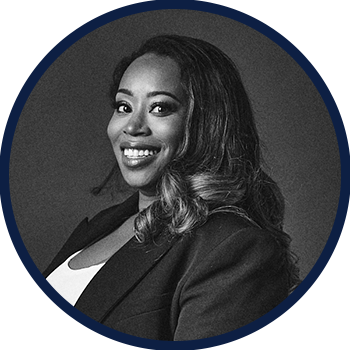
Amina Folarin
CEO of the UK Group at OLIVER
Amina Folarin, CEO of the UK Group at OLIVER, understands this contradiction intimately. "I started my career in HR at a time when it wasn't seen as a route to CEO," she says. "If anything, it was viewed as a support function, adjacent to the real business. So I understand why only 3% of CEOs come from an HR background. But that statistic says more about how organisations are structured than it does about capability."
Folarin acknowledges that her own path was not traditional. "My path to CEO of OLIVER UK wasn't traditional," she explains. "I had to step beyond HR into broader operational and commercial leadership, proving I could drive growth, lead transformation, and make high-stakes decisions. That shift isn't always available to HR leaders, and that's where the real issue lies."
"HR leaders possess skillsets that benefit a good CEO profile," she insists. "The best HR leaders operate at the heart of a business. They understand how to align people to strategy, build high-performing teams, and lead through change at scale. In today's environment, that is fundamental to performance."
Folarin says, "I've seen this first-hand.” Adding, "The difference between strategy and execution is the organisation you build to deliver it."
Regarding exceptions like Roisin Currie, Folarin rejects the notion that they are anomalies. "Leaders like Roisin Currie are often positioned as exceptions. I don't think they are. I think they are early indicators of where leadership is heading."
HR leaders possess skillsets that benefit a good CEO profile. The best HR leaders operate at the heart of a business. They understand how to align people to strategy, build high-performing teams, and lead through change at scale. In today's environment, that is fundamental to performance
She says, "As businesses navigate constant transformation, the CEO role is evolving. It is no longer just about financial stewardship. It is about building organisations that can adapt, perform, and sustain growth. HR-trained leaders are well equipped for that challenge. But they need the opportunity."
Her view is clear. "If we want to see more CEOs from HR, we need to give them real commercial accountability earlier. P&L ownership. Exposure to growth decisions. I'm a product of that shift. And I hope we'll see many more."
The 'inward-facing' trap
If the skills are so vital, why the disconnect? Simon Coops, CEO of Acuity Coaching, has a theory rooted in nearly two decades of data.
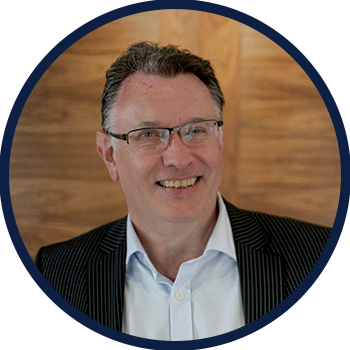
Simon Coops
CEO of Acuity Coaching
His firm produces thematic analyses of coaching objectives across major sectors, from financial services to technology. A consistent pattern emerges when comparing HR leaders to their peers in commercial or operational roles.
"Where the latter tend to anchor their coaching around enterprise-wide strategic influence, board-level credibility, and measurable business impact," Coops explains, "HR leaders disproportionately focus their development work on personal brand, voice and visibility in senior forums, and navigating career transitions."
He is careful not to diminish these priorities. "These are not small things," he adds. "But they are inward-facing in a way that CEO preparation is not."
Coops argues that this pattern reveals something fundamental about the professional formation HR creates. "The function builds people who are expert at developing others, expert at holding the culture, and expert at being indispensable to those at the top – all of which are admirable qualities that make a poor apprenticeship for the top job itself."