UK
UK  United States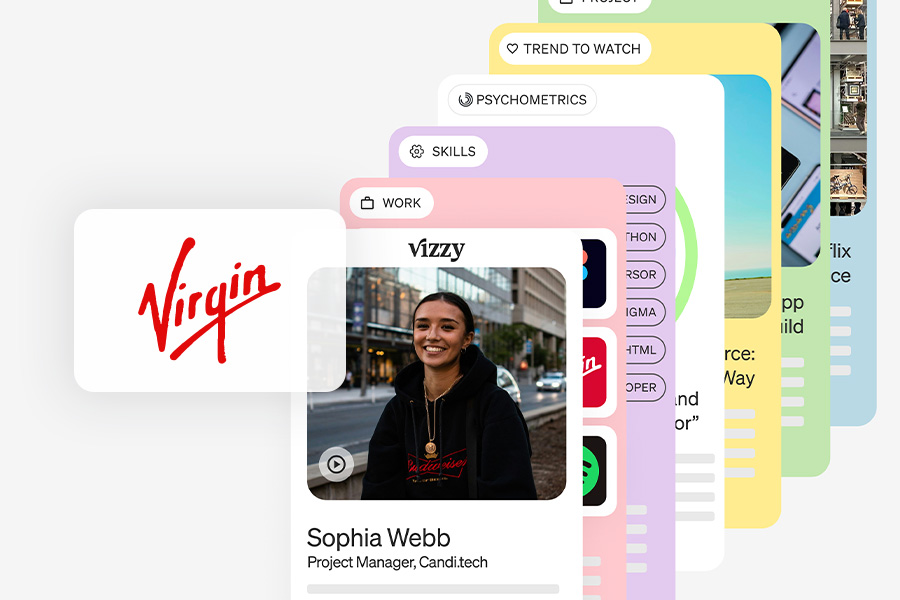
Last month, Denis Machuel, CEO of staffing group, Adecco Group, admitted that the average job seeker now has to send an average of 200 CVs out just to land a single job offer. It is a jobseekers market no more.
The only problem, however, is that the only way candidates can realistically do this is by (inevitably),turning to AI – and using it to fire off more applications faster.
But employers – and particularly Virgin, which prides itself in wanting to see people’s ‘real’ self – was finding that it was not impressed with this increasing copy-and-paste, scatter-and-hope approach.
“Here at Virgin, we pride ourselves in being forward-thinking about the way we do our recruitment,” says Sarah Lock, Recruitment & People Operations Lead at Virgin Group. “In this world of AI though, even 18 months ago, we were starting to find that CVs were coming in all looking the same.”
She continues: “We were getting an average of 230 CVs per advertised role. But from a candidate perspective we didn’t think people were necessarily being given the opportunity to shine. We felt something needed to be done about it.”
In this world of AI though we were starting to find that CVs were coming in all looking the same
In a moment of good timing though, just as Virgin was looking for a solution to this, came a meet-up with a relatively new called business called Vizzy. The business is the brains of co-founders Jess Woodward Jones and her brother Joe, the son and daughter of England Rugby World Cup Winning coach, Sir Clive Woodward.
Vizzy creates what Woodward Jones calls a much more modern digital profile of a person – a ‘Vizzy’ – which is far more graphical in nature, includes videos candidates might have done, and has the ability to be populated with other types of media.
“If a traditional CV and Pinterest had a baby, it would be a Vizzy,” says Woodward Jones, speaking to HR Grapevine.
“Candidates can create their basic profile, but then they can add handles from say Instatgram or other social media sites; have their own personal biography; add video, and basically add tonnes of other elements that really brings their former CV to life.” She adds: “There’s a section with their psychometric personality profile, and all-told, its very snackable for talent heads to then be able to look at and search through.”
Born out of a need for candidates to better showcase themselves
Vizzy was founded in 2020, when Joe Woodward lost his job during the Covid-19 pandemic, and he suddenly found that his own CV didn’t seem to be doing him justice. Says Woodward Jones: “He felt that if it was really difficult for him, even with several years’ experience under his belt, how hard must it be for young people to demonstrate who they are and what they can do without having a long job history behind them?”
If a traditional CV and Pinterest had a baby, it would be a Vizzy
Candidates can create their basic VIzzy by inputting all the detail from their existing CVs, but it really comes to life when they personalise it – perhaps by adding details of their side hustles, or answering specific questions (there is a template to choose from) with multi-media options. Employers, meanwhile, can customise what they want to see from a Vizzy (ie they can screen-out details such as age or education etc), and search against criteria they set, or even require candidates to answer specific questions just for them.
“Our concern was that the recruitment funnel was getting crazy at the top,” says Woodward Jones. “So this is where candidates are really able to stand out.”