UK
UK  United States

Leadership has been trending lately, but for all the wrong reasons. There was the cap-snatching CEO at the US Open, Nestlé CEO’s jilted mistress, and Coldplaygate.
Then there was the UK Deputy Prime Minister's underpaid tax and endless questions over Nigel Farage's financial dealings. And all this against the backdrop of one of the world's biggest stories being efforts to uncover the truth about sex parties for the rich and famous. Seems there’s been no end to the scandals.
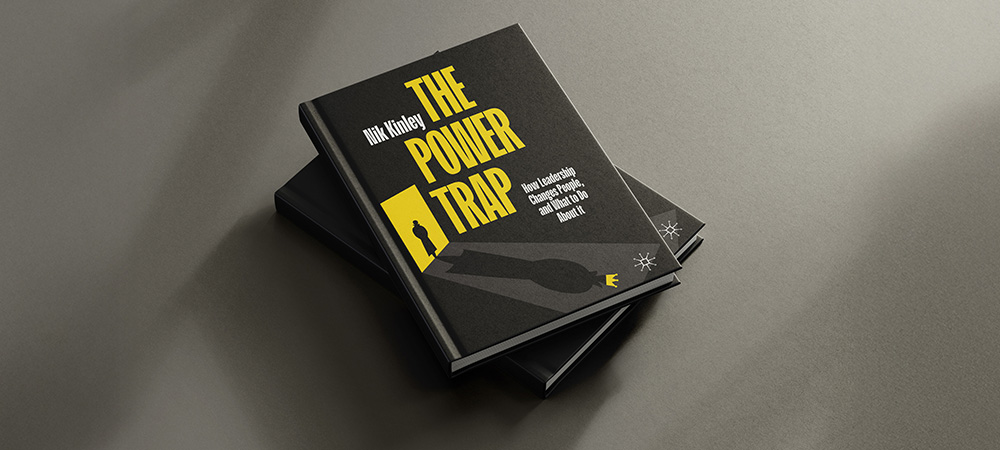
But why do so many leaders get caught doing wrong? Nik Kinley, author of The Power Trap: How Leadership Changes People and What to Do About It says the answer is all about power.
Power taints leaders
“Every leadership role contains an element of power, and every leader is affected by it to some degree. Over the past 50 years, researchers have uncovered a range of such effects, from altering attitudes to risk to increasing susceptibility to thinking biases and heightening insecurities. But there are three consistent findings about power that can make leaders more likely to engage in bad or inappropriate behaviour,” he says. They are:
1. Power makes us more disinhibited. We become more driven by what's inside us than by what's happening around us, and more likely to act on what we truly think and feel. Some of the consequences of this are innocuous. Powerholders are more likely to smile if they are feeling happy and tend to laugh louder than those without power. But they're also more likely to express negative emotions, and whatever they're feeling, their decision-making and behaviour is more likely to be influenced by their sentiments.
2. Power makes us more selfish. We become more likely to be led by what we want and to prioritise personal goals over group, team, or company ones.
3. Power makes us more likely to take risks. More influenced by our desires and passions, we become more prone to taking risks based on them. Which is part of why powerholders are more likely to engage in both unprotected sex and, yes, infidelity. And though this seems to be truer for men than women, leaders of both genders are affected.

Kinley explains, “These aren't just the findings of one or two studies, either, but the well-documented consensus of a whole field of research. Not all of power's effects on leaders are negative, of course, and not every leader will be affected to the same extent. Being the boss doesn't automatically make you a disinhibited, selfish, risk-taker. Instead, how you are affected is the result of a complex combination of personal and situational factors.”
He continues, “But whatever your inner character and values, the more power you have and the longer you have it, the more likely you are to be negatively influenced by the power you hold. Which is a key part of why we keep encountering stories of yet another leader, politician or celebrity who has acted in some inappropriate or scandalous way. Because power both makes them more likely to act on impulses and desires, while also giving them more opportunities to do so.”
Leaders are failing to invest in relationships
Simon Phillips an internationally recognised leadership expert, award-winning trainer, and creator of the revolutionary LACE Framework (Listening, Accountability, Collaboration, Empathy) says the mistake that leaders are making is trading genuine connection for performance. “For example, the desire to go viral on LinkedIn as a leadership expert becomes a higher priority than building genuine relationships within the workplace.”

Phillips believes that leadership has been over-engineered and this is partly to blame. “We've turned what should be a simple act of human connection into a complex business strategy with dreaded buzzwords and acronyms. Look at the rise of the 'C-suite' leader who's supposed to be a visionary, a coach, a therapist, and an analyst all at once.
It's not sustainable and it's not relatable. People don't follow titles; they follow people who inspire them and treat them with respect. The real reason these trends miss the mark is that they try to put a sophisticated label on a very simple, old-school idea: that leadership is about being a good human.”
Whatever your inner character and values, the more power you have and the longer you have it, the more likely you are to be negatively influenced by the power you hold. Which is a key part of why we keep encountering stories of yet another leader, politician or celebrity who has acted in some inappropriate or scandalous way
Phillips advises leaders to cut through the noise and ditch the tendency to lean into the pressure of marketing. “Leadership isn't about trending hashtags. It's about truly listening, creating accountability that breathes, fostering collaboration that feels like oxygen, and leading with an empathy so real it makes spreadsheets look pale. My advice: Stop trying to be the leader everyone talks about. Start being the leader everyone trusts.”

It's a point that Anne Williams, Head of Professional Development at Benenden School agrees with – she sees this very much in the context of a digital landscape that is shaping future leadership. “As the emergence of AI impacts the ways that we work and algorithms increasingly influence the way that information travels, the need for clear leadership, which is ethical, inspiring, and inclusive grows."
She continues, “Hybrid working is moving us towards a world where outcomes are in sharp focus and leaders are less ‘managers’ of the way that people work and more leaders creating a culture where innovation thrives and continuing professional development is the norm.”
Empathetic leadership is needed
Creating the right culture can stem in part by building good relationships and that in turn comes from applying empathy.
Jeremy Stockdale, Founder of Ylead says that click-bait headlines about leadership in the gutter doesn’t help. “Instead of headlines celebrating innovation, inspiration, or people-centric cultures, we hear stories of burnout, toxic workplaces and leaders who talk a good game about purpose and values but don’t embed them into daily action. Once we add back the tendency to over-emphasise short-term results over long-term vision and the perception of leadership starts to feel hollow. It creates mistrust, cynicism and leaves people questioning whether leaders today are truly equipped to meet the demands of an increasingly fast-changing world. We need and deserve better leaders: people, organisations, and society.”
The desire to go viral on LinkedIn as a leadership expert becomes a higher priority than building genuine relationships within the workplace