USA
USA  United Kingdom
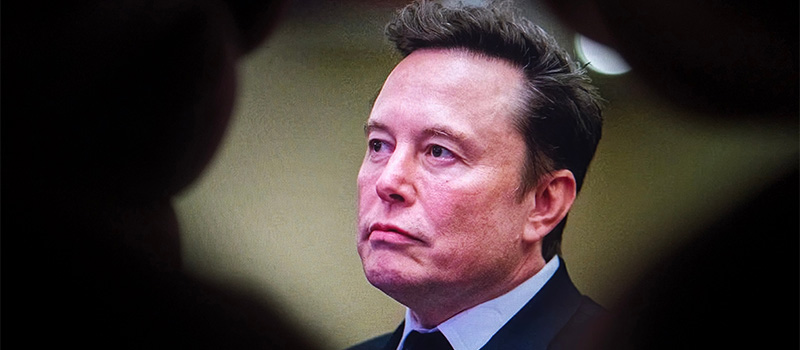
Elon Musk has joined the debate around current hiring practices, questioning whether resumes and cover letters are still worth the time for recruiters and candidates alike.
Instead of the traditional approach, Musk (like many) insists that skills-based hiring is what is now needed, asking applicants to distil their experience into something more tangible than a mere list of job titles.
To be considered for roles on Tesla’s AI5 chip design team, for instance, candidates are told to submit “3 bullet points on the toughest technical problems you’ve solved,” Musk wrote in a post on X.
Skills-first hiring gains traction
TestGorilla’s 2025 The State of Skills-based Hiring report found that 69% of employers now include soft skill evaluations in their hiring processes, with 60% acknowledging a growing emphasis on those traits over the past five years.
Some 85% of employers now use skills-based hiring methods, up from 56 per cent in 2022, and the same proportion (85%) of employers were satisfied with hires made in the last 12 months, with higher satisfaction (89%) among those using skills tests.
Additionally, employers said skills tests reduced hiring costs (57%) and mis-hires (66%) and improved retention (62%).
Wouter Durville, CEO and co-founder of TestGorilla, said: “In a hiring landscape shaped by uncertainty and rapid change, traditional signals such as CVs, degrees and gut instinct no longer cut it. Employers are under pressure to close skills gaps while making fewer, more strategic hires.
Musk’s own hiring philosophy backs that shift.
“The résumé may seem very impressive,” Musk said. “But if the conversation after 20 minutes is not ‘Wow,’ you should believe the conversation, not the paper.”
AI and the resume problem
AI is accelerating concerns that resumes no longer differentiate candidates in any meaningful way. As tools improve, applicants can refine their documents to near perfection, creating a uniformity that complicates decision-making for recruiters.
“AI is killing the résumé and the résumé has been bad for a long time, but AI makes it so much worse,” hiring expert Dr. John Sullivan told Fortune. “When every résumé is perfect, has no spelling errors, flaws of any kind, imagine how many you have to sort in order to determine who you’re going to interview.”
$55bn | Court restores Elon Musk pay package after Tesla appeal
While AI has made it easier for candidates to present themselves, it has also increased the burden on hiring teams tasked with filtering applications that now appear equally strong on paper.
“There’s just no correlation between a great résumé and being good on the job,” Sullivan said.
That disconnect becomes more pronounced when considering how top performers behave in the labor market.
“Top-tier employees are often so busy performing high-level work that they don’t have the time or the need to look for a job or update their career materials,” Sullivan said.
Which creates a huge problem in the so-called war for talent. If the best candidates are the least likely to produce polished resumes, then traditional hiring filters may be excluding the very talent organizations are trying to attract.
As AI continues to reshape what candidates can produce in the application process, the emphasis is shifting toward assessments that are harder to fabricate and easier to assess.
The growing adoption of skills-based hiring suggests that shift is already well underway, and that the traditional approach to the application process may already be redundant.