USA
USA  United Kingdom
The DEI backlash is not subtle. Which is exactly the intention. It’s aggressive, uncompromising, far-reaching and, despite the rather optimistic view to the contrary, is no mere aberration.
It’s legal, political, and cultural - and it’s forcing leaders to rethink what inclusion means in practice.
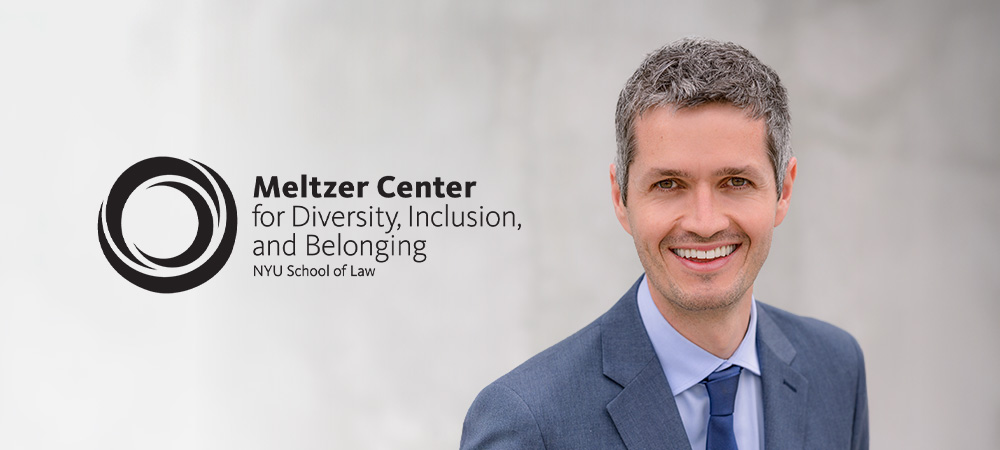
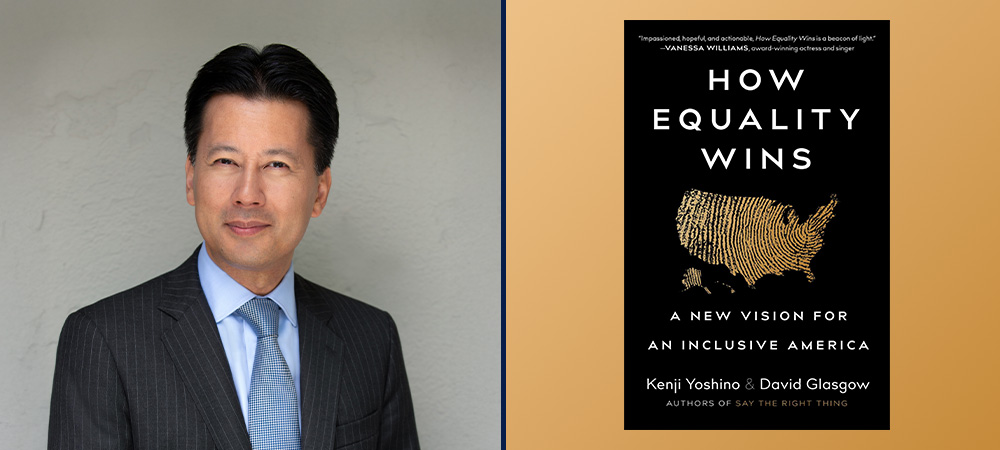
David Glasgow, co-author alongside Kenji Yoshino of the newly released book How Equality Wins: A New Vision for an Inclusive America, argues that the project of equality is far from over – but it’s in desperate need of a survival plan. And that survival plan starts with understanding what’s really happening.
“This is a pretty common cycle in US history of progress and backlash,” says Glasgow.
“The historian Carol Anderson wrote a book called White Rage, where she makes the argument that throughout American history, every period of progress or advancement for black individuals in the US has been met with a ferocious backlash.
“This very much fits that pattern where there was this moment after the murder of George Floyd in 2020 where organizations were tripping over each other to prove that they cared about DEI and investing in this work heavily. And that, of course, then planted the seeds of a backlash that we're now experiencing a few years later. So part of it is just culturally cyclical, I think. But another big important piece of it is the role of the Supreme Court in the United States.”
We urge what we call a shift from lifting to levelling
That legal dimension, he says, cannot be overstated and ensures that the laws around DEI that are being changed during this period are not simply going to revert once Trump is gone.
“In 2023, the Supreme Court handed down a decision in the case of Students Affair Admissions versus Harvard, which is the case that effectively ended affirmative action in higher education in the US. And that decision catalysed the now hundreds of lawsuits challenging diversity programmes inside the public and private sector in the United States.
Seven strategies to find the middle ground
Glasgow and Yoshino have authored a seven point plan to rebrand DEI, avoid polarised debate and move the intention from lifting to levelling...
- Reveal the stakes of the debate by exposing the weakness of anti-DEI arguments, such as their failure to acknowledge ongoing inequality.
- Support dissent within the pro-equality coalition by allowing for reasonable differences of opinion and withholding judgment rather than rigidly enforcing orthodoxy—for example, including those who endorse some, but not all, progressive causes.
- Welcome new groups into the pro-equality tent, including groups with existing legal protections that are not robustly enforced, such as the disabled and the elderly; groups that are in most respects dominant but nevertheless have fallen behind in certain areas—for example, men earning college degrees; and groups that have not been widely recognized for DEI purposes, such as people from lower socioeconomic backgrounds.
- Level the playing field by shifting from “lifting” approaches that give preference to disadvantaged groups to “leveling” strategies that use identity-neutral practices to even out the playing field for all.
- Embrace the universal by working to include everyone in equality programs rather than limiting them to certain groups.
- Reclaim the notion of merit from DEI opponents by pointing out that true meritocracy should encompass a variety of backgrounds.
- Highlight the risks of retreat from the ideals of equality, such as the threat of discrimination lawsuits and a negative reputation.
You can order a copy of How Equality Wins: A New Vision for an Inclusive America here
“So over the past few years, there's been this tremendous upsurge in those lawsuits, which we monitor actually out of the Meltzer Center.
“And that legal dimension has, I think, contributed tremendously to the backlash. I still hear this idea that everything was kind of chugging along fine, and then Trump came into office again for the second time, and he was the one who came in and attacked DEI. And of course he did. The administration has poured fuel on the fire, but that fire was raging even before the fuel was poured on it by Trump.”
The point, in other words, is that this is not just a political mood swing. It is structural. It is judicial. And it is reshaping how organizations think about risk.
Strategic hibernation or fundamental shift?
Inside companies, the question now is whether this is a temporary freeze or something deeper. And let’s be honest, whilst some companies might, on the surface, be oppositional to the changes that are happening, there are many that are merely playing lip service to that and secretly OK with the fact that they can save money and time on scaling back DEI roles and the programs and initiatives associated with them.
They are part of a cohort that isn’t exactly putting up much of a fight against what’s happening.
Then there are others that are optimistically hoping that once Trump leaves the White House everything will revert back to how it was before. Glasgow thinks that might be so much wishful thinking.
“There's an active debate within the DEI community on exactly that subject," he says.
“I've heard the term 'strategic hibernation' used. People are hiding in their bunkers for now and hoping that a few years from now, they'll be able to come out of the bunker, and the storm will have passed. I had another person put it to me that she thinks that there's a lot of pent up energy that will get released when the administration changes. I don't buy that narrative, to be honest. I think there has been a more fundamental shift. And the reason for that is that I think organizational leaders now know that they are only ever one election away from a complete wipe out of their programs all over again.
“They don't want to go back to how things were before. And I think the more sophisticated organizations understand that. This doesn't just depend on who's in power politically because of the Supreme Court. There's going to be a conservative majority Supreme Court for the foreseeable future, at least for this generation. So they have to contend with that as well.”
From lifting to levelling
That fragile sense of jeopardy - of being “one election away” from having to tear it all down again - changes executive behavior. The survival plan, then, isn’t about doubling down. It’s about recalibrating. And part of that recalibration is philosophical.
“One of them is that we urge what we call a shift from lifting to levelling. Meaning, historically, certain DEI practises involved trying to give a bump or a preference to people from historically marginalised groups. So you might put a thumb on the scale in order to advance women or people of colour in the workplace. And of course that created this sense among the people who are not getting that bump or preference that this is all unfair and this is discriminatory against white people or discriminatory against men.
"So, we urge a shift toward what we call levelling practices, which is instead of giving a bump or a preference, just make sure that the actual systems that you're implementing in the workplace, whether it's recruitment or promotion or performance evaluation or whatever it might be, make sure that those systems are absolutely fair and create equal opportunity in the way that they're implemented.”
It’s a reframing of the argument to make it less about advantage and more about fairness being baked into systems. Less visible preference, more structural integrity.
He also advocates another pivot.
“The other shift that we recommend is to do what we call moving from cohorts to content. A lot of organizations would have, say, scholarships, grants, fellowships, internships, mentorship programs, and they would target that programme just to members of a particular community and say, this is programme is for people of color, this programme is for women or what have you.
“If you shift from cohorts to content, meaning you retain the theme of the program, but you allow people of any demographic cohort to apply and participate in that program, that can also reduce some of the backlash, because then if you're allowed to to join in and no one is excluded, then it's a little bit harder to convincingly make the narrative that this is unfair anti-white discrimination.”
This is not the first time that the US has experienced this kind of cultural narrative around anti-white discrimination
Which brings us to the narrative itself.
“The thing is, this narrative has been around for a very long time. In the 1980s, under the Reagan administration in the US, there was a backlash to affirmative action because of concerns about so-called reverse racism against white people. So, this is not the first time that the United States has experienced this kind of cultural narrative around anti-white discrimination. But I think it's become particularly ferocious lately.”
A stable equilibrium for inclusion
And yet, despite the noise, Glasgow believes the work will survive - just in an altered form.
“I think what's going to happen is the work is going to have to evolve in a way that allows people to find some kind of stable equilibrium. So maybe they're not going to be as dramatic or push as hard as they did in 2020. But there are a lot of people that are still fundamentally committed to values like fairness and inclusion in the workplace.
I think the...idea that you should do something...to create an environment where you get the best out of people is going to survive
“I think the fundamental idea that you should do something proactive in the workplace to create an environment where you get the best out of people - that kind of an idea is going to survive.”
That survival, he suggests, will be quieter, more embedded and perhaps less obviously branded.
“I think the organizations that have laid off their whole DEI team and shuttered budgets for these programs. I mean, if you're going to want to do those again, then you're going to have to find the money somehow or hire new people. I suspect part of what's going to happen is that the organisations that really want to do this work well are going to try to find ways of embedding these issues into the system so that it's not just the responsibility of one individual or one team, but it's something that kind of everyone is responsible for thinking about how to embed inclusion into their own sort of talent management systems or whatever it might be that they're responsible for.”
And appearances, as he warns, and we all know, can be deceptive.
“One thing I'll just mention is that it may look from the outside like all these companies are just getting rid of it all. There's a lot of people where their job title is no longer Chief Diversity Officer. It might be Chief Culture Officer or Chief Belonging Officer or something like that. But, you know, they're still doing a lot of the work that they were doing before.
"So, I think if there is this great thought, which as I said, I'm a little sceptical of, I think it wouldn't be quite as hard as perhaps you might think for companies to do it because there's a lot of them still have people working on it. Just.”
“They're doing it in a careful way that's not attracting attention, but they're still doing it.”
In that carefulness lies the survival plan. Not a retreat. Not a surrender. But an adaptation away from slogans and toward systems.