USA
USA  United Kingdom

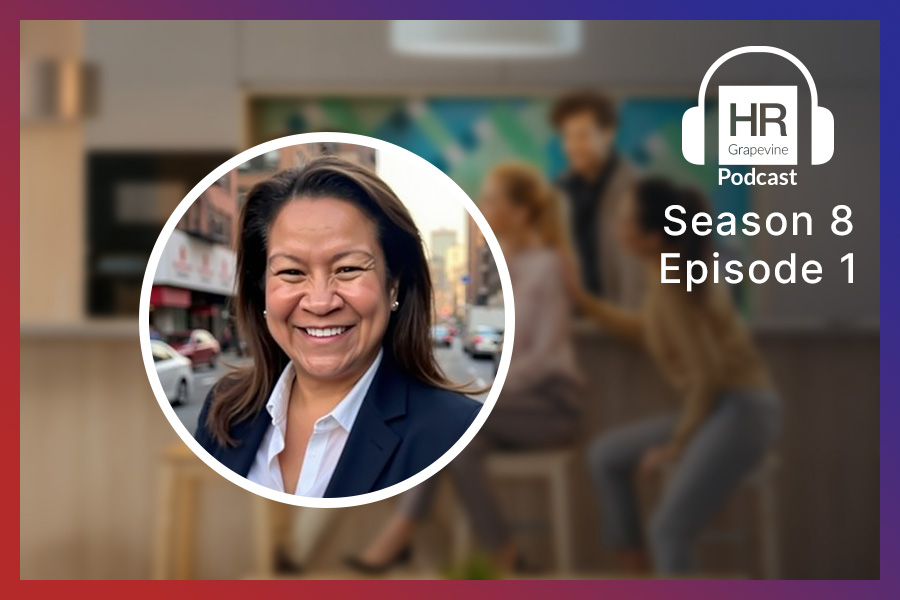
As Global Director of Inclusiveness at EY, Andrea Ramsey is responsible for strengthening belonging, effectiveness, and performance for 400,000 employees across more than 150 countries.
In 21 years at the firm leading those efforts, her extensive (and successful) programs have driven best-in-class practices, including the creation of the EY Global Inclusiveness Steering Committee and a major focus on building socio-economic mobility.
Ramsey joins the HR Grapevine podcast to discuss how EY has embraced the power of storytelling to drive belonging, through a campaign showcasing real employee stories of career progression – and reveals findings from the firm’s latest Belonging Barometer.
Host: Hello everyone, and welcome back to another episode of the HR Grapevine podcast. I'm your host, Benjamin Broomfield, head of content for HR Grapevine, and I'm joined today by Andrea Ramsey, Global Director of Inclusiveness at EY, where she leads innovations that strengthen belonging, effectiveness and performance across a diverse workforce of four hundred thousand people in over one hundred and fifty countries. With twenty one years of experience at EY, Andrea has been instrumental in shaping talent, culture and inclusiveness practices through regional and global roles in organization, effectiveness and inclusiveness. Andrea has led significant initiatives to accelerate inclusiveness for everyone at EY Including serving as a key driver of the EY Global Inclusiveness Steering Committee, chaired by the global chair and CEO and spearheading socioeconomic inclusion and belonging initiatives. Today, we'll be discussing why belonging and inclusion are so important to EY, e how the company is addressing the belonging paradox internally through storytelling initiatives and all in moments, plus a deeper examination of efforts to build inclusiveness across socio economic backgrounds. A very warm welcome to you, Andrea, and thank you for joining us today. Sounds like it's going to be a great episode.
Guest: Thank you. Thanks for having me on. I'm really looking forward to this conversation.
Host: Fantastic. Well, perhaps we can kick off with a bit of an overview from your end really on why belonging and inclusiveness are so important to EY, and how those concepts shape your success as a firm.
Guest: Absolutely. So in the context of work. Research shows something that I think is also probably quite intuitive to any of us who have worked ever in our lives, which is when we feel like we belong. We're more productive, motivated, engaged, and in fact, three and a half times more likely to contribute our full innovative potential to our organisation as well. And our recent survey that we conducted showed that belonging has emerged as one of the strongest drivers of employee experience. And according to our Global Belonging Barometer four point zero, work is where people feel the strongest sense of belonging, second only to home, which I find incredibly surprising. This is over. Places of worship. This is over their neighborhood. So this is a really important place for people to feel a sense of belonging. And what we found is that has increased six percent in the past two years. So that tells us that belonging is both a growing expectation of workers and also a driver of business results. So boosting belonging has benefits for every business, including ours at. So then the question becomes how do we build a sense of belonging for everyone? And as you mentioned in the intro, we are an organization of four hundred thousand people across generations, one hundred and fifty countries and territories. So for us, inclusiveness is the gateway to feeling connected and a sense of belonging. So that means inclusiveness for our business is a long standing priority. It's core to our values and our business strategy. And at EY, it's about all of us. That means all voices, all experiences, all backgrounds are part of our inclusiveness focus because we believe that an inclusive culture helps us attract, retain and develop top talent globally. And we're not alone in that. We did a global study previously that showed that three quarters of global workers said that they will prioritize companies who champion inclusion. So in terms of where people are choosing to work or choosing to stay to work, Belonging and inclusion are incredibly powerful tools.
Host: Absolutely. And those are a couple of really great insights you picked out from the barometer survey. I've read all four of the ones that have come out, and they're really useful tools. I definitely recommend for anyone listening to this episode. If you haven't taken a look to go through and have a review of some of the findings, and we can include a link to it in the description of the episode as well. But there's an area as well that I'm definitely keen to get your thoughts on that. We spoke about for the episode, this concept of the belonging paradox and how that plays out within the organisation. Maybe you can take us through what the paradox is and how it plays out in organisations.
Guest: Absolutely. So something else that this study uncovered is this paradox that in what is a hyper connected world, employees are feeling more disconnected. And this is especially true for younger generations. Generation Z is feeling the most disconnected of all, which might be surprising considering how natively connected they are through technology. And so we took a deeper look through the survey into what does this actually mean for people. And we found that despite access to technology and digital tools, eighty five percent of people say they feel excluded at work. And again, this is up from two years ago ten percent. And what I found most surprising out of all the results is that over half of Gen Z and millennials that responded to the survey said they regularly go a full workday without a real time conversation. Like that was just mind blowing to me, to think that you can make it through an entire workday and never actually have a conversation with another person. And the younger generation, again, is connecting almost two times less than Gen X and boomers. So there's a really different experience around connection that's happening in the workplace for a lot of people right now. So when we think about this kind of rising workplace isolation and the impact of that, you know, feeling disconnected or excluded or lonely at work, it's not surprising that we also found that it shapes how people are showing up at work as well. So we found that almost sixty percent of people said they feel uncomfortable sharing some aspects of themselves at work. And again, Gen Z is more impacted by this as well and feels less comfortable sharing aspects of themselves at work. And you know, when we were talking about this, you know, in our own organization, we said, look, no one joins a team to work alone, right? So it tells us that what we need to focus on is this is about feeling connected, not just being connected. And it underscores, I think, the need for organizations to create inclusive cultures where there's real, genuine spaces for connection and kind of cultivating that sense of belonging for everyone as well.
Host: Fantastic. Well, over the course of the episode today, we're going to be diving into a couple of the challenges and ways that organizations can address that paradox and more broadly, continue to develop their belonging and inclusion programs. Obviously, across the over twenty years that you've been you've been at EY, I'm sure there's been a lot of different programs, policies, efforts that you've put in place there. But I think if there's one thing that we know and that we see through things like the belonging barometer is that this is an ongoing effort, there are challenges that pop up and change all the time. It's something that has to be continually addressed. But today, one of the areas we're going to be looking at is the role that storytelling initiatives can play. And these all in moments that you've created at EY. So perhaps you could talk us through how you address the belonging paradox or just sort of more broadly, work through driving some of these efforts around creating that feeling of belonging, that feeling of inclusion within the workplace through storytelling.
Guest: Absolutely. So I'll start actually with another really interesting survey insight that we found, because I think that helps speak to why we do some of these initiatives that we do. One of the things that we also found is that people reported that the ability to share ideas, admit mistakes, and express concerns without fear on their teams and in their organizations. We would call this psychological safety is a top driver of belonging. So this gives us a real pathway to being able to impact people's sense of belonging. And with that, let me start with all in moments because this is exactly what this is for. So this is a simple and powerful way that some of our teams are building psychological safety and boosting belonging by making sure that all voices are heard and valued on their teams. And maybe I'll ask you to take a guess here of where? What the place is that you think this happens? I'll give you a couple of clues. So it's a place that shapes a lot of our day to day experiences at work. For many of us, it's a place where we spend lots of time. Where do you think, uh, this all these all in moments might happen?
Host: Oh, I mean, I think maybe one of my guesses might be sort of, uh, you know, a team meeting if we're going a bit more conceptual. But I guess if it's...
Guest: Yes. Yes, that's exactly right. Meeting. So everybody, I feel like all the listeners are gonna be like, oh, meetings. Right. But I think, you know, when we think about meetings, we do spend a lot of time in them. They do shape a lot of our experiences. I think we can all, you know, reflect and think about a meeting where we felt really good, where we felt like, you know, we were asked for our input, you know, it was listened to. We were able to build on each other's ideas. And then we also have those examples of meetings where we, you know, close the meeting window or we walk out of the room and we think, why was I even there? Did it even matter? And so we really took that to say, okay, practically, what can this look like? So let me share a few examples of what these all in moments can look like. So it might look like inviting more voices into the conversation. And that might be prompting those who may share less often, who may be less likely to speak up, who may need to be invited to actually contribute their idea. This might be people at more junior levels, right? We're hearing this this disconnect around Gen Zs and such. It might be people who are newer to the team and don't exactly understand the dynamics and kind of need that prompting to be able to know that this is a place where people really do want to hear what they have to say and value them. It might look like asking, who have we not heard from yet, right? Just to make sure no one is missed in the room or what would someone say who doesn't agree with us on this solution or this idea that we're talking about? And it can look like thanking people who raise a different point of view, even a dissenting point of view on something to really be explicit that that's valued and it's a safe place to do that. And what we found is this is really great because it gives teams a lot of flexibility. It's not super prescriptive, but it's very specific and practical, and it offers consistent results. So we have many teams that are doing this. We have surveyed teams that have been doing this, and we found a few things that are coming through very consistently. First of all, people are saying our meetings are more effective and productive. That's fantastic for a business. They're also saying personally that they feel more valued as individuals and they feel a greater sense of belonging. So it checks those on the personal side and that impact as well. So it's really a lot of bang for the buck, and it's something that teams can start doing immediately. It doesn't take a lot of learning, it doesn't take a lot of uptick. And also many people on the team can do it. It doesn't just have to be generated by the most senior person or the team leader to be able to prompt with some of these questions or comments. Storytelling. Let's jump to that. So storytelling is a really important tool for us in our work. And part of that is because as much as we love facts and data as EY We know that stories are twenty two times more memorable than facts. So it's been a really powerful way to offer insights into other people's experiences, to go beyond sharing the facts, to be able to bridge people together and create stronger connections. So we've filmed many people at EY Over the years talking about their own stories, in their own words, their own voices talking about both their personal and their career experiences. And we find that there's a lot of engagement around this. Um, it sparks conversations. There's a lot of aha moments, and people are able to connect with this in a really kind of human and personal way that speaks to things like belonging and inclusiveness in ways that really resonate with people and also around the world. These cross borders too, which is a really powerful thing for those of us in global organizations trying to find ways to engage people around these topics in different countries and cultural contexts, too.
Host: Fantastic. Well, maybe we can dive into to a bit of a specific example, and it was the era that I discussed at the top of the episode, this concept, obviously, of socioeconomic inclusion being something that's really important that e as, as a part of your approach to, to ensuring that all people across the world feel, feel that sense of inclusion and belonging. How does storytelling help you drive progress in that area, and perhaps you can talk a bit more about those efforts to drive socioeconomic inclusion at EY too.
Guest: Yeah, absolutely. So we talked a little bit about the importance of people feeling free to be themselves and feeling the sense of belonging and the belonging barometer. Four point zero uncovered another paradox, which is that while people experience the greatest sense of belonging at work, second only to home, more than half of them are uncomfortable sharing aspects of themselves, in particular socioeconomic background. And so at EY We believe that top talent exists everywhere, and the diversity of our people from across different backgrounds and experiences and skills is our reality, and it's our strength and socioeconomic background. Diversity is a part of that. And it's something that, from the survey results, we realize can be overlooked in organizations. And so we took the storytelling approach. We produced a suite of films of people from different socioeconomic backgrounds and ask them to share their stories authentically, in their own words, about how their socioeconomic background has shaped their experiences at work, and also offering some things that positively impacted them. Things that colleagues did, leaders did that actually helped them strengthen their sense of belonging and inclusiveness at work. These films moved. They became the most watched, shared, and discussed videos that we've seen at EY. In the first few weeks. There were records that were broken for, you know, talent focused campaigns, including externally on social media with over a million impressions. So, you know, what that told us is we've hit on something that's resonating with people, that's meaningful for people. And beyond the buzz of that, what we also heard was, this really makes me feel seen. This helped me understand what it might be like for people who are the first in their family to travel abroad, or to build a professional network, or who have built their skills and their capacity for learning through less traditional pathways. It normalised sharing about your experience, regardless of your background and that kind of unlocked and opened up support networks for people. People were more open about being asked questions. People were also more openly sharing advice on what to expect or how to navigate a challenging situation. And so the results of this, the types of behaviours that kind of were spurred by the engagement around this, are things that actually benefit everybody in the organisation and everyone on teams. And the people who told these stories are now role models and have been an inspiration, so that more and more people are telling their stories in the organization to their teams and in different forums and mediums.
Host: Absolutely. And we will definitely include a link in the description of the episode, some of those videos as well. Having watched a few of them before we recorded this episode, and yeah, they're just brilliant and really recommend anyone who, even if you don't work for a while just to go in and have and have a bit of a look through and hopefully take some inspiration away as well. Beyond the storytelling, obviously you outlined how impactful that has been. Are there any other steps that you've taken to invest or improve in, in just driving that socioeconomic mobility and inclusion across the organization?
Guest: Sure. I'll talk about two that I feel are kind of cornerstones of this focus on inclusion and belonging. At EY, we say inclusiveness is for everyone. It's about everyone and it takes everyone. So we know inclusion and belonging are built in the everyday moments, not just policies. So we invest in people developing skills to be inclusive Leaders because our people are the ones that are shaping the everyday moments. And so we offer a suite of learnings around inclusive leadership that are available to all people, all ranks, all geographies, wherever you sit. If you're part of EY. These are open and you have access to those. And our newest learning that we've just recently launched is around socioeconomic inclusion. And it leverages some of these stories and some of the real life examples that we heard from our own people, so that we're able to pick up practical tips, things that really work in the context of our organization. The second thing is our E global Inclusiveness Steering committee. And this has really been an engine for progress for us. And I think I can hear the sighs again. Oh, a committee right. There's a few things that make this committee really effective and a real driver of progress for us. The first is it's co-chaired by our EY Global Chairman and CEO. And it is built with members drawn from leadership across our global organization. So across parts of our business, across different countries and geographies, and they all bring their own perspectives from the business, from their cultural context, from the people who work in their markets to this committee and serve as our think and action tank. So their charge is really to bring our strategy to life. And to do that we explore challenges. We highlight success practices and then we collaborate on meaningful solutions. So what that means practically, is that this Global Inclusiveness Steering Committee is the group that has sponsored, championed, tested and then amplified the very things we're talking about, but focus on belonging, storytelling, socioeconomic inclusion all in moments. They help build these things and then move them throughout the organization so that they really do come to life.
Host: Fantastic. And you touched on a really important part there that maybe is a good place for us to sort of wrap up this episode, which is the role that leadership play within this, this type of effort. Obviously, having that that buy in, that sponsorship from the CEO, being a part of the Global Inclusiveness Committee is, is amazing. And I think when you can get that support not just from the CEO, but from leadership, pockets of leadership across the organization, that's certainly going to create a lot more momentum behind any of these programs. So I suppose, is there any other advice or guidance or any reflections you have on how we, as leaders have supported all of all of these efforts around the storytelling, around your efforts to drive inclusion and belonging at EY and the role that leaders play in any guidance you would you would give to our listeners as well?
Guest: Yeah, absolutely. So first, you know that that CEO involvement at tone at the top is really important. I will say also, our highest global management body, which we call our global executive has made a collective commitment to inclusiveness. They've all personally signed on to that. So, you know, that is a really important anchor. But again, we have four hundred thousand people and it's a huge organization. And so, you know, the way that we think about leadership in our organization is that everyone needs to demonstrate it. And so we view it as a mindset and a set of skills that apply to all of us, so that we can all make a difference in how we work together and how we lead individually, is one of the most impactful ways we can bring our values and our employee value prop to life. So we have all in leadership expectations, which include inclusiveness and psychological safety specifically. So the key themes that we talked about from these belonging barometer findings that we also know are essential for talent to thrive. And so those are applied to all of our people in the organization again, across all ranks and across all geographies. And when we get down to what do some of those things actually mean practically in the day to day, there's really good news for people, which is that small actions can have a really big impact on creating an inclusive culture. So the first tip I would give is around checking in to prevent checking out. So what we found is that almost a third of people saying that when someone checks in with them at work, in terms of their professional lives and their personal lives, it's a top driver of belonging. So these are genuine moments. They help people feel seen and heard. And the great thing is they don't have to be long. They just have to be intentional. So this is a really quick way to be able to make a big impact for a lot of people. Another top driver of belonging is developmental feedback. And we all talk about feedback a lot. It's I think something we're always trying to figure out and what we find in the leaders who are doing this really well. They're thinking beyond the formal feedback process, and they're thinking about the just in time feedback, and they're asking themselves questions, who am I giving the feedback to? Who may I be missing? How often am I giving this feedback? Am I giving, you know, constructive feedback so that people have something to, you know, develop towards and they're really focused on making sure that everyone on their team has an opportunity to learn and grow, not just some of the people on the team. And the third thing I'll share is something that may be the most surprising, because across generations, we all hear the challenges that people experience in the workplace. But what we have found is that designing cross-generational collaboration, so like meaningful connections where people can transfer knowledge in both directions, this could be project teams mentoring, reverse mentoring makes a tremendous impact. Half of the Belonging Barometer respondents said that they feel more connected when working with colleagues from different generations. So this is a really positive motivator for us in our organisations to see that there is a lot of value in those connections across generations, not just for idea generation or those things, but also people's sense of belonging that they're experiencing at work as well.
Host: Well, some really wonderful insights across the course of the episode. Andrea, thank you so much for joining us on the HR Grapevine podcast. As mentioned, I will include a link to the latest Belonging Barometer and to some of those videos that that just showcase the power of storytelling, not just in the UI, but across organisations as well, and really a lot of inspiration for people to take away. So once again, a huge thank you, Andrea, to you for joining us on the HR Grapevine podcast today. It's been wonderful to talk with you.
Guest: Thank you.