USA
USA  United Kingdom

The HR conversation has long revolved around pay, benefits, and flexibility, but recent research suggests that something else is stake in the workplace - friendship.
Sandy Torchia, Vice Chair, Talent and Culture at KPMG US, was asked about the finding that more than half of professionals would give up part of their salary in exchange for close friendships at work.
It is something employers need to start taking seriously, she suggests.
“Human connection has become the new workplace currency,” she says. “We're not talking about casual workplace chitchat, we’re talking about relationships that fuel productivity and spark innovation. Companies are discovering that facilitating authentic human connections is a competitive advantage that can directly impact the bottom line.”
Loneliness and the “friendship mirage”
Torchia believes rising loneliness is a hidden crisis, especially for men and remote workers. She describes it as a paradox of being digitally connected but emotionally detached.
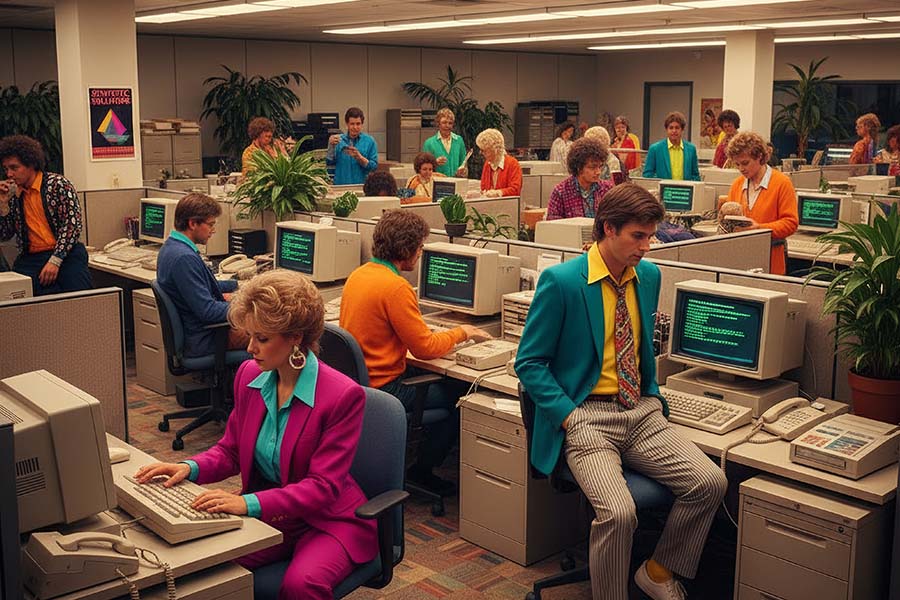
'Sweating buckets' | Retro dress code revolt sparks HR climbdown
“We're living in a friendship mirage - more connected than ever on the surface, but deeply lonely underneath. Digital connection without authentic engagement is creating an isolation epidemic. As our technology gets more sophisticated, our relationships are getting more superficial.
Connection happens in the margins - pre-meeting conversations, shared laughs, moments when someone asks about your weekend and waits for a real answer. We are losing those authentic micro-moments that actually build relationships. Those who leverage emerging technology to create more meaningful human interactions, not fewer, will lead.”
Survey data shows that employees report more friendships at work than before, but that increase is not solving the problem of disconnection. Torchia says it is a matter of depth rather than numbers.
“More friends and yet more loneliness - that’s the paradox we're facing. Quantity doesn't equal quality when it comes to workplace relationships – we’re collecting connections, not building bonds. The shift tells us that employees are desperately seeking deeper connections, but they're settling for surface-level relationships instead of the meaningful partnerships that actually combat loneliness and drive performance.”
Gen Z and the demand for connection
There are generational shifts in expectations. For Gen Z, for instance, the presence of genuine workplace bonds is a non-negotiable.
“Gen Z has made workplace connection a deal-breaker, not a nice-to-have. They watched previous generations sacrifice relationships for paychecks and are instead looking for workplaces that feel like communities. Leading employers are realizing they need to become social architects, deliberately creating environments where authentic connections can flourish. For Gen Z, it’s not about ping-pong tables and pizza parties - it’s about psychological safety and genuine human engagement.”
The insistence on community-minded workplaces is part of a broader cultural change, and it suggests that employers who fail to adapt risk losing the loyalty of a generation that are clearly less motivated by financial rewards alone.
AI as enabler or barrier?
The rise of workplace AI adds another dimension to the debate. Rather than seeing automation as a threat to relationships, Torchia argues it can serve as an enabler. KPMG’s own research found that 99% of workers would welcome having a chatbot or AI companion at work.
“When we automate the mundane, we don't eliminate the need for human connection, we amplify it. AI handles the tasks so humans can focus on what we do best: building genuine relationships. Leading organizations are using AI to identify shared interests, suggest collaborations and eliminate friction in relationship-building, then stepping back to let human chemistry take over.”
She acknowledges that there are always risks when technology is used poorly, however: “Technology can create false connections because we've confused efficiency with intimacy. The sweet spot is leveraging AI to break down silos, identify potential collaborators and even facilitate introductions, then creating physical and psychological spaces where people can build the deep relationships that actually sustain us through challenges.”
Why HR still struggles to reach Deskless Employees
Frontline employees often have the greatest need for HR support—but the least access to it. The reason is simple: most HR systems were designed for desk-based employees.
If you're investing in HR digital transformation, it's essential to ensure that every employee—whether office-based, hybrid, or deskless—has equal access to HR services, information, and support.
This guide explores the key considerations for building a consistent, accessible, and connected HR service experience for your entire workforce.
You'll learn how to:
✅ Deliver consistent HR support across every location
✅ Reduce repetitive HR requests
✅ Improve self-service adoption
✅ Connect email, mobile, AI and employee portals
✅ Create a better employee experience for frontline workers
Designing for authentic interaction
That balance between digital convenience and human depth will present a new challenge for HR leaders. If 90% of professionals expect companies to support friendship-building, the challenge is about how to meet that demand without over-reaching.
Torchia believes pragmatism is the answer.
“Create the conditions, provide the spaces, facilitate the moments, and let people do the rest," she says. "Here's a reality check: financial constraints are preventing most workers from socializing outside work hours. Leaders need to engineer informal, authentic opportunities during work time - walking meetings, company-sponsored coffee chats, meaningful volunteer opportunities.
“The most successful friendship-building isn't happening in formal programs, it’s emerging from informal social interactions, team activities and shared experiences. Companies need to become social architects, designing workflows that naturally bring people together around common goals and interests. Think collaborative projects that require diverse skills, mentorship programs that create mutual investment and physical spaces that encourage spontaneous interactions. The key is creating systematic opportunities for serendipity.”
Connection as a competitive advantage
Ultimately, while talk of “connections” and “loneliness” might come across as touchy-feely and maybe even irrelevant to harder business issues, Torchia positions connection not as a soft benefit but as a competitive advantage.
“The truth is that we're at a crossroads. We can design workplaces that foster authentic connection or settle for surface-level interactions that leave people isolated. The equation for an employer of choice has changed: it's not salary OR culture anymore, it’s salary AND connection. The organizations that understand this aren't just offering competitive compensation packages, they’re creating friendship-enabling ecosystems that unlock collective human potential.
“When people have authentic relationships at work, what follows is incredible: productivity, innovation, retention and people showing up authentically, ready to do their best work.”
In an era of economic uncertainty and AI disruption, human connection isn't a luxury, it can be the competitive edge that truly differentiates from one employer to the next.