USA
USA  United Kingdom
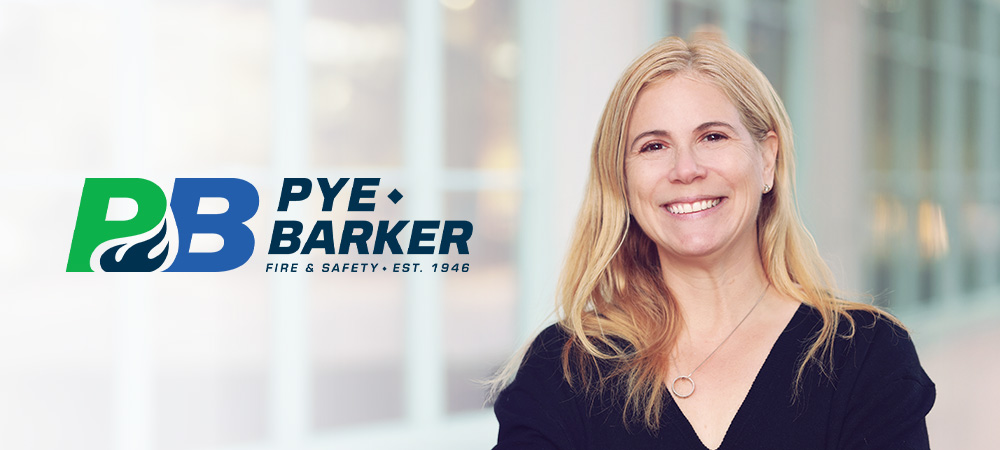
Rebecca True, Chief Human Resources Officer at fire and safety specialist Pye-Barker, tells us about the firm’s move towards employee ownership and how it affects the firm in terms of culture, retention and forward investment...
We're in a position where we can really recognize our team for their contributions to this growth, and that’s exactly what we intend to do with this announcement.
What inspired Pye-Barker to embrace employee ownership at this scale, and why was the timing right?
Employee ownership is something we have wanted to pursue for a while. It has countless benefits — employee engagement, customer satisfaction, and long-term organizational success. With benefits this impactful, there’s no reason not to embrace employee ownership at this scale.
This felt like the right time to make this strategic, proactive decision. Pye-Barker has achieved so much success recently, from our consecutive placement on Inc. 5000 to more than 100 acquisitions over the past three years. We're in a position where we can really recognize our team for their contributions to this growth, and that’s exactly what we intend to do with this announcement.
Our team is like family at Pye-Barker. They are the reason for our success, and it is only right that we find a way to give back to them. They were asking for a way to share in our growth, and we’re proud to now be able to give it to them.
How do you see the “ALL In” program influencing employee engagement, motivation, and retention across such a diverse workforce?
Studies show that employee ownership programs like ours result in a more engaged team, better company performance and improved customer experience. Our team members drive that success – and the “ALL In” program is a way for them to share in that.
Employees must stay at Pye-Barker to receive the incentive after Pye-Barker’s next significant transaction, and that payout’s amount is reliant on Pye-Barker’s growth. This will create a powerful incentive to not only remain with the company but also contribute to making it the best it can be. We are a large and geographically diverse workforce, but we are joined together in our mission, and we expect the “ALL In” program to increase employee engagement, motivation, and retention across the board.
Giving our team members ownership incentives makes them even more invested
Broad-based ownership is often linked to higher customer satisfaction and innovation. How will Pye-Barker track or measure these outcomes to ensure the program is delivering on its potential?
We’re confident that this program will deliver strong results for our customers, our team and our company. Happy employees mean happy customers, and our entire team is driven to provide the best service possible at Pye-Barker Fire & Safety.
The primary ways we will measure the success of this program include employee satisfaction, employee retention, customer retention, and ultimately, company growth. All of these factors work together to build a strong, healthy company. Giving our team members ownership incentives makes them even more invested in these outcomes.

Rolling out an ownership initiative for 8,000 employees across 46 states must come with challenges. What have been the most significant hurdles?
Financial incentives can be complex to communicate. Our program is structured so that employees receive an initial award this year and will receive annual awards throughout their tenure with Pye-Barker. Communicating exactly how the program works was of utmost importance. That’s why we took detailed steps before the announcement to ensure we communicated this program clearly to each and every employee. We also needed to quickly address any misperceptions. For example, this program is in addition to existing benefits, including salaries and bonus structures – and we needed to make that clear from the start.
When we get questions, we don’t just respond to the sender but share answers company-wide so everyone can learn from them."
Educating employees about the program is key. What steps are in place to help them fully understand the value of their ownership stake?
With the program launch, we also created several communications initiatives to help our team members understand the value of the program. After the initial announcement, we hosted a town hall-style Q&A event. Both our HR and finance teams answered every question posed from the team and then followed up with a resource document with answers to each question.
We’ve made it clear that our inboxes are also open, and we’ve received several great questions from the team. When we get questions, we don’t just respond to the sender but share answers company-wide so everyone can learn from them.
We will also commit to anannual financial review that will give our team insight into how the company is performing and the growth of their incentives.
In what ways does this initiative strengthen or reflect your culture of protecting lives and livelihoods?
Protecting lives and livelihoods is the core of who we are at Pye-Barker. It’s ingrained in our DNA as a fire and life safety company, and its importance directly translates to our own team. Through “ALL In,” we set our team members up for success in their professional and personal lives. It offers financial support, as well as confirmation that we’re here to support not only our customers, but our team members and their families too.
How might this type of workforce investment influence Pye-Barker’s recruitment strategy or employer brand in the fire and life safety sector?
Our ALL In employee ownership program is definitely a differentiator for us. We’re proud to be the largest company within the fire and life safety industry that is powered by employee ownership. It’s a way to show that we truly care about our employees, and we hope that all team members, both future and present, truly feel the culture of Pye-Barker. The fire and life safety industry is competitive, but we provide something unique — a culture driven by family values, mutual respect, and widespread dedication to success.
Investing in our team members will help us keep and strengthen our current team, while simultaneously making us an attractive employer for those choosing a career in fire and life safety.
Looking ahead, how do you envision employee ownership shaping the company’s long-term growth, innovation, and overall workforce strategy?
The initiative is more than a growth strategy; it is a cultural engine. It is a cornerstone of our identity, and it speaks to not only who we are today, but who we have always been. So, looking ahead, it will shape our long-term growth, innovation, and overall workforce strategy, because people invest more deeply when they feel valued, and that’s exactly what we aim to do.