HR teams today are under immense pressure to do more with less: fill roles faster, improve hiring quality, retain talent, and prove business impact. AI and automation are empowering organisations today, reducing manual work, improving productivity, and scaling operations to hire faster, develop better, and retain longer.
Most HR leaders have moved beyond the question of whether to adopt AI. Yet most organisations remain stuck at early or mid-level adoption, where intelligence and automation assist individual tasks but fail to transform end-to-end workflows. The result: limited efficiency gains, persistent bottlenecks, and unrealised value.

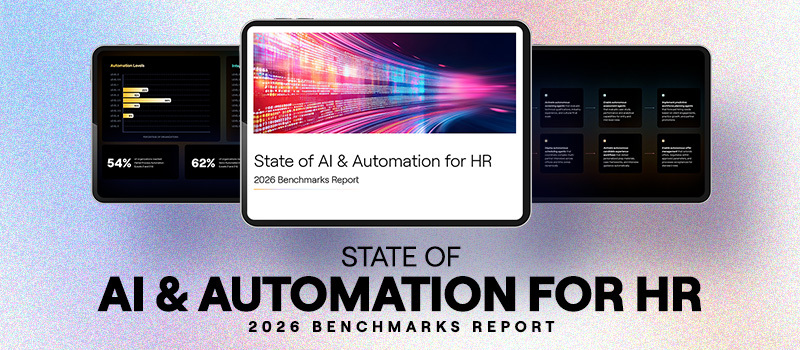
To understand how organisations are actually adopting AI and automation in human resources, Phenom analysed nearly 500 organisations across more than 12 industries using its proprietary AI & Automation Maturity Model. The findings, published in the State of AI & Automation for HR: 2026 Benchmarks Report, reveal a clear gap between ambition and impact, and why many HR teams are struggling to turn AI experimentation into measurable business results.
AI aspiration vs. AI application: What separates the leaders from the laggards
Although AI is widely available, the report revealed that consistent application across teams is still developing: 83% of organisations demonstrate low AI and automation maturity.
That gap becomes clearer when you look at where many companies sit on the maturity curve:
UK
United States