 USA
USA  United Kingdom
What makes a CHRO or HR leader great?
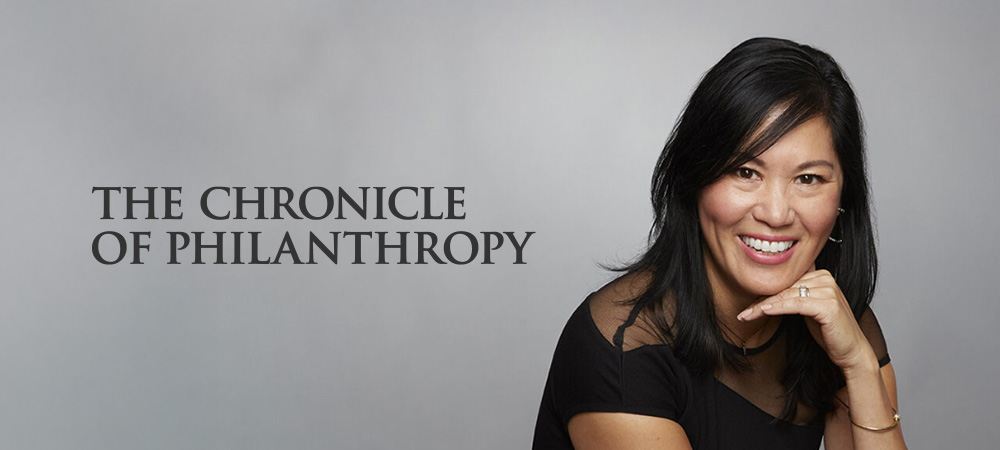
There are, of course, a handful of fundamental skills and traits, from commercial acumen and consensus-building to compassion and authenticity. But for Angela Cheng-Cimini, Head of HR at The Chronicle of Philanthropy (formerly CHRO, Harvard Business Publishing), being a leader is a lifelong learning journey.
Carefully peeling back the layers of great people leadership in an interview with HR Grapevine, Cheng-Cimini offers advice for aspiring CHROs, from the importance of friendship and self-care to the underrated art of written communications.
What makes a successful CHRO?
To be an effective partner, you need to know how the organization runs, what its vulnerabilities are, who its competitors are, what the landscape looks like, and what skills are needed for success.
A successful CHRO understands the business in the same way that the CFO understands the numbers, or the marketing person understands the brand position.
Are there skills you’d say are crucial for success as a CHRO in 2025?
There are two power skills, formerly known as soft skills – I'm trying to change the language because I think power skills are what amplify more technical skills – compassion, and the ability to engage in constructive dialogue.
When leaders practice written communication, they practice the nuance of how to hit just the right tone, just the right voice. The situation might call for a bit of levity, or instead some gravity
We sometimes get to a point in their career where we feel like we should have all the answers. There's a loss of vulnerability. But fortunately, oftentimes the people who do have the answers are sitting right in front of us.
The ability to pull the very best out of other folks around the table and then translate that into action with consensus and buying support… that’s a really powerful skill that CHROs need to focus on developing.
Have these core competencies shifted in the past five or ten years? Why or why not?
They’re evergreen. They've always been important. But I do think that recently, there's been much more focus on the power skills.
The fact that contemporary leadership today emphasizes those compassion, empathy, and authenticity signals a shift in employee expectations today.
They were not part of the leadership vernacular ten to 15 years ago, and certainly not 30 years ago when I first entered the workplace.
Are there any underrated capabilities you think HR leaders often neglect?
Written communication. We have lost the art of writing in long form. Everything is 144 characters, so to speak, and now with the advent of AI, we can easily punch in something and have technology clean it up for us.
I think there's something really special about original ideas being put to paper—not literally of course (although interestingly science says the physical act of writing something down on paper fires different neurons than typing it in a keyboard.) In fact, university students are encouraged to take notes by hand because it improves retention and understanding.
When leaders practice written communication, they practice the nuance of how to hit just the right tone, just the right voice.
The situation might call for a bit of levity, or instead some gravity. There's an art to telling a story that compels change and brings about positive impact. I don't think we spend enough time laboring over those messages.

We’ve covered some fundamentals – but how can CHROs find their own voice?
You don't have to be unique, but I do think we need to be authentic!
It's hard to put on a facade and be someone else. My leadership persona has been shaped and informed by so many other people that I've watched, some who have been role models and some who have been bad exemplars of leadership.
Through that, I've forged my own identity. Some of it is me, but the rest is me adopting leadership approaches that I've seen work well, or behaviors I know I want to avoid. I've had the wisdom and experience of 30 years to do that, but even now, I'm still studying. Being a lifelong learner is an important journey for being a leader.
It’s a study of human behavior, understanding what works well for you through trial and error, which is sometimes very painful. But it's also very real. You make a couple of mistakes, and you know what works for you and what doesn't. Ask for feedback and be curious about your impact on others.
What are the best ways for CHROs to develop their skills?
There are lots of opportunities to learn without formal training experiences. I belong to a number of different HR communities, and they have been hugely helpful. And the more diverse your network, the richer your learning experiences. You learn from other people's perspectives and how they see the world differently. You can take the same skill and have it brought to life differently through another leader, which opens your eyes to the many ways that leaders can show up.
A leader’s persona is not only multidimensional, it's also multi-contextual. It doesn't show up the same way for every conversation
A leader’s persona is not only multidimensional, it's also multi-contextual. It doesn't show up the same way for every conversation. In addition to learning from other people, if you develop your network, if you practice self-study by reading articles and books from various sources, you'll expose yourself to a broader way of thinking and ultimately, leading.
The CHRO post can be a very lonely job, and the best cure for loneliness is to go out and develop new friendships. Not only is it one of the best ways that CHROs can continue to grow and learn, it makes the work less isolating and more graitfying.
What are you prioritizing for personal development as an HR leader this year?
I stepped down from a full-time role in December, and I'm now with a much smaller nonprofit organization. It's helping me to find balance. I continue to use my craft and practice the discipline I've loved for the last 30 years, but now also find the time to pursue other personally meaningful endeavors.
I'm working on a 1000-piece puzzle, as frustrating as that is. I'm going to learn how to paddleboard this summer. I'm thinking about writing a book. I want to travel more. I want to sleep in. I want to exercise. I want to do all the things! As we so often say, I'm putting on my own mask first, so I am better able to help others.
We neglect our wellbeing at our peril and to the detriment of the people that we serve and support, so for me, this year is all about self-care.


