USA
 United Kingdom

They say a week is a long time in politics. Apparently, in corporate America, it can be an eternity. Especially in artificial intelligence.
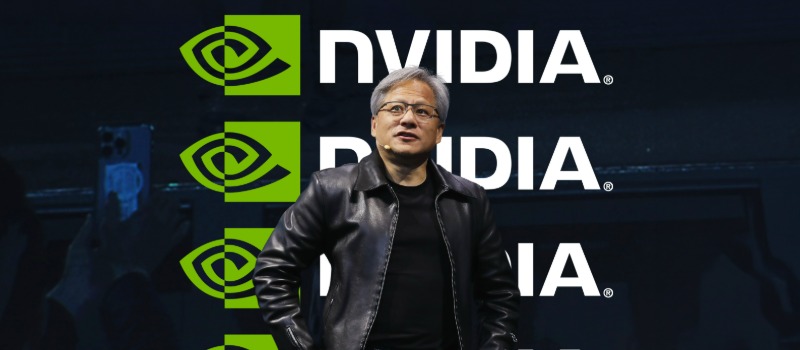
And so, another newsflash arrives. Jensen Huang is back as CEO of Nvidia. I had barely finished considering the implications of his resignation before the whole story turned on its head.
But let’s rewind. On 12 November 2026, Nvidia announced Huang’s resignation, appointed CFO Colette Kress as interim CEO and began searching for a permanent successor. The board subsequently made clear that it did not intend to reinstate him.
That sounded fairly final to me. Yet on 23 November 2026, the same board unanimously welcomed him back. So what changed?
When the share price starts talking
Perhaps the most revealing part of this extraordinary story is what happened to Nvidia’s share price. According to historical US trading data, shares closed at $173.73 on 11 November 2026, the day before Huang’s resignation was announced. By Friday 20 November 2026, they had fallen to $125.53, a decline of 27.7%.
Nvidia’s shares were already under pressure before his departure, so we cannot attribute the entire fall to the leadership crisis. The decline was substantial.

We cannot assume that falling share prices influenced the directors. We do not know what directors discussed. In its 23 November announcement, Nvidia said further discussions had satisfied directors about Huang’s candour and ability to lead. The board also said that input from senior US government officials had given it confidence that his return posed no national security risk.
Directors can reconsider decisions when circumstances change. But with an independent investigation still underway, the speed of the reversal invites questions about how the board reached its conclusions.
What role should HR play in CEO succession and board governance?
The board is responsible for appointing, overseeing and, when necessary, replacing the CEO. But the most senior HR leader has an important advisory role in ensuring that decisions involving leadership conduct, succession planning and employee trust are supported by fair processes and consistent standards.
HR does not control the board, but it should be part of the checks and balances that help directors exercise independent judgement.
Consider Nvidia’s chairman, Harvey Jones. According to the company’s 2026 SEC proxy statement, Jones has served on the board since 1993, the year Huang founded the business. He was classified as an independent director and became chairman following Huang’s resignation. Before that, Nvidia had a lead independent director.
Thirty-three years of service brings extraordinary experience and institutional knowledge. It does not automatically compromise independence, but it is reasonable to ask how directors maintain the confidence to challenge a founder with whom they have worked for decades, particularly one whose leadership has contributed so much to the company’s success.
And where does HR fit into this? We spend years establishing corporate values, codes of conduct, disciplinary procedures and leadership standards.
Employees are told, quite rightly, that nobody is above those standards. Yet when concerns involve the CEO, who ensures that fairness, consistency and accountability are properly considered?
The chairman leads the board, and directors ultimately make decisions about the CEO. A board-level investigation is not an ordinary HR disciplinary process. But HR should provide expertise on employment procedures, organizational culture, employee trust and succession, alongside legal counsel and independent investigators.
The US National Association of Corporate Directors has emphasized the importance of involving CHROs in CEO succession planning, while leaving final responsibility with directors. Nvidia’s own governance arrangements also give its Compensation Committee responsibilities relating to human capital oversight.
We do not know what advice Nvidia’s HR leadership provided, and there is no basis for suggesting it was excluded or ignored. But the wider principle matters. When the CEO is involved in a sensitive investigation, the senior HR leader should have an effective route to independent directors, without normal reporting relationships compromising professional judgement.
HR Conversational Agent: Do's & Don'ts
Nvidia has also established a National Security and Export Control Oversight Committee, comprising independent directors, and announced plans for a Chief Compliance Officer reporting to a board committee. These measures invite questions about previous oversight.
What happened to succession planning?
There is another uncomfortable question. Nvidia is one of the world’s most influential technology companies, yet its leadership appears so closely associated with Huang that replacing him became an extraordinary corporate event.
His contribution is undeniable. But being an exceptional leader and being indispensable are not necessarily the same thing. Shouldn’t successful leadership build an organization capable of succeeding without you?
Colette Kress barely had time to settle into the interim CEO role before Huang returned. Her appointment lasted just 11 days. Meanwhile, Nvidia had reportedly engaged executive search firm Heidrick & Struggles to find a permanent successor. One wonders whether the consultants had even finished their initial briefing before the board changed its mind. If nothing else, it must have been one of the shorter executive search assignments.
Behind that rather extraordinary turnaround lies a serious question for every board and HR leader. How prepared is an organization for the unexpected departure of its most influential executive? A succession plan is not simply a list of potential replacements. It must consider capability, continuity and stakeholder confidence.
Reversing a decision does not automatically demonstrate poor governance. Directors sometimes need to change course. But they remain accountable for both decisions, and for the processes supporting them.
For HR leaders, the lesson is that corporate governance cannot be left entirely to the boardroom. Directors need independent, informed people advice, particularly when leadership conduct and succession are involved. Corporate values and leadership standards are only credible when those at the top are subject to appropriate scrutiny.
And perhaps the biggest question isn’t why Jensen Huang is back - it’s what changed the board’s mind.