'Culture of trust': How Synchrony's Chief Talent Officer is delivering employee AI value

Claudine Hoverson, Chief Talent Strategy Officer at Synchrony, has implemented AI ‘Field Guides’ to ensure safe but effective employee AI adoption...
HR Grapevine
HR Grapevine | Executive Grapevine International Ltd
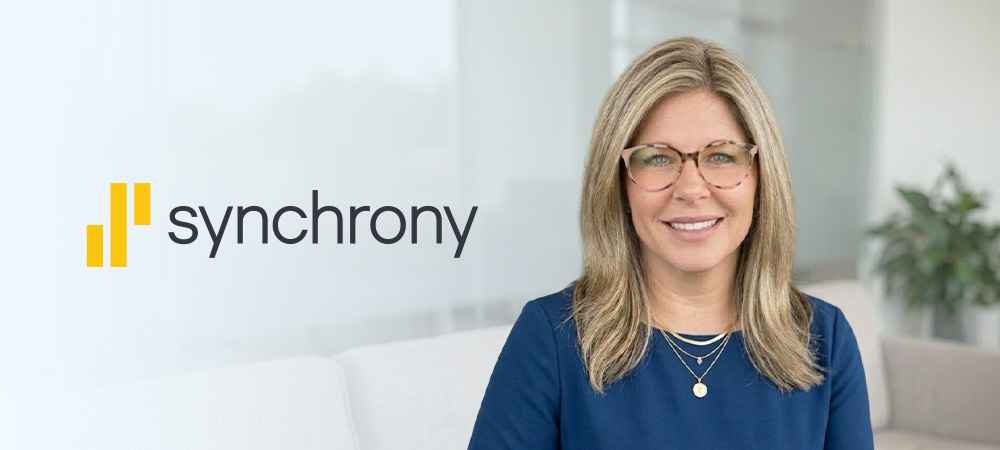
Claudine Hoverson, Chief Talent Strategy Officer, Synchrony

When it comes to careful yet impactful workplace adoption of artificial intelligence, consumer financial services company Synchrony is leading where many others have failed.

Spearheading and stewarding that transformation journey is Claudine Hoverson, Chief Talent Officer at Synchrony.

The people leader has not only successfully overhauled her own HR department, automating key processes such as onboarding and increading the focus on deeper team support – but has also ensured all employees are able to confidently and safely wield AI tools to accelerate their work and focus on higher-value projects. At present:

  • 90% of employees trust Synchrony to use AI fairly and ethically
  • 82% of employees say AI will create new growth opportunities for Synchrony
  • Nearly 80% believe it will have a positive impact on their careers

Speaking exclusively to HR Grapevine, Hoverson reveals how she has achieved these impressive results that defy industry benchmarks.

How did Synchrony’s talent team lead by example with workplace AI adoption?

We make listening, testing, and learning a consistent part of how we build, improve, and scale programs co-created with our employees.

We treat our people like our customers, building solutions based on their needs, instead of what we think they need. As a result, this drives stronger employee engagement, more effective business solutions, enhanced productivity, performance, and competitive advantage. That agile mindset shapes our approach to AI as well, building upon the company’s decade-long use of AI and machine learning.

Is there an example of an application that delivered value?

My team and I applied Generative AI to one of our most data‑heavy, high-impact places: analyzing open‑ended employee survey comments. Using our internal “SynchronyGPT” tool, we analyzed tens of thousands of Great Place To Work responses and asked AI to surface key themes that draft a summary for leaders.

Previously, that work took close to two weeks. With AI, we generated the initial insights in a couple of hours, then spent our time validating the results, focusing on priority areas and deciding what actions to take. It was an effective way to evaluate AI and prove its value quickly. 

How else do you use AI to improve key HR processes?

Since then, we have been actively innovating with AI.  For example, Gen AI automates routine HR tasks like writing unbiased job descriptions, which enables leaders to invest more time in hiring quality and team performance, and turning broad objectives into clear and measurable goals, saving thousands of hours and freeing leaders to focus on coaching and strategic support.

We’re also piloting AI to automate onboarding tasks like ID setup and laptop provisioning, helping new hires get up to speed faster.

Gen AI automates routine HR tasks like writing unbiased job descriptions, which enables leaders to invest more time in hiring quality and team performance

Some of our best AI ideas come from design-thinking workshops with HR leaders. We’re piloting a GenAI tool for our HR advocates who are dedicated to supporting our frontline employees. The tool aims to deliver accurate, timely benefits and policy answers, allowing our HR team to focus on deeper support.

Our teams are also exploring the development of an AI assistant inspired by SynchronyGPT and Workday AI to support onboarding, career growth and engagement.

How about applications in departments beyond HR?

We have seen firsthand how it has freed our people to do more valuable work.

Synchrony has used AI and machine learning for over a decade to enhance the customer experience, which includes powering our intelligent virtual assistant, Sydney, that handles customer questions.

Generative and Agentic AI are redefining how we work and transforming how we harness talent. Our approach is built on strong data governance and the principle that AI should be a supportive tool, not a replacement. People remain the core as builders, decision-makers, and innovators.

90% of Synchrony employees trust the company to use AI fairly and ethically

What checks and balances do you have in place for that to happen?

Leaders still oversee, check for bias, and make the actual decisions, supported by clear communication and training, so employees understand how to use it responsibly.

How does Synchrony’s talent team upskill and support staff on this journey?

Synchrony regards AI as a core skill.

We launched our AI Field Guide, a comprehensive resource that instructs our employees on the practical aspects of using our Synchrony GPT tool, from prompt writing to responsible use best practices. We’re rolling out prompt writing training sessions companywide to enable testing and learning in the AI era.

Our approach is built on strong data governance and the principle that AI should be a supportive tool, not a replacement

Our people managers play a critical role when it comes to AI fluency, turning intent into impact. The first step is creating a culture of trust and curiosity, encouraging teams to test, learn, and share what works with clear guardrails. By measuring time saved, sharing wins, and coaching core human skills like critical thinking, problem solving and collaboration, managers help reduce fear and turn AI into a daily skill that makes work more meaningful and helps teams work smarter as they prepare for the future of work.

How will you keep the AI Field Guide up to date?

Synchrony created our AI Field Guide by drafting core rules on data privacy and responsible use, incorporating them into a concise guide that includes best practices, dos and don’ts and tips for getting started. To ensure that our guide stays current, leaders will conduct regular reviews, employee feedback and external changes like new tech advancements.

Is this a part of your wider career development strategy?

We also have a strong track record of helping employees grow into new roles inside or outside of Synchrony. ​For example, we offer no-debt tuition benefits for degrees and tech certifications, where we provide up to $20K a year for degrees in in-demand fields like business, education, and healthcare; and up to $9K a year for tech certifications in high-growth fields like cyber, software engineering, and UX design​.

And we’ll continue to build on our upskilling and reskilling capabilities around AI so we can help our people embrace new opportunities and grow their careers.

Can you share any measurable results from your adoption journey so far?

We’re proactively addressing employee concerns and opportunities to drive responsible AI use, share best practices, and prepare our workforce for future skills. 

Together with the Great Place To Work, we launched an “AI For All Index” within the survey to capture employee sentiment and spot AI opportunities. Results reveal that our employees recognize AI’s biggest benefits, like automating repetitive work and assisting with writing, data analytics and learning, while also desiring ongoing education and guidance on AI tools and their evolving roles.

We launched our AI Field Guide, a comprehensive resource that instructs our employees on the practical aspects of using our Synchrony GPT tool

We’re seeing adoption translate into everyday use and strong employee engagement. Nearly 100% of our senior leaders are using AI tools, 90% of employees trust Synchrony to use AI fairly and ethically, 82% of employees say AI will create new growth opportunities for Synchrony, and nearly 80% believe it will have a positive impact on their careers – all well above benchmarks.

How do you expect your HR strategy to successfully evolve moving forward?

AI is transforming HR by reducing the manual work that keeps our leaders from doing the human parts of the job.

Success for the talent team is an HR function that listens and responds in near real time, coaches, designs fairer and more consistent processes and builds AI skills into every role, with people sitting at the centre of decision-making and defining our high-trust culture.

You might also like

You are currently previewing this article.Create account

This is the last preview available to you for the next 30 days.

To receive our daily newsletter and access HR features & insights, create a free account today.