USA
USA  United Kingdom
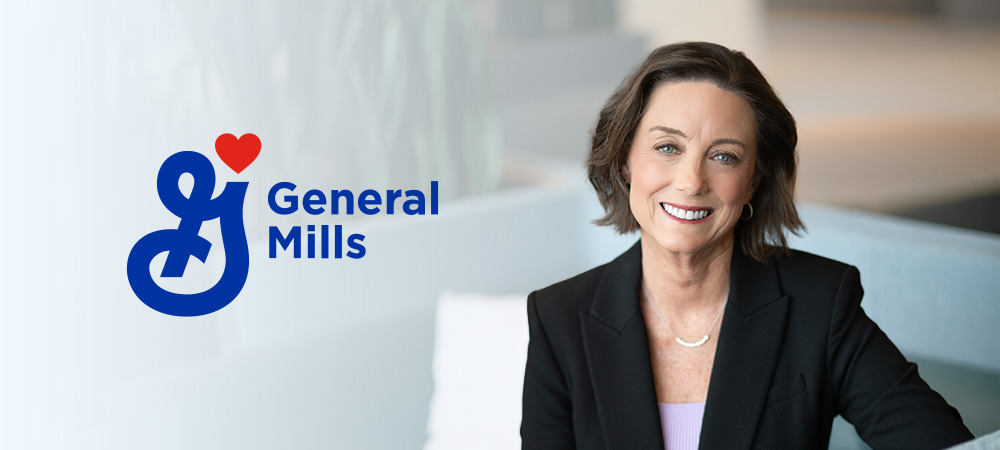
At General Mills, owner of household brand names such as Lucky Charms, Cookie Crisp, Cheerios, and other nutritious (and crunchy) breakfast staples, leadership development sits at the core of how the business competes, grows, and retains talent.
In fact, Jacqueline Williams-Roll, Chief Human Resources Officer, insists it is a business imperative: “The only competitive advantage an organization has is its talent, and at General Mills, we want to be the top choice for career growth and building world-class leaders. We are fueled by engaged people, an advantaged organization, and an undeniable culture of learning, growing, and belonging.”
Williams-Roll says she has benefited herself from great leaders in her own career, which probably explains why leadership development is more like an operating system for General Mills.
“I’ve had incredible mentors and managers throughout my career, and it is truly a privilege to play a role in the development of our talent and culture. We’ve created a leadership foundry at General Mills, and I’m proud to have played a part in the development of our leaders here and those who have went on to lead at other top companies around the world.”
We invest in our people, ensuring they have the skills, knowledge and behaviors needed to drive strategy, guide teams, and manage change effectively.
Leadership development starts with learning culture
That idea of a “leadership foundry” suggests something intense and defining for GM alumni, outlining the company as a catalyst for career growth.
“Growth starts with building a learning culture. We invest in our people, ensuring they have the skills, knowledge and behaviors needed to drive strategy, guide teams, and manage change effectively. It is an expectation that our teams never stop learning.”
It shapes not only capability but behavior, which is why leadership at General Mills is tightly defined around values in action, says Williams-Roll.
“At General Mills, great leadership means living our core values - winning together, continuously innovating, championing belonging, and always doing the right thing - while actively demonstrating the specific actions we call our Engaging Leader Behaviors. Examples include ‘Embrace a Learning Mindset’ and ‘Develop All Players.’”
Embedding leadership into how work happens
It’s easy for companies to talk a good game, but those behaviors need to show up in how work actually gets done, which is where flexibility and day-to-day execution come into play.
“Workplace flexibility is one way we support our employees to do their best work,” she says. “We’re always adapting how we connect, create, collaborate, and celebrate, keeping in mind ongoing changes, different job needs, and business goals. Central to our work is creating an environment for our employees that encourages innovation, collaboration, and continuous learning, while offering flexibility so that everyone can thrive and bring their authentic selves to work.”
Embedding that environment across functions requires leadership development to move beyond theory and into operational practice.
“HR plays a critical role in driving a remarkable mindset, with ways of working and continuous learning more important than ever. Across teams, we are developing core skills into functional development and company initiatives. Leaders need to have strong functional skills and live our core values through individual leadership. This combination is critically important.”
Our approach is multifaceted and designed to support leaders at pivotal moments.
Coaching as a leadership accelerator
As leadership expectations become more embedded, the focus then shifts to how capability is accelerated at key moments in a leader’s journey.
“We view coaching as a critical lever for strengthening leadership performance and accelerating our enterprise priorities. Our approach is multifaceted and designed to support leaders at pivotal moments. Coaching is primarily utilized for executive onboarding, at key leadership transitions, as an integral part of leadership development programs, and for targeted development to accelerate the growth of our high-potential talent.”
That targeted approach is part of a rationale around speed, effectiveness, and readiness.
“The 'why' behind our coaching investment is clear: to speed up transitions, enhance leader effectiveness for both the individual and their team, and equip leaders to navigate ambiguity, lead change, and grow both people and business simultaneously. Overall, we’re seeing positive results, including enhanced leadership effectiveness, improved readiness, and engaged teams. We also observe very low turnover among our critical top talent.”

Scaling leadership across a global workforce
With leadership development embedded and accelerated, the next challenge is to maintain consistency across a global footprint. Thinking globally and acting locally, which often requires a lot more of a nuanced approach to each territory.
“As a global company, we’ve built leadership programming for all, no matter where talent sits. Across the more than 100 countries we operate in, our focus remains true – to create leader development experiences that drive trust, performance, and inclusion.”
Maintaining that consistency also depends on how clearly leadership expectations are communicated and experienced internally.
Why HR still struggles to reach Deskless Employees
“Both Human Resources and Corporate Communications are fundamentally engaged in the employee experience. While Human Resources designs the policies and programs, Corporate Communications ensures these are effectively understood, embraced, and celebrated. Together, they build and maintain how our company is perceived as a place to work.”
Aligning leadership with business priorities
Ensuring leadership development is treated as a business priority requires alignment at board level, which shapes how strategy becomes action.
“With any business priority, I partner with our CEO, and with clear strategic alignment and agreement with our Board and Senior Leadership Team, our HR team works to translate these plans into action to grow our business. I am grateful always to work for an amazing company that values the HR function as a business leader first and foremost and fundamentally believes that talent is our competitive advantage.”
It allows the company to focus on specific leadership behaviors that support growth.
“This year, we’re differentially leaning into ‘Foster Agility for Growth’ as a focused Engaging Leader Behavior. We know mindset, not just tools are critical to our success. We regularly host events, Engaging Leader Forums, and encourage all employees to attend these valuable development opportunities to provide external perspectives and thought leadership. A recent employee engagement survey revealed that 82% of employees feel they have the opportunity to grow and develop at General Mills.”
Keeping our leadership programming with learning at the center is how we’ll continue to stay relevant.
Measuring leadership impact on growth
Those engagement levels feed directly into how success is measured, linking leadership development back to workforce outcomes which keep the company ahead of the game.
“Growth starts with building a learning culture and as the pace of change is faster than it’s ever been, keeping our leadership programming with learning at the center is how we’ll continue to stay relevant.”
That future focus is tied to clear indicators around engagement, retention, and employee advocacy which create a virtuous circle of feedback that keeps the firm aligned and on course.
“Creating an environment where employees are engaged and energized to do their career-best work is critical. Proven evidence of positive workforce dynamics, high engagement levels and employee satisfaction will continue to be measured through regular employee surveys, retention rates, and workplace culture assessments. We are incredibly proud that 86% of employees would recommend General Mills as a great place to work.”
GM’s approach shows that leadership development works best when it is not treated as a standalone priority, but the thread that connects culture, capability, and business performance into a single, continuous system.