USA
USA  United Kingdom

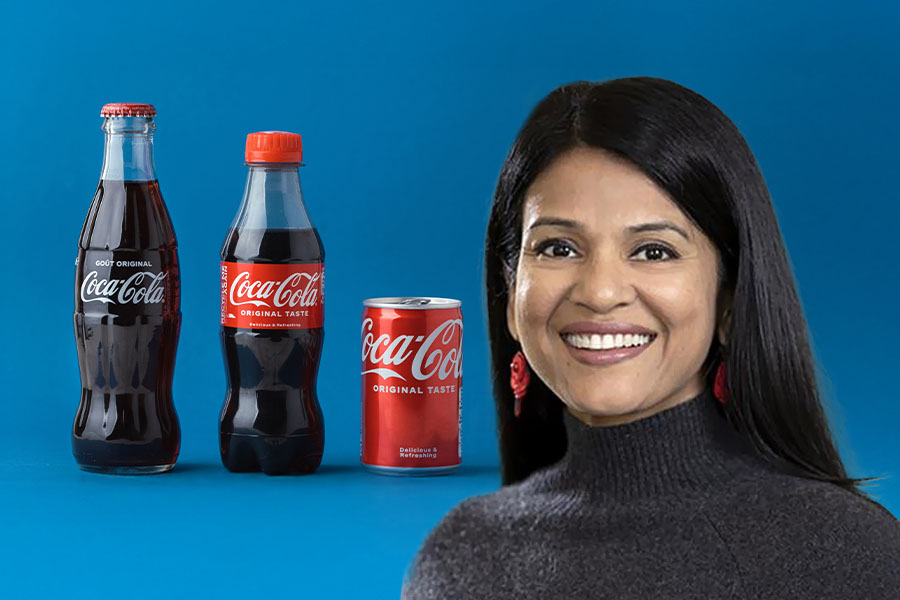
Coca-Cola has announced a changing of the guard, with a new global CPO taking over from the long-serving Lisa Chang.
Tapaswee Chandele will become Global Chief People Officer on May 1, as Chang steps away after a seven-year stint.
In a post on LinkedIn, Chang said: “Leading the Global People & Culture Function of one of the world’s most iconic companies has been one of the great privileges of my career. Shaping the talent, culture, and human experience across every geography, function, and level is a responsibility I’ve never taken lightly and one I’ll always hold close.
“What I’m most proud of, though, is the people. The People & Culture team, leaders, and colleagues across our system and around the world show up every day with purpose and care. You are the culture carriers who make Coca‑Cola truly special. The talent, values, and ambition I’ve witnessed give me confidence that the future is in great hands.
“I’m deeply grateful for my time working under James Quincey, who has just reached his own milestone, shifting from CEO to Executive Chairman. With this transition, it’s the right time for me to step into the next chapter of my own career.”
Chang will stay with the company through the end of 2026 as a senior advisor, and will also serve on the board of The Coca-Cola Foundation.
Podcast | HR Partner, Greybull: How we infuse a culture of 'operational excellence'
Chandele is currently Senior Vice President and Executive Assistant to President and Chief Financial Officer John Murphy, a role she has held since May 2025. Prior to that, from 2019 to 2025, Chandele was Senior Vice President of Global Talent, Development and HR system Partnerships, responsible for the company’s worldwide talent management strategy. In that role, Chandele was a member of Chang’s leadership team.
She joined Coca-Cola in 2001 in her native India and went on to work in various HR and talent development roles, and was based in Turkey and South Africa before moving to the US in 2017.
We may not necessarily be about to witness a run on sales of foot cream, but as general manager of HR in India, Chandele helped introduce a ‘Dance at Work’ scheme because they “wanted some fun way for the employees to beat the stress”. Employees were also given free passes for the Indian Premier League to watch live cricket.
Data-driven HR strategy and legacy practices
For clues as to what comes next, Chandele’s approach to HR hints at a focus on data, with a willingness to prioritize outcomes over adherence to established practices.
Quoted last year by ExCo, Chandele said: “Let’s take the example of identifying high potential talent; we need to evolve the way we identify and develop them – which is grounded in data. Another example is ratings for employees. Should you have them or not? You could make arguments on both sides. If you take away ratings, for example, you take away transparency. But underneath the question is whether you are creating a culture with the right goals and objectives, and them measuring them effectively.”
She added: “You also have to be careful with benchmarks. One benefit of them is that if someone else has done something, then you don’t have to spend the same time learning about it or making the same mistake. But what worked in one company doesn’t necessarily work in another.”
It points to a reluctance to adopt external best practice for the sake of it, in favor of a more nuanced, context-based, view of HR strategy.
She continued: “The broader point is that we have to really identify the barnacles in your organization - the ideas or processes that nobody ever questions and they become part of your fabric, because people have used them forever and they are just accepted. You have to identify them and get rid of them, because nobody respects them anymore.”
Leadership trust and hiring strategy
She views trust and transparency as a core leadership responsibility, particularly in periods of organizational change, saying: “It starts with making sure there is not a gap in your organization between what leaders say and what they do, regarding any topic. There should be respect and trust in leaders, and respect and trust come with consistency. Even if you’re conveying a difficult message that people don’t like, they will respect it if it’s grounded in real business context as to why this is the right thing for the organization.”
“If people find they are having trouble bringing people along on topics, then maybe the leadership team needs to step back and ask, 'how are we coming across to the teams?' Because it’s the role of the leadership team to create confidence and trust. Another way to do that is to give people a full explanation of the context and thinking behind a decision, rather than just issuing a decision. Everyone wants to be treated like an adult.”
Her hiring philosophy also leans toward a commitment to learning and development, taking a long-term view of career progression.
Turning workforce data into early warnings for high-cost employees
“I lean a lot into asking about the mistakes that people have made and what they have learned from them. I value the humility that comes from going through a journey like that and reflecting on it because I want to create a culture of continuous learning on my team.
“The second thing I look for is whether the person has built resilience in the organization - whether it’s about process, technology, capability, or in the team. I want to avoid people who may have delivered results in the moment, but they left the organization worse off when they moved on. I’m really wary of people who see themselves as heroes.”
Culture, capability and change - the further thoughts of Coca-Cola’s new HR leader
Creating a learning culture
“Being comfortable with version 1.0, 2.0, and 3.0 is part of the journey. This requires a growth mindset – a shared belief in continuous learning to improve the business and ourselves. A learning organization is one where experimentation is encouraged, failures are a normal part of growing, routines and project artifacts allow for sharing and making things better, and where you do not wait for a perfect product before going to market.”
Employee value proposition
“People are going to stay if they know that by working for X or Y company, they’re building the skills and capabilities that they need to be more employable. Our hope is that employability keeps you at Coca-Cola.”
Workforce restructuring
“Our attrition rates tend to be very low, but what emerged from people taking voluntary separation packages was that we got a wonderful chance to accelerate talent from within. We were able to significantly promote internal talent and make progress against our diversity, equity, and inclusion aspirations, and we could also do a lot more external hiring. At the same time, we did not lose much high-potential talent.”
Data-driven leadership decisions
“We use data extensively in our succession planning conversations and leadership selections for onboarding leaders.”
Culture, values and leadership
“Staying true to your values, being authentic and transparent – people ultimately make their own choices.”