USA
USA  United Kingdom

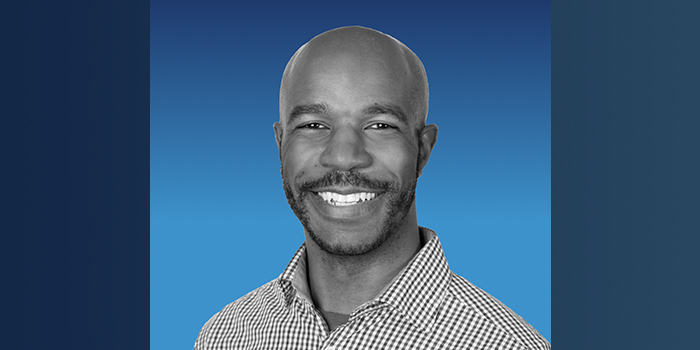
Bek Sunuu is the CEO and Founder of Orisuun, an online ‘ecosystem’ built to connect black business leaders with investors and other partners. He gives HR Grapevine his thoughts on the past, present and future of DEI programs in the US.
What did most people misunderstand about corporate DEI initiatives?
Most people misunderstood corporate DEI because its limits were never clearly stated.
At no point was it widely or explicitly communicated that these initiatives were meant to be temporary or conditional. With over two centuries of direct and indirect discrimination embedded in labor markets, capital access, procurement, and general regulation, it was reasonable to assume that DEI efforts were intended to meaningfully address the structural imbalances (in any individual corporation’s control) that resulted from that. People were not naive for interpreting them that way. They were right to misunderstand, because the programs were framed and promoted as moral commitments, not short-term responses.
But in practice, corporate DEI was not designed as durable economic infrastructure. Instead, DEI programs were layered on top of existing systems rather than rebuilding those systems to achieve the equity DEI purported to have as a goal. Long-standing procurement, capital allocation, risk models, and vendor selection criteria largely stayed intact. DEI programs functioned alongside those existing systems. DEI functioned as dressing, not the systems - or infrastructure-level reform it was hyped to be at its peak.
As companies scale back DEI commitments, what vulnerabilities are now being exposed for black entrepreneurs who relied on those pathways?
For many of these businesses, but definitely not all, the corporate programs offered borrowed attention and reach. The businesses did not own that reach. From a business perspective, there’s nothing wrong with that, as long as it continues. If your business strategy is in any way dependent on that and it ends, it’s detrimental. The business then needs to start from scratch to build real and organic visibility.
"DEI functioned as dressing, not the systems - or infrastructure-level reform it was hyped to be at its peak."
For consumer-brand-based businesses, the retail corporate programs (like Target's and others’) provided much-coveted and valuable shelf space, trial distributions, and even preferred vendor status, but those brands can be left with demand and inventory planning issues when placements or programs contract, and fixed costs are slower to unwind than revenue.
Moreover, when the credibility and validation signals that the corporate programs provide are removed, independent business development and capital access opportunities that were made available based on large contracts or general associations could also dry up abruptly. This can affect access to working capital and credit, including reduced or withdrawn revolving facilities, tighter covenants, worse terms, or, in some cases, more aggressive lender actions.
Does corporate DEI still exist under a different name?
No. What exists today is a derivative, narrower set of practices that share surface-level traits with DEI, but lack its scope, intent, and focus. What we saw was full structural contraction, not just a linguistic shift as some would want you to believe.
We’ve traded race-specific accountability metrics for generalized “belonging” and… explicit race-based commitments for “culture and engagement” language. Supplier diversity targets have turned into compliance-focused “fairness.” It’s no longer DEI when the programs have been stripped of their most consequential components. DEI has evolved into something lesser that deserves and, in many cases, has a different name.
“DEI, indirectly, comes from civil rights legislation and was meant to right the long history of wrongs.”
DEI, indirectly, comes from civil rights legislation and was meant to right the long history of wrongs. It was a result of the equality that Americans fought so hard for. In our largest institutions and far-reaching corporations, we wanted to see the workforce and vendors reflect the nation. We wanted to see equity in the form of special programs designed to meet those who have been purposefully and systematically disenfranchised for centuries and help them catch up to where they would have been if that were not the case. That was the language, at least, of DEI (not necessarily the practice). Even so, meaningful progress was being made. But what we saw from most corporations was a full retreat, which has exposed some truths for all of us.
How do you see DEI coming back in a post-Trump America?
DEI likely will not return in any meaningful form that resembles its 2020 - 2022 version. A lesson has been learned by corporations, investors, and institutions: that the US is now structurally unstable. Corporations have internalized this hard shift. Expectations are that legal and regulatory environments will swing sharply between administrations (what is legal and encouraged under one can become presumptively illegal under the next). Long-term social commitments are no longer insulated from political reversal and retribution. This represents a break from the post–civil rights era assumption that progress moved directionally forward, even if unevenly.
"DEI likely will not return in any meaningful form that resembles its 2020–2022 version."
For DEI to shift back to a form similar to what we saw in the early 2020s, we would need to see external pressure on the corporations that outweighs their assessment of the risks.
How can black founders shift from depending on corporate gatekeepers to building direct relationships with customers, partners, and capital providers?
Black founders can move beyond dependence on corporate gatekeepers by deliberately shifting from permission-based access to relationship-based growth. As mentioned in the discussion on DEI rollbacks, corporate programs were never designed as durable infrastructure, which makes building independent pathways essential. In practice, this means prioritizing direct relationships with customers, partners, and aligned capital providers through owned channels, targeted outreach, and peer-driven collaboration rather than waiting for institutional selection.
When growth is anchored in compounding relationships and diversified demand, Black-owned businesses are no longer forced to reset momentum every time corporate priorities or political conditions change.
What independent growth channels are you seeing emerge in a post-DEI environment, and which ones do you believe carry the most long-term potential?
It’s important to recognize that the core business channels themselves have not disappeared or fundamentally changed. Direct sales, distribution partnerships, community and network effects, social sales and events all still exist as viable paths to growth, just as they did before. What has changed is how easily founders can access and combine those channels without relying on corporate sponsorship. Cross-border collaboration, in particular, has become significantly easier through social media, digital tools, and platforms, allowing Black-owned businesses to find customers, partners, and collaborators across geographies without needing institutional intermediaries or domestic corporate validation.
At the same time, there has been a proliferation of independent accelerators, lending circles, investment clubs, and peer-based resources that offer practical support for sustained growth. These alternatives provide capital, knowledge, and networks without the volatility and discretion that characterized many corporate DEI pathways. When these elements are brought together inside all-encompassing ecosystems the impact can be cumulative and compounding.
How can community-powered models help founders navigate political and economic shifts without losing momentum every time corporate priorities change?
To address the leadership, credibility, and network gaps that were often temporarily filled by DEI programs, our co-founder and board member matching feature enables founders to find aligned partners and advisors based on fit and capability rather than pedigree or proximity to elite networks. Similarly, we address the issues discussed in the question about DEI rollbacks exposing vulnerabilities through our crowdfunding tool that will soon facilitate direct, on-platform debt, and equity investment, giving founders alternatives when traditional capital tightens or when large corporate contracts no longer serve as collateral. These tools are designed to diversify capital access so that growth does not stall when one funding source retracts.