USA
USA  United Kingdom


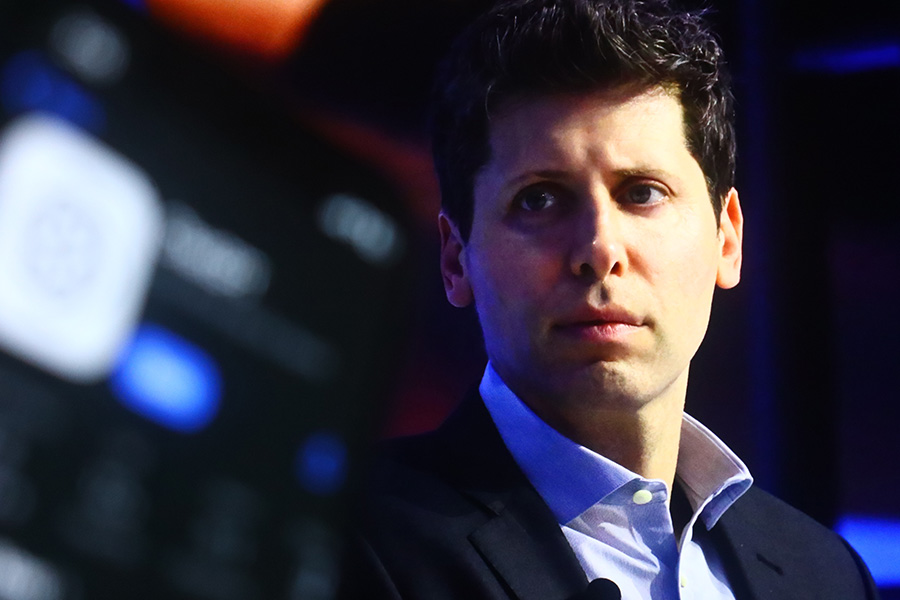
A LinkedIn post by Darren Bush, Global TA Director at Kyndryl, has touched a nerve among recruiters, talent leaders, and HR executives, prompting a discussion around how much attention you should pay to instinct when hiring.
The debate was originally sparked by Gary Vaynerchuk, chairman of VaynerX’s assertion that employers should rely less on resumes and more on 'gut' judgment.
According to Gary V, as he likes to be known: “How do you make decisions when logic and intuition conflict? I pick intuition.
I think we've all been taught to not listen to our gut, our intuition. I actually think intuition is the answer to every quiz. Once I hired one of my team members off a cold DM. I didn't have a job for him. I hired someone without a role. That's very illogical when you run a business.
“But I don't regret it. I had a good feeling about it. Your gut is the primary brain and your brain is secondary. If you feel it, don't use your secondary brain to talk you out of it. And again, worst case scenario is what I always say.. hiring is guessing. Firing is knowing.”
The post was immediately dismissed by one poster as “dangerously reductive”.
Bush shared the post with a concise summary of the message that was provoking so much reaction.
He agreed that “Radical honesty to candidates is a hiring superpower”, arguing that companies tend to oversell roles and then appear surprised when people quit, but was concerned about the idea that intuition could replace assessment.
As he put it: “When ‘gut’ becomes the method, managers start auditioning people for likeability.”
Meaning that interviews that should be screening for competence and relevant experience can be reduced to a personality contest where hiring decisions reward charisma rather than competence.
Structured processes vs ‘vibes’
The post sparked a host of comments that revealed a divide between believers in the more instinctive approach and advocates of the more structured and currently commonplace candidate assessment process.
Ken Collins from Greenway Collins, disagreed with Bush’s take and argued that instinct has always been central to hiring. “Gut has always been the defacto standard until scorecard’s and rubric’s were layered on and we all pretended it wasn’t.”

Others pushed back hard on that idea. Alan Walker, CEO of Udder, wrote: “Any half-decent recruiter, who - assuming even just a few years of experience - will have managed far more hiring processes than Gary V (or almost any hiring manager), and should have far more data points to rely on.
“Data from applications, screening, assessment, interviews, onboarding, performance, progression. All of that trumps ‘gut feeling’.
“Your processes and hiring approaches are designed around those (or should be). Not what a random internet dude it saying. Stand your ground, don't fall into the idiocracy trap.”
It stands at odds with a hiring culture that currently focuses on performance data and skills-based assessment, while personality-driven hiring has come under scrutiny for its role in bias, homogeneity and cultural misalignment.
Organizational psychologists also weighed in. Claudia Gasson, Business Psychologist from Bailey and French, asked: “How does ‘trusting your gut’ help eliminate bias in recruiting? Oh wait, it doesn’t.”
Shiran Danoch, CEO and Founder at Informed Decisions, expanded on the distinction between intuition and expert judgment, noting that Vaynerchuk likely accumulated practical hiring data through repetition rather than pure instinct.
She wrote: “That's not intuition, that's DATA accumulated over years and years of hiring for the same positions. There is plenty of research showing that expert intuition is more predictive since its not intuition, it's exercise + feedback +iteration.
“The thing is - most of us are not experts (even if we believe we are and that we are great judges of character)- so we need a proper infrastructure to assess candidates in a consistent and fair way. Gut on its own is not predictive, hence the low predictive validity of unstructured gut-based interviews and the overall hiring failure rates that stand at about 50%, which is equal to flipping a coin.”
Resumes, fairness, and candidate experience
The thread also touched on transparency and candidate care.
Lianda Banks, TA Operations Process Lead at Ericsson, argued that over-reliance on gut instincts ultimately leads to weaker communication, adding: “Could this be why so often candidates don't receive objective feedback? Decisions based on gut feeling can’t be communicated back to candidates so instead nothing is communicated at all.”
From an employer branding standpoint, it’s an argument that resonates with many HR leaders who are pressing for more accountability and clearer feedback loops in hiring. And it would certainly gain a positive response from candidates.
Why HR still struggles to reach Deskless Employees
Frontline employees often have the greatest need for HR support—but the least access to it. The reason is simple: most HR systems were designed for desk-based employees.
If you're investing in HR digital transformation, it's essential to ensure that every employee—whether office-based, hybrid, or deskless—has equal access to HR services, information, and support.
This guide explores the key considerations for building a consistent, accessible, and connected HR service experience for your entire workforce.
You'll learn how to:
✅ Deliver consistent HR support across every location
✅ Reduce repetitive HR requests
✅ Improve self-service adoption
✅ Connect email, mobile, AI and employee portals
✅ Create a better employee experience for frontline workers
Of course, instinct is unique to the individual and may well depend on their background or role in the hiring process.
Paula J. Reagan observed that: “A CEO or VP hiring someone to work for them in a discipline they know well based on gut is markedly different than TA or external recruiter having a “gut feel” on a person for a job requisition they read for 5 min or in a discipline may not fully understand.”
Technical hiring also surfaced as a concern. Jaclyn Lilly, Client Solutions Lead at Ovidius argued: “Trust your gut to many simply means just taking a guess because they don’t know any better.”
Gut instinct as shorthand for guesswork was repeated throughout the thread, but some comments defended the use of intuition in moderation.
Christy Collins, Director of Recruitment Operations at Silicon Fen Resourcing, wrote: “I don’t think anyone believes that “trust my gut” is a reasonable approach to recruitment in isolation (at least I hope not). However, I still place a high value on the subconscious in the assessment process.
“The very best recruiters listen to what their subconscious is telling them, while developing the ability to challenge subconscious bias. Not least because the subconscious processes 10x the content of the conscious brain, before providing you with that gut feel.
“It is essential for quickly assessing authenticity, emotional intelligence, confidence, team fit, etc. So when someone says they know in the first 5 minutes, that is what they mean.”
But even Collins acknowledged that gut must sit alongside some form of investigative rigor, rather than replacing it altogether.
What it means for HR leaders
While the thread was the usual lighthearted and occasionally pointed social media debate, it confirmed that skills-first hiring, structured interviews and evidence-based decisions are gaining momentum, while resume-heavy screening still dominates.
But it also suggested growing discomfort with both ends of the spectrum.
As Mike Stamp, VP of Branding and Social Media at Autocrat, said: “The five second thing always surprises me. Five seconds is enough to gauge confidence, presence, possible humour. It’s not enough to see how someone handles boredom, pressure or disagreement. Yet we talk about it as if it’s some deep human skill.”
Andy Thompson, Chief of Staff at Test Driven Solutions, probably got nearest to the fact that the truth of the matter usually lies somewhere in the middle, saying: “Hiring is not an exact science regardless of the process you use.”