USA
USA  United Kingdom

At Enveda Biosciences, the Head of HR does not see culture as a poster on the break room wall or a set of policies in a handbook.
Robert Buckley, Chief People Architect at Enveda, starts from a simpler premise about where value really comes from.
“People create all value,” Buckley says. “As lovely as all the hardware and software is that we have in Enveda and we have super cool stuff, we didn't just walk into the lab and go, ‘Oh my gosh, look what sprung up overnight all by itself.’ That didn't happen.”
That belief shapes everything that follows, he says. If people create the value, then the work environment has to allow them to do exactly that.
“You have to create a work environment where people actually create value,” Buckley says. “Because if you have a really sucky work environment, people aren't going to create value, because they hate being at work and there'll be lots of turnover.”
For Buckley, the lever that matters most is not HR processes and directives but management capability.
“People leaders are the fulcrum of every organization,” he says. “The most valuable thing we can do is hire, train, build, remove, encourage, be available to people leaders.”
HR as support, not the star of the show
Buckley is clear, however, that HR should not be absent from the process, but rather that it should be present in a very specific way.
“It's not to get out of their way,” he says. “It's to be an amazing support to them. Give them tools, give them freedom, yes, but give them the tools to do that.”
Support of that kind is not delivered through rigid rules, he suggests.
“We don't create a bunch of rules for them,” he says.
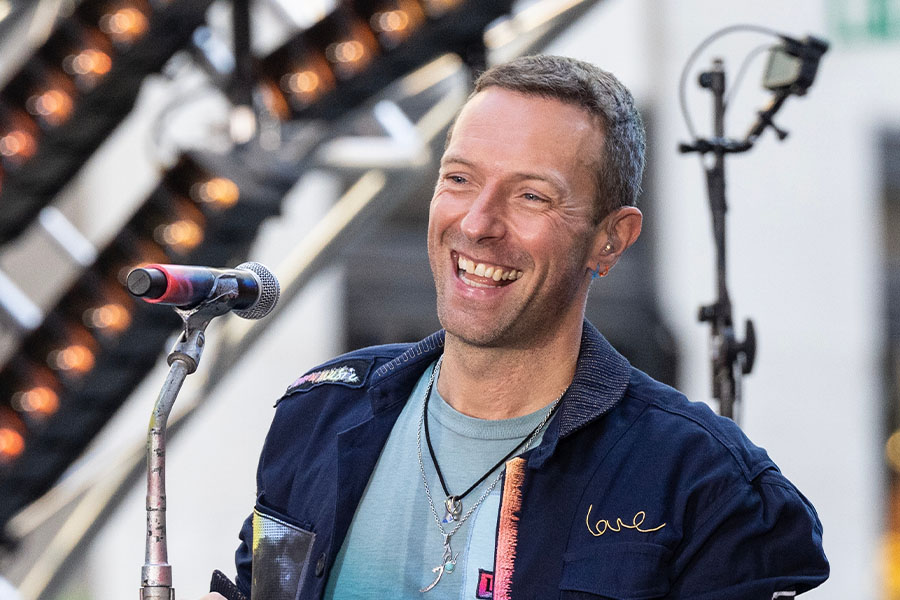
Giving an example, he says that when a manager called seeking an immediate policy answer, he told them that they should already have the capability to create that solution.
“I said, ‘You make the decision. We've given you all the tools you need go make the decision. You understand the trade offs. We trust you.’”
Why managers matter more than policies
Buckley points to a statistic that underpins Enveda’s empowerment approach.
“At least 70% of how somebody sees the company is how they see their manager,” he says. “So if that's true, then what's the most valuable thing we could do? Have great people leaders and let them make decisions.”
That philosophy reshapes HR’s role within Enveda and internal attitudes towards it from management and leadership.
“We give them some culture, we give them philosophy, we give them data, we give them tools, we make ourselves available to them,” Buckley says. “And then they talk to employees, they solve problems, and they make decisions.”
Mistakes are part of the deal. “They may not always make the ones I would make, and that's fine,” the HR head continues. “That's what employees want… they want to talk to their manager.”
Winning trust in the boardroom
For HR leaders struggling to get buy-in and profile, Buckley frames the challenge as philosophical rather than political.
“If you want to know whether you should hire me, let's talk philosophy,” he says. CEOs, he argues, are not questioning technical competence. “The question behind the question is really this… ‘Are you gonna be a nightmare to work with?’”
Buckley believes HR’s role is a balance of tension between authority and self-governance.
“They're not here to tell you what to do. Our job is to help. At the same time, what's the point of hiring someone like me if you don't want me to tell you what to do?”
That balance is strengthened by perspective. “We view the business differently, not better, not worse,” Buckley says. “What the wise leader does is say ‘I should listen to their point of view’.”
Reframing the HR budget conversation
When it comes to investment and buy-in for HR projects, Buckley avoids starting with dollars.
“I never have a money discussion… never,” he reflects. “As soon as you start the conversation with money, you’re in a commodity discussion.”
Instead, he focuses on outcomes. “I always say, tell me the outcome you want. Tell me the experience you want. I will create that for you.”
Only then does cost enter the conversation. The results, he argues, speak for themselves. “Our NPS for employee experience is 82% which is insanely good,” Buckley says. “It doesn't have to be super expensive.”
Values that show up in daily decisions
Buckley argues that Enveda’s reputation, which has recently seen it listed as one of America’s Top Most Loved Workplaces, is not built on novelty but consistency.
“The number one thing is, we actually do what we say we're going to do,” he says. “There's nothing unique about a company having values… what's unique is, do you actually live them?”
Enveda keeps it deliberately simple. “We only have five values. You could memorize five,” Buckley says. “We live them every single day.”

“The first one is curiosity. Second one is agency. Third one is journey. Fourth one is charity. The last one is unity," he explains.
Those values guide how people are treated, especially when it matters. On leave, for instance, Buckley says: “Work it out with your boss. I don't know. Maybe you don't want to come back at all… Maybe you want to come back part time for a little bit, I don't know.”
Letting culture do the heavy lifting
Buckley remains skeptical of over-engineered HR functions. Which is an unusual position for an HR leader, but his approach is more about function over form.
“What I see a lot of in HR is there's not a philosophy, there's not a brand,” he says. “If you don't have a way you're thinking about something, how do you know if it's good?”
At Enveda, HR has a value because it is useful to management and leadership and of course, employees generally.
“We're super valuable. We're helpful,” Buckley says. “When we do talk to employees, we don't tell them the rules and the policy. We give them ways to think about things, and we point them back to their manager.”
It’s an approach that has been scaled across a global workforce. “We have 320 employees,” Buckley says. “About half are in the US, and about half in India.”
Across roles and regions, Buckley sees the same truth. “People want to talk to their boss,” he says. “People want their boss to believe in them… that's true no matter what.”