USA
USA  United Kingdom
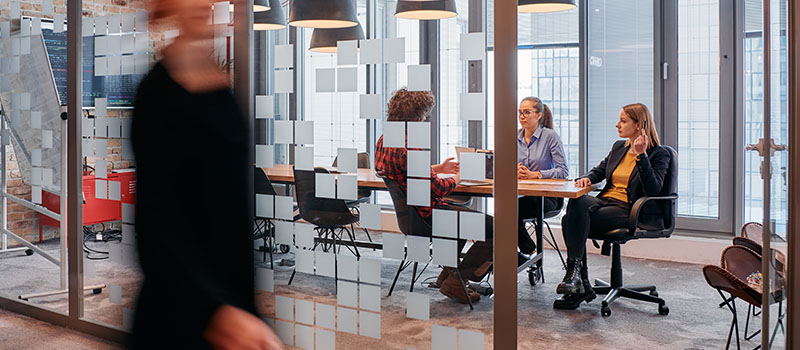
Employers are shifting toward a quieter strategy known as 'hybrid creep', in an effort to encourage employees to spend more time in the office without formally raising attendance requirements.
Rather than issuing new directives, companies are using incentives, social cues and monitoring to shape behavior. Speaking to the Wall Street Journal, HR consultant Jaye Johnson says one of the strongest signals comes through promotion decisions. Elevating employees who exceed in-office expectations sends a message that others quickly absorb.
“Let’s say Sally is promoted. Now Sally is the new standard,” Johnson says. “Be like Sally.”
Some organizations are also leaning more heavily on surveillance tools instead of adjusting policy language, as a way to achieve compliance through awareness rather than instruction.
The approach is gaining traction as power in the labor market shifts. While unemployment remains low, there are roughly 700,000 more Americans out of work than a year ago and layoffs have created a climate of worker caution, and a belief that in-office visibility may improve job security.
“We’re in a climate where people are afraid of losing their jobs,” Johnson says. “So, if there’s an office nearby, I’m going to be there whether I want to or not.”
Johnson argues managers should clearly explain how office attendance factors into career development decisions, though many leaders still rely on unwritten expectations.
Office attendance rises without new rules
Employee behavior suggests the message is landing, with office attendance continuing to rise even as formal mandates level off.
Badge-swipe data from Kastle Systems has recorded year-over-year gains for six straight months. More than 50% attendance has now become typical, a threshold not reached last year.
Daily patterns are also shifting. The sharp midweek concentration that defined hybrid schedules is fading as Mondays and Fridays grow busier.
Commercial real estate firm JLL reviewed five years of attendance data across major US cities and found that its offices averaged 56% occupancy on Fridays and 67% on Mondays this year. Monday attendance now matches Wednesday levels from 2023, while Fridays approach Wednesday occupancy from 2022.
Stanford economist Nicholas Bloom says improved tracking explains part of the change. Companies have moved beyond basic badge swipes, which were easy to manipulate through practices like 'coffee badging'.
“It’s like speed cameras on freeways,” Bloom says. “The better enforcement technology makes folks obey speed limits, rather than drivers suddenly wanting to drive slowly. Same thing with office attendance.”
Visibility and influence drive behavior
Not all employees feel pressured. Tom Enright, a manager at a staffing firm in Charlotte, N.C., goes into the office weekly despite a once-a-month requirement.
“I’d been saying for a while I was going to go in more often but I wasn’t,” says Enright, 60. “Once I started doing that, I realized there were other people doing the same thing.”
At software company Cloudera, office attendance has climbed 22% since 2022 despite no required minimum. Chief People Officer Amy Nelson says engineers now commonly spend two to four days in the office.
“Advancement is based on results, leadership behaviors, and contributions to the business,” Nelson says. “With that said, visibility and collaboration does matter in any organization.”