USA
USA  United Kingdom

As employers accelerate AI integration, a philosophy professor argues that heavy reliance on these tools is stripping workers of foundational capabilities, resulting in a loss of productivity in the short and long term.
Some employers see AI tools as a fast route to higher output, yet a philosophy professor has cautioned that the same tools may be quietly draining essential abilities from the workforce.
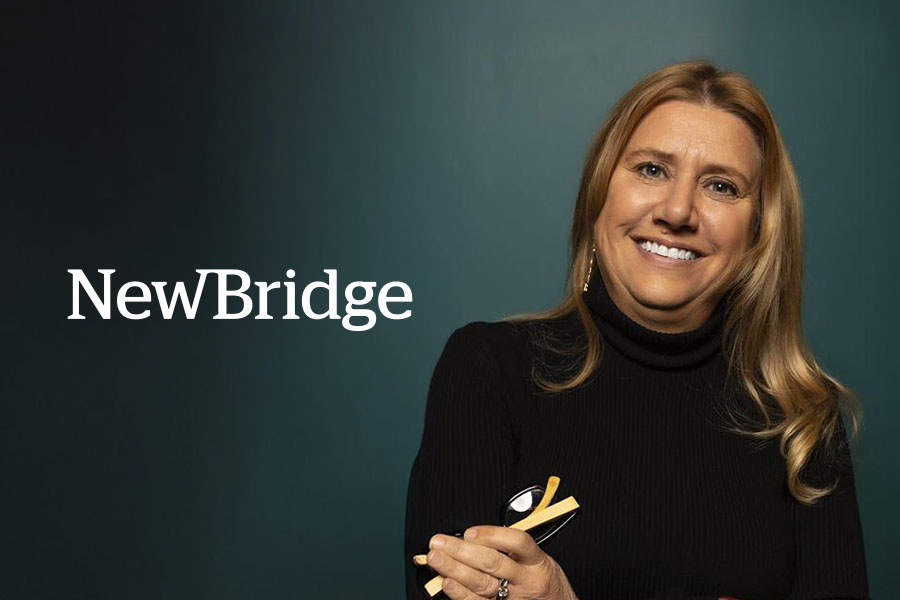
Anastasia Berg of the University of California, Irvine, said growing evidence from research and industry anecdotes points to a decline in core skills among workers who lean too heavily on AI for routine thinking and problem-solving.
Speaking on The Philosopher podcast, Berg said widespread use of AI appears to be accelerating a form of skill attrition that typically develops only over long periods.
“We have a tremendous amount of empirical data on this question of skill attrition or skill atrophy,” she said, adding that skills must be maintained through active practice rather than delegated to software.
AI use reshaping early-career development
Berg argued that early-career workers may face the greatest consequences as they skip the learning curve that once defined junior roles.
She said professors in computer science are reporting that students and new developers increasingly depend on AI tools to generate or fix code instead of understanding the underlying concepts. “It’s one thing for a senior coder to use AI,” she said. “But the junior people are useless because they cannot help themselves from using it.”
According to Berg, some employees enter the workplace already conditioned to rely on AI for basic tasks. By depending on the technology from day one, she said, they struggle to build the foundational knowledge required to judge whether an AI-generated answer is right or wrong.
AI dependency extending into daily life
The professor said the pattern stretches well beyond the office. Adults are now using chatbots for emotional support, small decisions, and routine guidance. She described this trend as “constant advice,” “a lot of weird sociability,” and “emotional task management,” arguing that it erodes independent reasoning.
A study analyzing 1.58 million ChatGPT conversations by researchers at OpenAI, Duke University, and Harvard University found that 73% of adult user messages by June 2025 were unrelated to work. While the research did not identify specific uses, Berg said the proportion highlights how deeply AI is embedded in everyday cognition.
Concerns about long-term competence
Berg warned that the loss of friction in daily tasks removes a key part of how people develop resilience, creativity, and decision-making abilities. “We have them compromising their most basic levels of their ability,” she said. “The threat to the highest level of their ability is just tremendous.”
She said firms could unintentionally create a workforce that appears productive while lacking the competence required for independent performance. Employers adopting AI as a shortcut to efficiency may, she argued, end up eroding the very capabilities they expect their teams to strengthen.