USA
USA  United Kingdom
Tell us about 'whole-person learning' - how did the philosophy develop?
At New Bridge and CSPN, we design for real life. We remove the cost of entry, teach high-fidelity skills, and build the emotional tools that keep people in the field. That’s why our graduates don’t just get jobs - they stay, advance, and strengthen Cleveland’s health system.
Early on we learned that academic skill alone doesn’t predict completion - stability does. Our model blends technical training with a trauma-informed, resilience-building approach grounded in DBT skills (mindfulness, emotion regulation, distress tolerance, interpersonal effectiveness). We open every cohort with norms for psychological safety, weekly check-ins, and practical problem-solving around housing, food, transportation, and scheduling.
We remove the cost of entry, teach high-fidelity skills, and build the emotional tools that keep people in the field.
The result is that students show up, stay engaged, and finish. At New Bridge we’ve sustained 84%-plus graduation, 90%-plus job placement, and 88%-plus one-year retention because we treat life barriers as design challenges, not character flaws.
How is it funded and sustained and how do you measure ROI?
We remove tuition, books, exams, uniforms, background checks, and even transportation as barriers through braided funding: philanthropy, employer partnerships, public workforce dollars. We see the increased pressure on local philanthropy since the new administration came into office, so we are entirely focused on fundraising for and constructing our Career District social-enterprise real estate, which is designed to generate approximately $400,000 in annual operating support once fully stabilized. That evergreen revenue helps keep programs free or near-free and lets us scale responsibly.
We don’t wait to “fix burnout” after hire, we build protective factors during training.
For ROI measurement, we track wage gains, placement speed, one-year retention, and employer overtime reduction. For hospital partners, we calculate avoided contract labor, faster time-to-productivity (via simulation and coached onboarding), and reduced turnover costs. For the community, we track income mobility, benefits access, and multi-year employment persistence.
Burnout and attrition rates are quite high in healthcare. What works for your graduates?
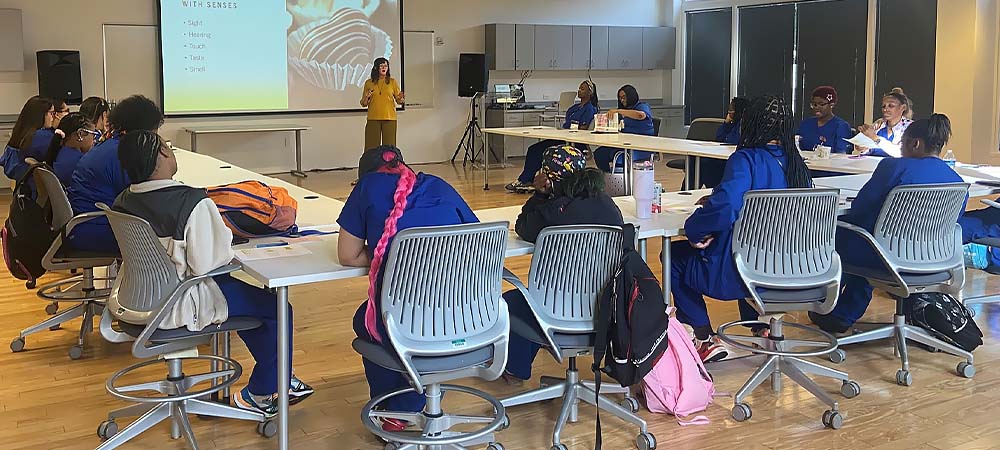
We don’t wait to 'fix burnout' after hire, we build protective factors during training such as DBT-based micro-practices in every lab, realistic simulations that rehearse stress responses, peer-cohort accountability, and coaching touchpoints at 30/90/180/365 days post-placement. We also teach help-seeking as a professional skill (using chain-of-command, de-escalation, and self-advocacy). Graduates report healthier boundary-setting, better team communication, and fewer early-exit triggers.
How do you stay aligned with employer needs?
We co-design with employers, not for them. Cleveland Clinic, University Hospitals, and MetroHealth help define competencies, simulation scenarios, and hiring rubrics. Advisory councils meet regularly; we run rapid feedback loops from supervisors on graduates’ first 90 days; and we adjust curricula quarterly.
Why do your retention figures stand out?
It’s down to three things.
Fit and readiness. Admissions looks at grit, schedule stability, and mission-fit, not just academics.
Friction-removal. Tuition-free training, earn and learn models where students are paid to train. Assistance with housing, childcare and transportation all take time and resources but they create an environment where momentum isn’t lost to logistics.
Structured handoffs. Warm introductions to supervisors, a clear skills checklist, utilization of VR to simulate work environments, challenging externships with great on the job teachers. This is all coupled with visible wage ladders, so graduates see a future, not just a first job.
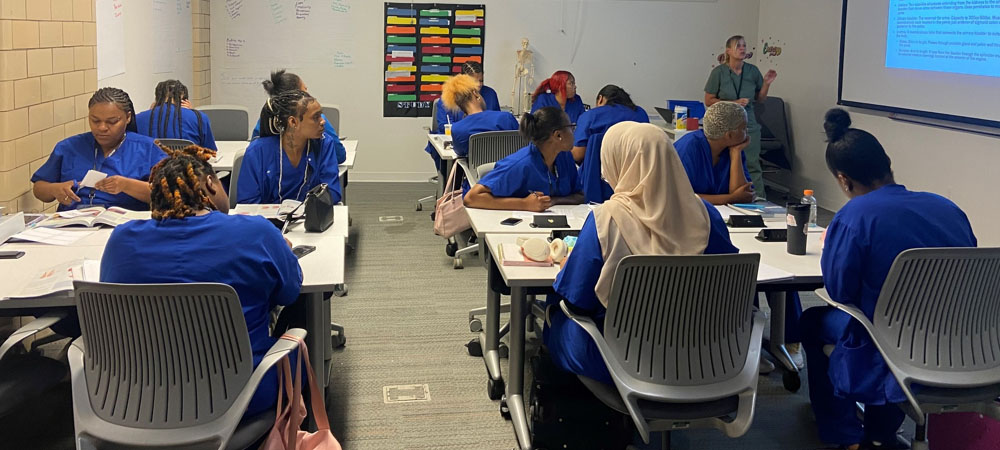
What are the biggest hurdles to scaling impact while keeping quality and how do you handle them?
First, clinical slots and faculty capacity. We never want to train students and then have them sit because of an absorption problem. We are always seeking new clinical and externship slots and new employer partners.
We start earlier, remove friction, teach resilience, align tightly with employers, and fund sustainably.
Second, braided funding complexity: addressed by building a finance stack that blends philanthropy with earned revenue from the Career District and public dollars.
Third, data systems: we have invested in a single outcomes backbone that tracks each student from inquiry through year-one employment so we can iterate quickly without losing the human touch.
How do you operationalize SEL and trauma-informed learning in the day to day?
We embed it everywhere. We have five-minute regulation drills at the start of labs, communication scripts for difficult patient interactions, reflective debriefs after simulation, and restorative responses to attendance issues. Faculty are trained to name what they see (“state words”), co-regulate in the moment, and connect students to supports without stigma. It’s not a side program; it’s the operating system.
Harris Polls project a national shortage of 700,000 healthcare workers by 2037 - how does your model build long-term resilience, and what would it take to replicate it?
We treat healthcare workforce as a system design problem. So we start earlier, remove friction, teach resilience, align tightly with employers, and fund sustainably.
Replication requires four ingredients: An employer consortium committed to co-design and guaranteed interviews; braided financing that de-risks tuition for students and stabilizes providers (including a local evergreen revenue stream, like the Career District model); Simulation capacity to compress time-to-productivity and reduce first-year attrition, and a playbook for DBT-based resiliency training, integrated into technical instruction.
With those in place, regions can build durable pipelines for entry-level roles and stackable advancement, reducing vacancy rates while opening mobility pathways for working adults.