Share this article:

'Personnel polygraphs' | FBI using lie detectors to test employee loyalty, sources claim

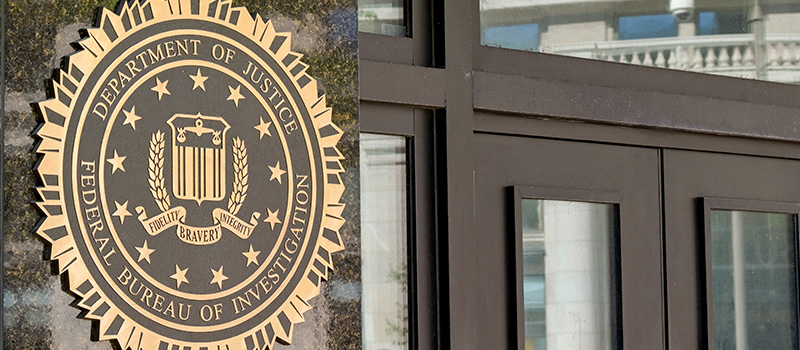
FBI headquarters entrance sign badge

The FBI is allegedly using polygraph lie detector tests to identify employees who have been critical of leadership or shown disloyalty to the agency.

A New York Times report cited several sources close to the FBI, who suggested that dozens of staffers have been subject to questioning.

Sources claimed that Director Kash Patel is on the hunt for agents who have criticized his leadership of the bureau or leaked information to the media.

Insiders alarmed over FBI’s alleged use of lie detectors on employees

The reported use of polygraph tests on employees has concerned agency insiders, who told the Times that it breaks an FBI precedent to mainly use tests on those believed to have committed serious offences against the US.

Sources said that agents, including a senior employee, were probed on whether they had said anything negative about Patel.

Another was allegedly ordered to take the polygraph test during an interview about a news leak, after news outlets were told Patel had made an unusual request for a service weapon.

It follows the departure of one senior agent, Michael Feinberg, who formerly worked out of the FBI’s field office in Norfolk, Virginia.

Feinberg claimed he refused to take a polygraph test during an investigation by the agency into his friendship with Peter Strzok, former Deputy Assistant Director of the FBI's Counterintelligence Division, before he was fired over text messages that criticized Donald Trump.

Patel has reportedly been working alongside Tulsi Gabbard, Director of National Intelligence, in a bid to identify disloyal agency staff.

According to the Washington Post, Gabbard has tried to “gain access to emails and chat logs of the largest U.S. spy agencies with the aim of using artificial intelligence tools to ferret out what the administration deems as efforts to undermine its agenda.”

The Director has also created a task force named the ‘Director’s Initiatives Group,’ promising to crack down on “deep-seeded politicization” within the government’s intelligence agencies as well as reviewing “structure, resourcing, and personnel to improve efficiency and eliminate wasteful spending.”

The FBI declined to comment on the Times’ report of lie detector tests being used against staff, on the basis that it involved “personnel matters and internal deliberations.”

Featured Resource

Delivering Consistent HR Services for Deskless Workers

Delivering Consistent HR Services for Deskless Workers

Can HR truly reach every employee — whether office-based, hybrid or deskless?

Deskless workers represent ~80% of the global workforce, yet most HR systems were designed for desk-based employees.

This ebook explores how to build a multichannel HR service delivery strategy — combining portals, mobile apps, email and conversational interfaces — to deliver consistent HR services, improve accessibility, and create a seamless employee experience across the entire workforce.

Based on research conducted by Neocase with clients and stakeholders in the industrial sector, it highlights practical insights on:

  • Why deskless environments reveal structural gaps in HR service delivery

  • Why multichannel HR requires governance, not just more channels

  • How mobile-first access can transform frontline HR interactions


What you will learn from this eBook: 

  • How to reach employees without desk access

  • How to structure HR service delivery across sites

  • How to reduce HR workload from employee requests

  • Real examples from large organizations

Show more
Show less

The HR angle - could ‘invasive’ monitoring erode loyalty even further?

The attempts to crack down on criticism within the FBI ranks signify a broader effort by Patel and Gabbard to tackle dissidence across their respective organizations.

From an HR perspective, however, increased surveillance of staff and invasive tools such as polygraph tests may instead risk further deepening disloyalty.

A 2025 ExpressVPN study looking at all forms of workplace surveillance found that over 77% of workers believe organizations should be legally required to disclose all forms of monitoring.

Lauren Hendry Parsons, Digital Privacy Advocate at ExpressVPN, warned that heightened surveillance in recent years is “clearly eroding trust and morale in the workplace.”

“As companies adopt increasingly invasive tools, they risk losing the loyalty and well-being of their workforce,” she explained. “Employees are demanding accountability, transparency, and respect for their privacy.”

Moreover, many studies (notably Google’s Project Aristotle) have shown that building psychological safety – “‘a sense of confidence that the team will not embarrass, reject or punish someone for speaking up” – is vital for team effectiveness.

Addressing his exit from the FBI, Feinberg argued that under Patel’s leadership, “subject matter expertise and operational competence are readily sacrificed for ideological purity.”

Be the first to comment.

Sign up for a FREE myGrapevine account to have your say.

Share this article:

You are currently previewing this article.Create account

This is the last preview available to you for the next 30 days.

To receive our daily newsletter and access HR features & insights, create a free account today.