USA
USA  United Kingdom

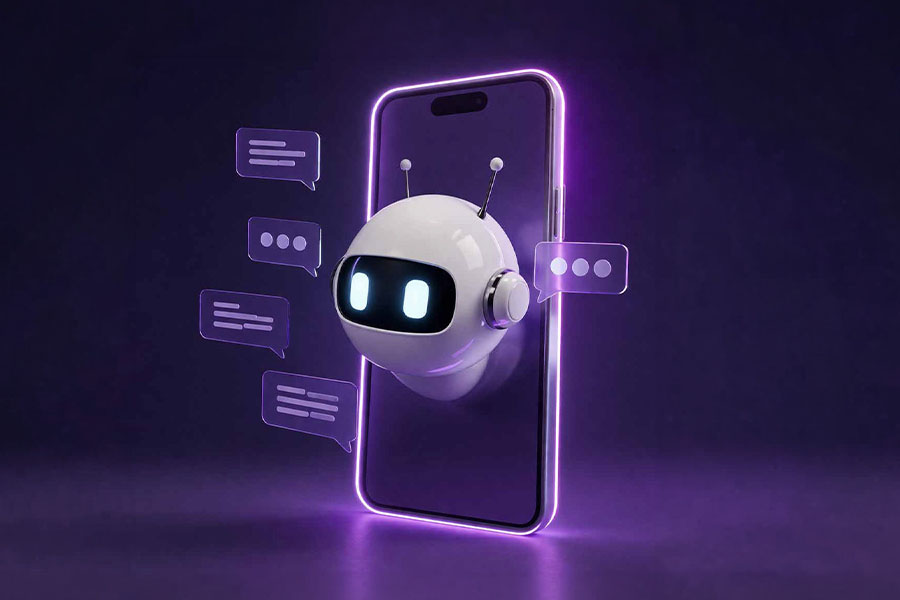
Sam Altman, CEO of OpenAI, has predicted that our workplaces could be home to virtual employees – or ‘AI agents’ – by the end of 2025.
In a blog post published Monday, the tech executive asserted his belief that these agents will transform how work is completed.
“We believe that, in 2025, we may see the first AI agents ‘join the workforce’ and materially change the output of companies,” he wrote.
OpenAI CEO says AI agents could offer workplaces ‘great outcomes’
His business, OpenAI, is expected to launch an AI agent later in January, while other organizations like Microsoft and Anthropic have already rolled out AI agent products.
Altman added his belief that putting “great tools in the hands of people” will result in “great, broadly-distributed outcomes,” in which he includes a “massive” increase in abundance and prosperity.
Many major employers including Microsoft, McKinsey, Mastercard, and Klarna reported gains in time savings in 2024 through the rollout of AI bots. Microsoft, for example, revealed the introduction of an HR Virtual Agent bot saved 160,000 hours for HR service advisors by answering employee’s routine questions.
Financial institutions have also leaned into the use of AI tools to improve employee productivity. Citigroup, for example, has rolled out two AI products to 140,000 employees to automate and simplify processes, including the summarization of documentation.
Turning workforce data into early warnings for high-cost employees
Many employers only learn about high-cost claims after the fact, relying on annual health plan reports that provide little opportunity for prevention. Yet when absenteeism, disability, and workers’ compensation are included, the top 5 percent of cases drive nearly 60 percent of total costs. Looking only at medical and pharmaceutical claims limits an employer’s ability to understand where risk is forming and how costs escalate over time.
By integrating medical, pharmaceutical, disability, absence, compensation, and broader human capital data, employers gain a more complete and predictive view of workforce risk. Workpartners’ Human Capital Risk Index (HUI) leverages this integrated data warehouse to flag emerging high- and moderate-risk cases early, enabling timely, HIPAA-compliant outreach and clinical prevention.
Through a holistic, person-centric care model, individuals receive high-touch support across health, work, and family dimensions—helping shorten or prevent periods of high risk and high cost. The result is earlier intervention, improved outcomes, and measurable reductions in utilization, lost time, and total cost.
What You’ll Learn
Why high-cost claims are often identified too late
How integrated data improves risk prediction
How our HUI flags emerging risk early
Why holistic, person-centric care matters
How early intervention reduces total cost
But recent AI product releases, as well as reports on OpenAI’s forthcoming Operator tool show that the technology is rapidly becoming more advanced. In November, Bloomberg reported that Operator will be able to take actions such as producing code or booking travel on behalf of a person.
While some may have concerns about the introduction of AI agents into our workplaces, Altman indicated his belief that a gradual progression toward AI adoption is the safest approach for businesses and society as a whole.
“We continue to believe that the best way to make an AI system safe is by iteratively and gradually releasing it into the world, giving society time to adapt and co-evolve with the technology, learning from experience, and continuing to make the technology safer,” he wrote.
Altman addresses board fallout and talent exodus
The executive also appeared to address the somewhat tumultuous year OpenAI had in 2024, characterized by a series of high-profile resignations, including safety researchers, and a controversy around non-disclosure agreements.

Altman argued the attrition was natural given the speed of OpenAI’s growth. “The last two years have been like a decade at a normal company,” he reflected. “When any company grows and evolves so fast, interests naturally diverge.”
Earlier in the letter, OpenAI’s CEO also mentioned his controversial sacking and re-appointment by the company’s board in November 2023. The sudden ousting was attributed to concerns about his approach to safety and his workplace conduct.
In the blog post, Altman described it as a “dream gone wrong.”
“Getting fired in public with no warning kicked off a really crazy few hours, and a pretty crazy few days,” he continued. “The whole event was, in my opinion, a big failure of governance by well-meaning people, myself included. Looking back, I certainly wish I had done things differently.”
The executive reiterated his belief that, in a world where we could soon be working alongside AI colleagues, diverse viewpoints and “good governance” with “a lot of trust and credibility” are paramount.