USA
USA  United Kingdom
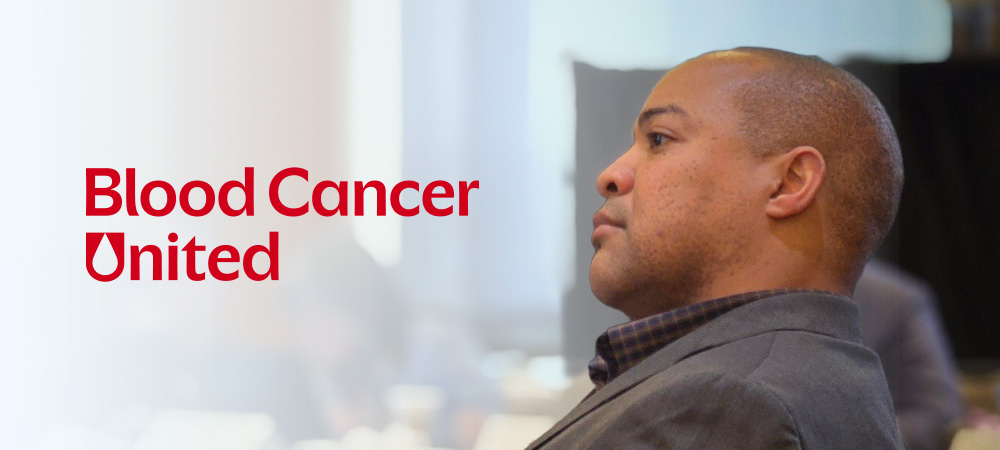
"My first job was as a stock boy in a grocery store, Winn-Dixie, North Carolina," says Orlando Ashworth, Executive Vice President & CPO, Blood Cancer United. It was a first foray into the world of work and a positive one. "I loved it," he remarks. Being part of a team and helping others was fulfilling. From there he graduated from high school and went straight into the Marine Corps. "I took a non-traditional path into HR."
It began in the Marines
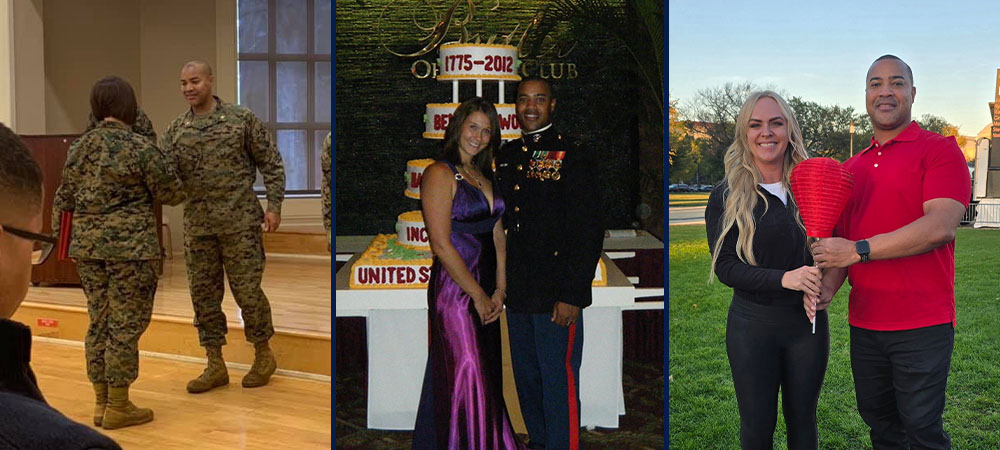
Ashworth is a grafter, a trait that became apparent early on in his career. "I was a Marine during the day and studied at night," he says. It took two and a half years to gain his criminal justice degree, from which he was able to rise through the ranks to officer and that's where he first practised HR. "My first job was as a lieutenant and I was involved in a lot of the same people issues that are addressed in the civilian world - performance reviews, coaching, staffing, and succession planning."
He spent 20 years with the Marines before retiring in 2020, a period he describes as "awesome." It was the height of Covid and career choices were hampered by the pandemic, yet he knew one thing - he wanted to stay in HR.
My first job was as a lieutenant and I was involved in a lot of the same people issues that are addressed in the civilian world - performance reviews, coaching, staffing and succession planning
In June of that year, he joined AARP as Vice President of Human Resources, a non-profit organisation based in Washington. Many of his skills were transferable, but he felt the need to get them formally recognised and put himself through the SHRM HR accreditation process.
"I also got certified through the Human Resources Certification Institute, HRCI, as a senior professional in human resources," he says. As if that weren't enough, he then completed a second master's degree in HR. "I wanted to make sure that I understood the language and trends." He spent considerable time networking in Washington DC across various HR associations and forums.
The discipline of the Marine Corps gave him key leadership skills. "Employees deserve the best leadership, they should be led by someone that cares," he says.
Ashworth joined Blood Cancer Utd in 2024
In October 2024, Ashworth joined the charity Blood Cancer United as Executive Vice President and Chief People Officer. "I'm one of six EVPs and a direct report to the CEO. My job is to empower people so that we can deliver our mission and goal of adding an additional million years of life for blood cancer patients.
“That means more birthdays, more weddings, more everyday moments for people with blood cancer,” he says. “We’re here to cure blood cancer and improve the lives of those it impacts. That means reaching more patients who need us, and to do that, we need the right talent in place.”
Ashworth oversees people, culture, sustainability, talent acquisition, progression, HR business partnership, HR operations, technology, strategy and planning, as well as culture and DE&I. His decision to join wasn't born out of a personal connection to blood cancer, but because he aligned with the mission - helping others. "After serving in the Marine Corps for 20 years and with two other non-profits, I really want to get up in the morning and do something worthwhile. I want to make a difference. Blood Cancer United gives me the connection to a big mission and the opportunity to serve others," he says.
The statistics speak for themselves. An estimated 1,759,461 people in the United States are living with or in remission from leukaemia, lymphoma, myeloma, MDS or MPNs. Approximately every three minutes, one person in the US is diagnosed those diseases. Blood cancers account for 9.4 per cent of the estimated 2,041,910 new cancer cases that will be diagnosed in the US this year.
"Are we making a difference? Absolutely," says Ashworth. "We get feedback from patients and survivors all the time. We have employees with family members who are survivors. The work we do through research, accelerating cures and treatments really matters. We receive videos from patients we have helped, and they come to speak to us about the difference it has made to their lives. Sometimes we experience it first-hand through employees who are suffering, or have suffered, from blood cancer."
Being an employer of choice is a key priority
In an organisation with such a strong mission, it might be expected that the culture would naturally fall into place. Ashworth acknowledges this as a strength, but one they don't take for granted. "Since I joined, we have put a renewed focus on ensuring that Blood Cancer United is an employer of choice. We want people that are considering working for us to appreciate what we're doing and to do that, we're making sure we're not just HR, we want to add value," he says.
There is a clear focus on quality. "Our employees get the opportunity to work for an organisation with a true mission, they can see the direct impact of their work through patient stories, data and more," he says.
We’re here to cure blood cancer and improve the lives of those it impacts. That means reaching more patients who need us, and to do that, we need the right talent in place
Blood Cancer United is 76 years old, and a key priority is ensuring it is robust enough to be here for another 76. "We're asking ourselves what we can do now to make sure the organisation is truly sustainable - we need to make sure we are delivering for blood cancer patients. That means having the right tools and processes in place to give our employees more capacity to deliver the mission."
ED&I ensures the charity is representative of the patients and families it serves
An employee resource group focuses on sustainability, looking at issues including how to reduce their environmental footprint. DE&I, as for many organisations, is a key concern - Ashworth and his HR team work hard to ensure their approach reflects the patients they serve. "We want to make sure that we have diversity inside Blood Cancer United. Like any organisation, it starts with who you bring through the door. We want the best qualified candidates, and we aim to have inclusive processes that don't discriminate. Once people are inside the organisation, we ensure there are progression opportunities achieved through mentorship programmes and employee resource groups that represent a wide range of staff, including veterans and Black employee forums. All these groups are open to anyone," he says proudly.
Turning workforce data into early warnings for high-cost employees
"Inclusion creates synergy, and that enables you to move towards your mission," he says. A distinctive aspect of the charity is that it is fully remote. "We do have a small office in Washington DC, but 99 per cent of our staff work remotely," he says. Ashworth sees this as a positive - it widens the talent pool considerably. "It allows us to attract the best talent regardless of where they live."
On supporting working parents, the ability to work from home is a key step towards blending work and family life, and something they are proud of. "We encourage flexibility, and we recently received a Best Places to Work and Working with Cancer award."
Data is a key pillar of their decision-making. "It allows us to serve our employees better and offer them a better experience. It gives us confidence that we're moving in the right direction," he says.
Family is a key value for Ashworth and a motivator
There is much to admire about Ashworth - his commitment to learning and his positivity among many things. As to where his inner drive comes from, he says, "My dad had multiple sclerosis but carried on working in a factory making socks, while my mum worked in another factory making jeans. They worked hard for our family, and that's been passed on to me."
My dad had multiple sclerosis but carried on working in a factory making socks, while my mum worked in another factory making jeans. They worked hard for our family, and that's been passed on to me
Personal improvement has been a constant goal too. "I'm an avid reader - I aim for a book a week and I keep fit. But I'm also a family man. I have four children, two of whom are adopted, ranging in age from one to 21, and I've been married to my high school sweetheart since I was 23. Family is hugely important to me."
The books he reaches for aren't fiction - he wants to learn from the real world. "I love business books and I read about culture." The next logical question is whether he has ever considered writing his own. "Yes, I'm doing that now!" he says with a wink. You get the sense that everything has been leading to this moment - the next step in his evolution, after a life dedicated to learning, discipline and serving others, he is fulfilling his own ambition of becoming an author and with his unbending focus it’s a good bet that he will.