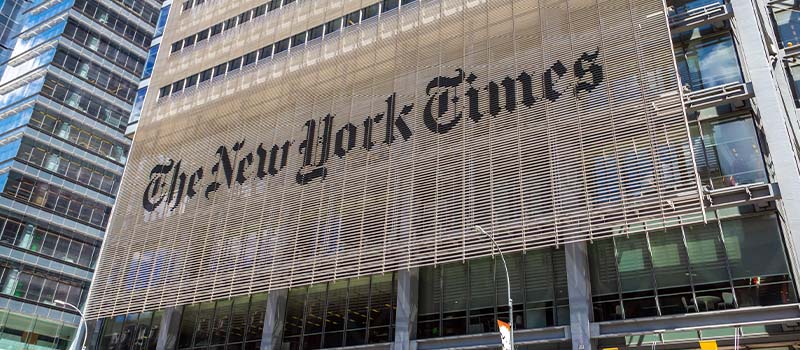
The EEOC (Equal Employment Opportunity Commission) lawsuit against The New York Times is placing diversity hiring goals, internal employment policies, and the growing legal pressure facing organizations with public DEI commitments, in the spotlight.
The federal civil rights lawsuit alleges that a white male employee was denied advancement to a deputy real estate editor role in 2025. The case follows an investigation that began after an employee complaint filed with the EEOC in New York last year.
The complaint references diversity and inclusion reports published by the NYT, including a 2021 “Call to Action” focused on increasing the number of Black and Latino employees. It also references Slack exchanges among newsroom leaders regarding diversity hiring trends and internal correspondence connected to the hiring process.
The EEOC investigation examined whether representation goals influenced employment decisions tied to the Deputy Editor position. The complaint also argues that the complainant was more qualified than the successful candidate.
The Times strongly disputes both the allegations and the characterization of its hiring practices.
NYT rejects discrimination allegations
“The New York Times categorically rejects the politically motivated allegations brought by the Trump administration’s E.E.O.C.,” said Danielle Rhoades Ha, a spokeswoman for The Times.
“Our employment practices are merit-based and focused on recruiting and promoting the best talent in the world. We will defend ourselves vigorously.”

Turning workforce data into early warnings for high-cost employees
Rhoades Ha also challenged the scope and direction of the EEOC investigation.
“The allegation centers on a single personnel decision for one of over 100 deputy positions across the newsroom, yet the E.E.O.C.’s filing makes sweeping claims that ignore the facts to fit a predetermined narrative,” she said.
“Neither race nor gender played a role in this decision - we hired the most qualified candidate, and she is an excellent editor.”
The NYT also maintains that the successful applicant possessed experience in service journalism and supervisory experience tied directly to the role’s requirements.
DEI enforcement enters new phase
The case reflects the changing direction of the EEOC under the second Trump administration and Republican chair Andrea Lucas, who has pushed the agency toward cases connected to diversity programs and discrimination claims involving white male employees.
“No one is above the law - including ‘elite’ institutions,” Lucas said in a statement about the lawsuit.
“There is no such thing as ‘reverse discrimination’; all race or sex discrimination is equally unlawful, according to long-established civil rights principles. The EEOC is prepared to root out discrimination anywhere it may rear its head.”
But the decision to pursue litigation exposed division within the commission itself.
Kalpana Kotagal, the commission’s Democrat, said she voted against the litigation “because I disagree with the substance of the case and don’t believe it’s a good use of scarce agency resources.”
The complaint seeks compensation, including back pay, and requests an injunction preventing the NYT from engaging in discriminatory employment practices tied to race or sex.
USA
United Kingdom