USA
USA  United Kingdom

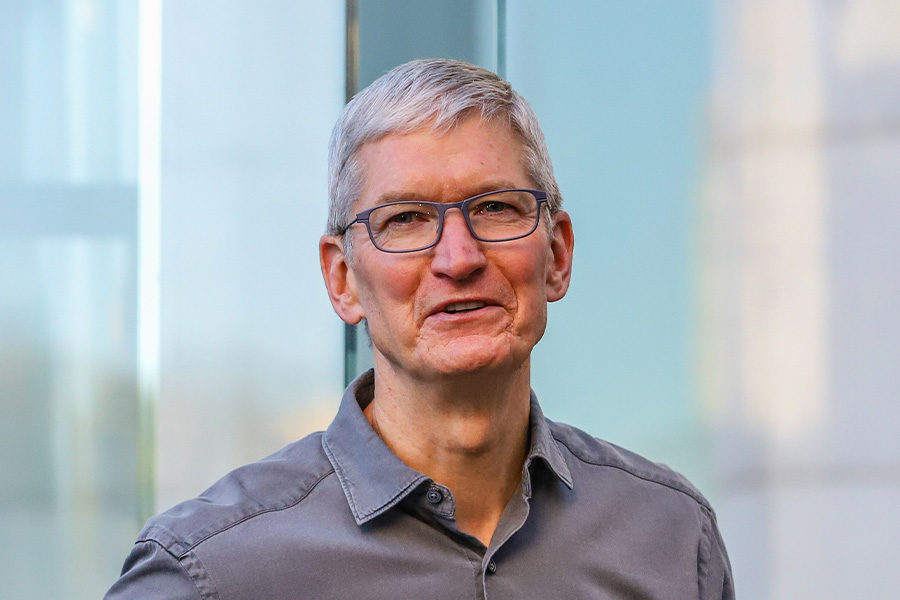
The announcement that Apple’s CEO, Tim Cook is handing over the reins to John Ternus, 15 years after succeeding Steve Jobs, will prompt much rubber-necking in the tech sector, eager to see how it manages the transition.
Ternus, the current Head of Hardware Engineering, who has been at Apple for 25 years, will take over on 1 September, when Cook will become Executive Chairman.
He will stay on as CEO through the summer to work with Ternus on the transition after which he will “assist with certain aspects of the company, including engaging with policymakers around the world”.
Cook's decision to step away from the chief exec role follows months of speculation that Apple was looking for a successor and comes in the wake of a number of senior executive departures over the last 12 months.
Chief Operating Officer Jeff Williams, retired last July and was considered by some to also be a potential CEO pick. Luca Maestri, Chief Financial Officer also stepped back and there were a number of departures to rival tech companies with VP of Human Interface Design Alan Dye, and Senior Design Director Billy Sorrento both jumping ship to join Meta.
Succession planning is typically designed to deliver continuity and progress, but it becomes more complicated in the midst of high levels of leadership turnover.
Succession planning and timing risk
In his letter to Apple staff, announcing his departure, Cook said: “Team, fifteen years ago, my friend and mentor Steve Jobs asked me to step into the role of CEO. It was an emotional and challenging moment for all of us at Apple, and I hoped I’d be up for the awesome responsibility I was taking on.
“I knew then what I know now: that there are certain values embedded in Apple that are bigger than any of us; a belief in the simple, not the complex; a determination to innovate with a focus on those few things that are truly important to the world and meaningful to us; an impatience for anything less than excellence in every group in the company; a commitment to enriching the lives of those we have a privilege to touch with our work; and a resolve to do all that we can to leave the world better than we found it. Those were the values that made Apple what it was then, and I am proud to say that they are the ideals that animate each of us today.
Turning workforce data into early warnings for high-cost employees
“Today, we have a truly extraordinary road map, and I have never been more optimistic about Apple’s future. That is why I have decided that now is the right time for me to transition to a new role of executive chairman. And I am thrilled to announce that John Ternus will be our new CEO.
“Throughout the many years I’ve worked with him, and our many conversations about his becoming Apple’s next CEO, John’s passion and love for Apple shine through. He is a visionary in his own right, a man of remarkable integrity, and the kind of person we can all be proud to follow.
“John is the right leader to help us innovate into the future, to help us break new ground on big ideas and bold new pathways, and to ensure that the values that have made us so successful and so admired for the past 50 years will remain the core of our identity and our culture in the decades to come.
"For my part, I will remain CEO through the summer and work very closely with John as we transition roles. In my new role as executive chairman, I plan to support John and Apple in a number of key areas and to be available to offer my experience whenever and wherever it is needed.”
The changing of the guard creates a familiar challenge for leadership teams that often develop long-standing working relationships with a sitting CEO - relationships which can influence retention when a transition begins.
There can be have been few more daunting successions than the handover from Jobs to Cook, in October 2011, but Apple not only survived but continued to thrive spectacularly after the loss of its ‘visionary’ leader.
The firm’s brand valuation more than tripled from 2011 to 2014, giving it the highest market value of any company worldwide. Gross revenues also continued to increase dramatically year on year, from $65billion in 2010, to $108billion in 2011, $157billion in 2012, and $171billion in 2013.
The growth Apple experienced following the loss of Jobs is the mark of a robust succession plan. The company not only maintained its position in the industry, it continued on its trajectory to become the first trillion dollar company just three years after Cook took over.
Challenges for the new Apple CEO
The incoming CEO will face challenges currently familiar to many firms around logistics, exacerbated by current geopolitical upheaval, and maintaining its supply chain with China. But the main challenge for Ternus will be to make Apple competitive in the AI space, where it has lagged behind some of its competitors.
In January, Bloomberg reported that Apple is accelerating the development of AI wearables built around its Siri voice assistant - smart glasses, a pendant and AirPods with cameras.

One of the most important changes in the company’s history comes against a background of huge change both internally and externally. Ternus will need to focus on both, ensuring that the company can successfully navigate market turbulence, while ensuring that no more of its best people start fumbling for the exit door handle.
With months to go before Cook clears his desk, there will be ample opportunity to jostle for leadership positions in the new-look team, which will be motivation enough for execs eyeing a big promotion. What happens in the aftermath if they miss out, is another consideration. No doubt there will other enticements in the form of compensation strategies and alternative career progressions, to minimize any regrettable attrition.
That can help maintain continuity in the short term, although it does not fully address the broader issue of alignment with a leadership team that is evolving alongside a CEO transition.
And there also needs to be alignment with strategy, particularly in areas (such as AI) where the company is still building capability.
Leadership transitions, talent retention, and strategic capability are all interconnected, and when they shift at the same time, the complexity of managing change increases.
All eyes will be on Ternus, and an Apple striving to keep its best people, and stay competitive at a critical juncture in its history.
Five succession planning best practices
Industry experts propose five must-have for any leadership succession plan…
Start early: Begin succession planning as soon as a CEO is chosen to build a long-term leadership pipeline
Prioritize internal candidates: Internal leaders bring stronger alignment on culture and values, while external benchmarking remains important
Address sensitivities early: Boards and CEOs should work together to plan transitions without destabilizing the organization
Set clear structure and criteria: Define timelines, expectations, and evaluation frameworks for candidates
Retain broader leadership talent: Develop progression paths for those not selected to prevent loss of key individuals