Share this article:

Podcast | HR Partner, Greybull: How we infuse a culture of 'operational excellence'

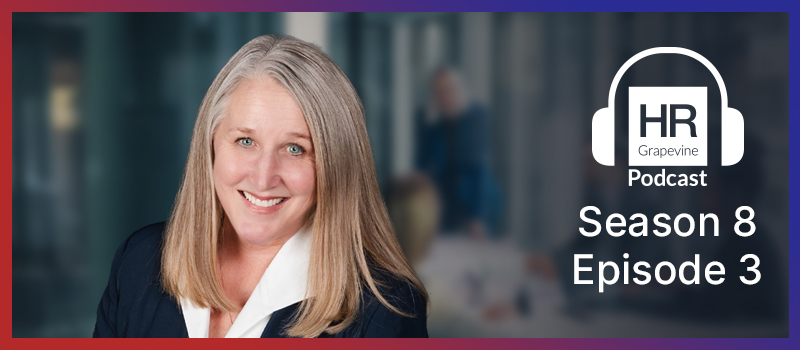
Jennifer Hiatt, Recruiting and HR Operating at Greybull Stewardship

As Recruiting and HR Operating Partner at Greybull Stewardship, a private equity firm that focuses on the pre-middle market, Jennifer Hiatt’s focus is firmly on instilling cultural excellence.

Speaking on the HR Grapevine Podcast, Hiatt reveals how she achieves this through a combination of attracting and retaining “wickedly smart” talent, an emphasis on identifying and developing leaders with an “entrepreneurial spirit,” and embracing continuous performance improvement.

She reveals her approach to delivering “operational excellence” and how it drives portfolio-wide performance.

Host: Hello everyone, and welcome back to another episode of the HR Grapevine podcast. I'm your host, Benjamin Broomfield, head of content for HR Grapevine, and I'm joined today by Jennifer Hiatt, the recruiting and human resources operating partner at Greybull Stewardship, a private equity firm focused on the premium markets. Jen began working with Greybull in 2020, assisting in the recruitment of senior level talent and strengthening HR capabilities across the firm in its portfolio, partnering closely with management teams to identify core talent needs, implement key technologies and developments, and ensure hiring strategies align with each company's long term growth and vision. And today, we're going to be diving into her work at Greybull and her focus on attracting and retaining talent, instilling cultural excellence and driving portfolio wide performance. So a very warm welcome, Jen, thank you so much for joining us on the podcast today.

Guest: Great to be here with you.

Host: Wonderful. Well, maybe you can give us a bit of context just to begin with on Greybull as an organisation and talk us through the organisational culture that's in place and how it drives your success as a firm.

Guest: Sure. Well, Greybull Stewardship is a private equity firm and we focus on what we call the pre middle market. And as we've defined pre middle market that would be businesses that are twenty five million enterprise value or less with five million of EBITDA. So the companies that we're looking for and that we're hoping to attract to be a part of Greybull's portfolio often tend to fall in that middle market, a pre middle market that's a that is before private equity typically would look at. So these are sound businesses that have a business model that's excellent. But they may have a few things that they need to work on operationally. And so what we want to do at Greybull is to infuse them with that operational excellence so that they can move on to be private equity ready. What I love so much about our culture here is that we've based our entire organization in a similar structure to what we hope for our portfolio companies. So when you think about it, there's diligence, there's legal, there's sales and marketing that we often take with an eye towards strategy. So I think starting with a business, our business as well, but also our portfolio companies looking at their strategy and then finding a way to go to market with that strategy, technology, recruiting and HR and then marketing. So what we at Greybull do, all of our operators do this, is that we're trying to be the best that we can be to help them transform their business as quickly as possible.

Host: Fantastic. Well, it'll be wonderful just to dive into, I suppose, first and foremost, the leadership that you sort of look for within the organisation. Obviously, you know, through your portfolio companies, you're dealing with a lot of organisations that are at that really pivotal point in their journey and obviously for, for sort of within Greybull itself, you know, need folks who are capable of driving that forward and bringing that culture to life. So what are some of the leadership traits and experience that you tend to prioritize and how do they help that culture come to the fore within your organization?

Guest: Yeah. So one of the things that we really look for is a proven track record of having done this before. So when you look at our operators at Greybull, we are people who have been in businesses before and done something similar, may not be in the exact industry and it may not be to the exact scale, but we have this proven track record of doing this in a similar atmosphere. And then we want scalers and builders. So think an entrepreneurial spirit with an operator. I so think we want to be the ability. We have the ability to swoop in, help our portfolio companies. And it could be that I'm the only one doing the project there. Benjamin. It could be that I'm actually leading the search and helping them, almost like you would think of like an outside recruiting firm. Or it could be that I'm joining them to help them to get to the next level that they need to so that they can recruit over and over again with the same kind of framework that we would use at Greybull. And then also, one of the things when I think about the entrepreneurial spirit, I want someone with an entrepreneurial spirit with a nod towards collaboration. Can they turn that what I call that scrappiness and turn it into a way to collaborate with other people? Because so often with our portfolio companies, what's happening is they just what's gotten them to the point that we've invested is not necessarily all the same tools that they're going to need to get them to the next level. And my job is to infuse with them all of what they need. That could be people. It could be adding human resources to their organization, but it could be that I'm just helping them learn a process or a procedure. I think also of our accounting team, sometimes they just have not ever thought about being GAAP compliant candidly or to have to be audit ready. And we want to prepare them as quickly as possible with foundations and fundamentals to get that job done. And lastly, we want people who know that we're when we talk about scaling and growing that have their eye towards that and kind of know that with all these pieces and parts, they understand that that is in fact the thesis to take what they're doing and to build it and to grow.
Host: Fantastic. I'd be interested to know as well. We spoke a little bit there about how that impacts the leadership that are coming into the organization and the role that they play, but presumably that that culture also influences a lot of the structures that you have in place within the organization. And that's something I would imagine as well, given that the model that you have at Greybull and also within your portfolio partners, you know, there's going to be a real focus on sort of making sure that those structures within the organization are right for growth and delivering.

Guest: Yeah...

Host: Delivering on those goals that you set out at the beginning of the episode. So how do you see that that that sort of culture impact some of the structures you have in place, things like performance management and so on that you have in place for your teams?

Guest: Yeah. So when I when we talk about having an industry expert who is able to collaborate, sometimes what that happens is that we want to take the people that are there and make them capable of doing different things than they've done in the past. And so for each of those areas that I outlined in the beginning, Benjamin, it could be that we're just helping to refine them. I think about this a lot in terms of I'm the daughter of a basketball coach. And so I think about being a player sometimes and being a coach sometimes. And I have to be able to have that kind of relationship influence and be able to say, like, this is a time where they need me just to coach them up or to mentor them. And sometimes it means that I have to literally like, jump in there and do all the work myself. And I, I think when you have that kind of plethora of people who are sitting on the bench at Greybull, they have the opportunity to choose from a bunch of different operating partners. And if in the long run, what works perfectly is if they see us each in a different way, and that we've helped to infuse their culture with kind of that heightened level of expectation. And they see that from the work that we provide for them when we talk about them growing and scaling, it's not always the same playbook. You know, we think about, do we have a playbook? Yes, Benjamin, most certainly we do. Do we want it to go perfectly? Yes, we most certainly do. And when it doesn't, we want to be there to be the catcher's mitt for these human beings and to help them to say like, okay, that didn't work quite the way that we wanted it to be. And this is our expectation level of what we're hoping to get and how do we get the organization to that level. That's what I've loved about Greybull is my colleagues are wickedly smart and they have deep knowledge in their industry expertise. And that means that I don't have the same expertise that they have. And so I know when to pass the baton and to say to them, hey, it's time for you to jump in and swoop in and help them. And I think this it infuses this kind of culture of collaboration where they don't feel like a company that's out there on an island. And typically, candidly, when you have a small business and you've grown it to the numbers that I brought up five million of EBITDA. You typically have done this by yourself and you typically have been out there alone. And we want to be the partners that they see to get them to the next level.

Host: Absolutely. Well, I'm looking to deliver a lot then in terms of the support given to those individuals. And obviously, you know, to deliver on that culture, there's expectations for performance and delivery. I'd be interested to know how that impacts. Obviously, the work that you do when it comes to attraction and the retention of talent at Greybull itself as well. What does that sort of typically look like? Have there been any challenges there, or does it actually really give you sort of more opportunity to sort of bring some really talented individuals into the fold?

Guest: This has gotten better and better. In my time at Greybull, I did my first recruiting job with Mesa and Myers, our CEO, and I did it as a contractor for one of our businesses, and I got to know him in the culture that he was trying to create. And it is infectious to have someone at in this free market, who is able to say, this is what we're trying to do to support and grow? What I love is that I'm able to talk about it. So when we have someone who wants to join Greybull, you know, I think about using technology to capture the best, to cast the net as wide as possible and to get as many applicants as possible. And then what I love is my job is to get in there and talk about our culture and talk about what we do. What's so awesome is that if you listen to a podcast of Mason's, or if you look at any of our information, you can see that exactly what I'm talking to you about today is how we behave and then how our businesses perform that I love. I also think when we think about retaining and recruiting talent, I am not looking for a bunch of people who are just like Jen Hiatt. Like, I want someone to come in and provide something that's different to Greybull. That is something that I'm not able to provide because I truly do believe in. The rising tide lifts all boats, and if I can find talent that can do that and kind of provide that lift for all of us. At Greybull, my performance becomes better and so does the actual total amount of what we do. Lastly, I will say that when you when you work in this kind of environment and you're an operator like this, I have to do exactly what I'm expecting all of our companies to do, and that is to have my better get better and better so that every day, what I'm doing at Greybull is vastly different than what I was doing a year ago at this time. And I love that. It's fun to be around that, and it's fun to see the, the results of that work.

Host: Well, let's dive into that last point in a bit more detail. Obviously, that that approach I would imagine going to impact, you know, the development programs that you have in place for people as well, that sort of cyclical relationship of wanting people to come in and raise the bar and at the same time helping them develop and sort of shape and collectively push forward. So, I mean, what are some of the development programs that are really important to you at Greybull, and how do they help drive that that culture and that level of performance.

Guest: Yeah, I love talking about this because we use this kind of multi-layered approach. One is that as an operator, I will meet with the people who do the HR recruiting at their company, and we provide them with this group experience where and I'll give you a real sound example, so many of them, as they continue to do more and more remote work as a small business, they are hiring people that are in a state that's different than they've ever operated before, and they need to learn exactly how to, you know, how to level up that if you're going to add another state to where they're being they're having employees and oftentimes they just don't know where to go. And those groups, we do two things. We provide that kind of mentoring network for them where they can say, okay, you know, Jen Hiatt, who works at this company, she does have a employee in Colorado. I'm going to reach out to her and learn a little bit more. The other part we do is we have topics. So every month we're talking about something that may have come up for one company, or may have come up with many of the companies, and we'll have an industry expert come in and explain a little bit more about this. Here's two parts that are super important about this. We're giving them a network when they might not otherwise have a network for the role that they perform at this growing and scaling business. And two, we're giving them topical information from an industry expert that they may not have ever had access to before. Well, I also appreciate about this is when they're going through new things. They see us as the resource. But I'm going to go back to my very first point when I talked about legal. Sometimes they'll call me, this is the HR human being at one of our companies. They'll ask me a question that is really just a legal question, and it's not something that I should ask. We provide them with a multiple approach. They can use their own legal resources that they have at their company, or they can we can guide them towards one. So think of it kind of like a train conductor, where sometimes I'm telling them, I'm going to get on this train with you. I'm going to go with you for the ride. And sometimes I'm saying, no, you need to let me off here and I'm going to bring someone else in. And when we've established relationships with these businesses, I know when to turn that switch from one to the other. And they know when to call me in to ask for my help and support. And lastly, we want them to get better and better through their national organizations or other ways. Sometimes it's regional, whether they're interested in leadership opportunities for themselves. I can't tell you how many times people at our portfolio companies say, I want to work for another portfolio company of Greybull's, or I'd love to work for Greybull. And I think that's the best advertisement we could ever have from people, is they want to continue to be a part of what we're creating.

Host: Wonderful. I wanted to come back to one of those sort of final point you mentioned as well around, I guess, practicing what you preach. And like you said, a day this year is going to be completely different for you than it was this time last year. Obviously, there's some real kind of fundamentals in place that are going to stay the same. So I suppose I'm interested to know how do you sort of take on board that feedback from employees at Greybull and in the portfolio companies, whether they're, you know, first coming in at that sort of early stage or if they're obviously in more of those leadership roles, how does that feedback shape your approach? And really then kind of iterate your, I guess, talent management practices down the line with that, with that input taken into it?

Guest: Yeah. What I love is just constantly having that that continual feedback loop where people can tell me and I'll use myself as an example, a little more of this, a little less of this, and can you help me in these ways? And sometimes that help for one human being at one of our portfolio companies is vastly different than another portfolio company. And I'll give you an example. Some of our companies are excellent at their use of technology. They the fundamental of the organization, whether it's a SaaS business or not. They could be so stellar at using those technological tools. And other times I'm having to infuse some like some technological support and provide them with opportunities to learn a little bit more on the technological front, but I do love that at Greybull, infused in all of us has been this sentiment of coming forward with humility and with grace. And I love being a part of an organization where our leader is humble and he enters all conversations with every person with this basic grace and gratitude. And I, I hope to embody that in every single conversation I have with someone. The question they're asking me is just as important as the question that somebody asked me a week ago, and I want to make sure I give them all my attention.

Host: Wonderful. Well, that feels like a lovely message to wrap up the episode on. And I think a really good takeaway for, for any of our listeners. So, Jen, thank you so much again for taking the time to join us on the HR Grapevine podcast. We're talking through this unique culture that you've got at Greybull Stewardship and within your portfolio companies. It's been wonderful to hear all about it. So thank you again for taking the time. It was great to have this time with you.

Guest: Thank you so much.

Be the first to comment.

Sign up for a FREE myGrapevine account to have your say.

Share this article:

You are currently previewing this article.Create account

This is the last preview available to you for the next 30 days.

To receive our daily newsletter and access HR features & insights, create a free account today.