USA
USA  United Kingdom
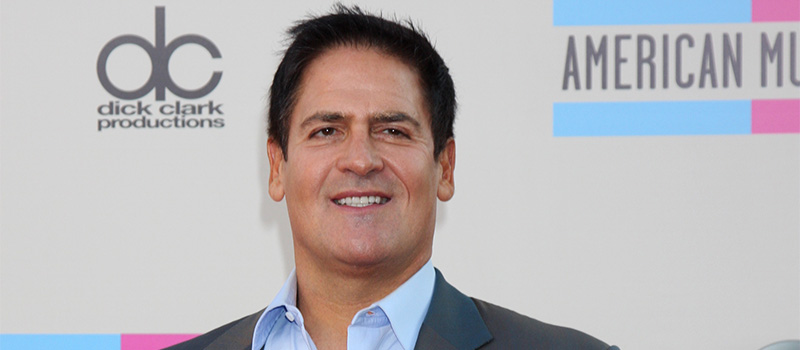
Billionaire investor Mark Cuban has pushed back against claims that artificial intelligence is poised to eliminate wide swaths of jobs, arguing that cost and reliability challenges may limit short-term disruption.
Cuban responded on X to a viral clip from the All-In podcast in which investors Jason Calacanis and Chamath Palihapitiya discussed the real-world expense of deploying AI agents. In some cases, AI agents are costing more than $300 per day, or more than $100,000 annually. Palihapitiya, founder of Social Capital, said the price has forced him to reconsider budgets for top developers, warning, “I’ll run out of money.”
Cuban described that economic reality as the “smartest counter” he has seen so far to predictions that AI will replace large numbers of workers in the near term.
Cost, context, consistency
Cuban said that even if AI systems are technically capable, companies must demonstrate that the economics justify replacing human employees. He questioned whether the price tag outweighs the broader value that workers provide.
“Humans have a far greater capacity to know the outcomes of their actions,” Cuban said. “Agents, and LLMs as well, never do.”

He pointed to gaps in real-world judgment, describing how an 18-month-old pushing a sippy cup from a high chair learns from the reaction that follows. AI systems, he argued, lack that contextual awareness.
“Agents can tell you the sippy cup will fall,” Cuban said. “But they have no idea of the context and what will happen next.”
He also criticized inconsistency in current systems, saying agents often “spac[e] out” and fail to recognize why and when mistakes occur.
“Agents are still like college interns that come in hungover, make mistakes, and don’t take responsibility for them,” he added.
Layoff predictions vs current data
Warnings about AI-driven workforce upheaval continue. Anthropic CEO Dario Amodei, has said AI could disrupt half of entry-level jobs within one to five years and recently suggested it may perform most jobs in “much less than five years.” Sam Altman has also cautioned that the world could be only a “couple of years away” from superintelligence capable of replacing CEOs, including himself.
To date, large-scale AI-related layoffs have not materialized, although many companies are using it to justify redundancies, a practice described as “AI washing.” Analysts at Oxford Economics said companies “don’t appear to be replacing workers with AI on a significant scale.”
Altman acknowledged the distinction at the India AI Impact Summit, saying: “I don’t know what the exact percentage is, but there’s some AI washing where people are blaming AI for layoffs that they would otherwise do, and then there’s some real displacement by AI of different kinds of jobs.”
Cuban believes companies must weigh qualitative considerations as well as productivity metrics.
“Are there qualitative issues like morale, morality, whatever, that can’t be quantified, that need to go into the decision?” he wrote.