Share this article:

Palantir CEO | Toxic transparency: Why publicly leaning into your failings isn't the win you think it is

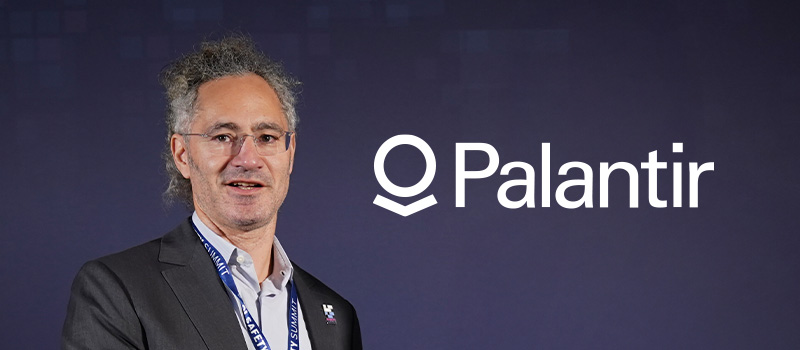
Palantir CEO Alex Karp with company logo

It’s tough being a business leader. Or so business leaders never tire of telling everyone.

The weight of command, the responsibility you hold for people’s livelihoods, the pressure to grow and adapt. Of course it’s hard. No-one worth listening to would argue otherwise.

Everyone is under pressure. Employees too, let’s not forget. Their fate is often not in their own hands, but subject to the whims of those much put-upon business leaders, who can ‘downsize’ them in the interests of operational efficiency or profitability. The two are often linked/the same. It’s important that their leaders have an understanding of the fallout that can come from their actions.

So, when a business leader bemoans the weight of the role, the extremely well-paid role, in most cases, it does tend to create something of a run on very tiny violins at local music shops.

When one of these captains of industry holds their hands up to say ‘it’s my fault and I should have done better’ it goes over much more positively than a pre-prepared statement that references said difficulties of leadership.

Why difficult leadership harms culture and performance

A well-documented strain of ‘tough guy’ leadership that eschews a more collaborative or transparent workplace culture in favor of an unapologetic ‘my way or the highway’ form of boardroom behavior, has always existed.

Palantir boss Alex Karp, seems to have brought attention to a similar lack of self-awareness with his proclamation that his Wall Street reputation for being an ‘arrogant prick’ is pretty much on the money and, furthermore, so what? You need to be an ‘arrogant prick’ to succeed he argues.

In fact, the world needs more arrogant pricks in leadership positions he says. And there was us thinking we had reached capacity.

“If you’re right a lot, maybe exerting that you’re gonna be right tomorrow is pretty important,” Karp said.

“The critique I get on Wall Street is I’m an arrogant prick. Okay, great. Well, you know, judge me by the accomplishment.”

As much as he would like to position being an AP as some sort of superpower, the truth is, aside from the old ‘no publicity is bad publicity adage’, and despite the column inches it has generated, it is of course not a reputation anyone would want unless they are at least self-aware enough to realise that it is just who they are and there’s nothing that can be done about it. Which seems to be the case with Karp.

Effectively, he has doubled-down on it because he knows that so strong is the force of AP within him that he has little or no choice but to.

He is, however, fooling no-one. Being afflicted with AP-ness is not, and can never be, an advantage to anybody. If Karp had been called ‘ruthlessly efficient’ for instance, well that’s arguably at least half complimentary in macho business terms at least.

But he wasn’t. He was called a ‘prick’.

And by embracing that, he is giving a pretty strong signal that he is unlikely or incapable of changing that definition of him.

Featured Resource

Delivering Consistent HR Services for Deskless Workers

Delivering Consistent HR Services for Deskless Workers

Can HR truly reach every employee — whether office-based, hybrid or deskless?

Deskless workers represent ~80% of the global workforce, yet most HR systems were designed for desk-based employees.

This ebook explores how to build a multichannel HR service delivery strategy — combining portals, mobile apps, email and conversational interfaces — to deliver consistent HR services, improve accessibility, and create a seamless employee experience across the entire workforce.

Based on research conducted by Neocase with clients and stakeholders in the industrial sector, it highlights practical insights on:

  • Why deskless environments reveal structural gaps in HR service delivery

  • Why multichannel HR requires governance, not just more channels

  • How mobile-first access can transform frontline HR interactions


What you will learn from this eBook: 

  • How to reach employees without desk access

  • How to structure HR service delivery across sites

  • How to reduce HR workload from employee requests

  • Real examples from large organizations

Show more
Show less

How executive behaviour shapes engagement and retention

For Palantir staff, it’s surface level embarrassing to be working for a self-defined AP and not great to hear that he is completely comfortable in such a skin (no pun intended), if he ends up making decisions that are aligned with such a disposition.

When a CEO proudly doubles down on such a major personality flaw, they are not signalling strength, they are signalling limitation.

Anyone can claim that abrasiveness fuels results, but if that’s the reputation you want, you are not countering the criticism at all, merely confirming it.

Be the first to comment.

Sign up for a FREE myGrapevine account to have your say.

Share this article:

You are currently previewing this article.Create account

This is the last preview available to you for the next 30 days.

To receive our daily newsletter and access HR features & insights, create a free account today.