USA
USA  United Kingdom
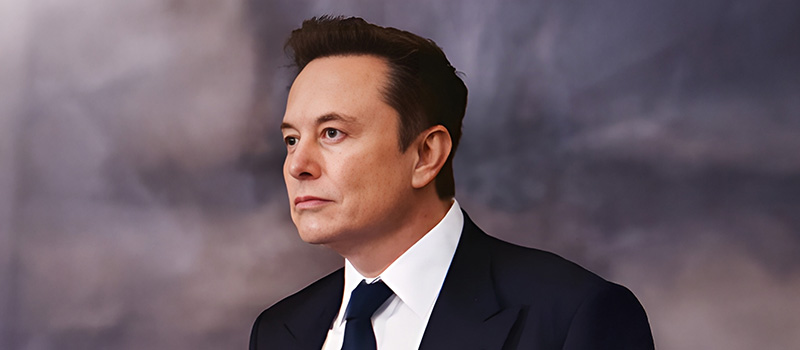
As employers and employees struggle adapt to the pace of change it brings, and jobs appear and disappear with increased frequency, Elon Musk has suggested that artificial intelligence and robotics could reshape society so profoundly that workers may eventually see employment as a choice, rather than a necessity.
Speaking at the US-Saudi Investment Forum, the Tesla chief sketched out long-term outcomes that he believes could arrive within a few decades.
"I don't know what long term is, maybe it's 10, 20 years, or something like that," Musk said. "My prediction is that work will be optional."
"It'll be like playing sports or a video game or something like that. If you want to work in the same way, like you can go to the store and just buy some vegetables, or you could grow vegetables in your backyard. It's much harder to grow vegetables in your backyard, but some people still do it because they like growing vegetables," he said.
AI expansion and economic implications
Musk also suggested that money could decline in relevance as these technologies advance, saying that literature describing positive AI futures often dispenses with traditional currency altogether. If progress in robotics and AI continues, he said, “money will stop being relevant at some point in the future.” Even in that scenario, he acknowledged that physical constraints such as power, electricity and mass would remain.
During the discussion, Musk emphasized his belief that humanoid robotics will become a dominant global industry. He argued that the market for machines designed to mimic human actions could surpass every major product category in existence today. “Everyone’s going to want one,” he said.
Coincindentally,Tesla is developing its Optimus robot, also known as Tesla Bot, which Musk described as part of a broader race to market involving many companies. He predicted intense competition and extensive commercial activity as the technology matures.
Poverty and productivity claims
The world's first trillionaire also claimed that a world transformed by AI and humanoid machines could see poverty eliminated. “There is basically one way to make everyone wealthy, and that is AI and robotics,” he said.
He argued that while Tesla will be a leader in the space, competitors will build their own versions of humanoid robots and the sector to be the largest industry or product category ever created.