USA
USA  United Kingdom
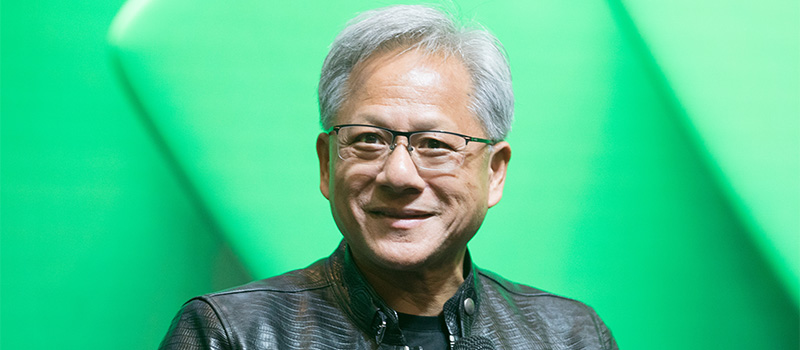
Nvidia CEO Jensen Huang believes the next generation of workers will include “digital employees” trained and integrated into company culture just like humans.
In a recent interview, Huang described a future where enterprises recruit, license, and manage AI agents capable of performing professional roles once reserved for people. “I wouldn’t be surprised if you license some and you hire some, depending on the quality and depending on the deep expertise,” he said. “So future workforces in enterprise will be a combination of humans and digital humans.”
Huang estimated the potential market for agentic AI labor to be worth trillions of dollars, as companies begin deploying digital nurses, accountants, marketers, and legal professionals.

From cybersecurity to onboarding culture
The Nvidia cofounder said many AI agents will come from platforms such as OpenAI, Harvey, OpenEvidence, Cursor, Replit, and Lovable, while others will be developed internally to safeguard proprietary data. At Nvidia, AI already plays a central role in cybersecurity, with “a lot more cybersecurity AI agents than people working on cybersecurity,” Huang said.
He also highlighted the importance of corporate culture for both human and digital hires. “I tell my CIO, our company’s IT department, they’re going to be the HR department of agentic AI in the future,” Huang explained. “They’re going to be the HR department of digital employees of the future. And those digital employees are going to work with our biological ones, and that’s going to be the shape of our company in the future.”
CEOs anticipate mixed human-AI workforces
Other technology leaders share Huang’s view. At the World Economic Forum in Davos, Salesforce CEO Marc Benioff predicted that today’s executives will be “the last cohort of CEOs to lead all-human workforces.” He added, “From this point forward … we will be managing not only human workers but also digital workers.”
Anthropic CEO Dario Amodei also forecast that by 2026 or 2027, AI systems will outperform humans in nearly all tasks and warned that they could eliminate up to 50% of entry-level white-collar jobs.
Why HR still struggles to reach Deskless Employees
Frontline employees often have the greatest need for HR support—but the least access to it. The reason is simple: most HR systems were designed for desk-based employees.
If you're investing in HR digital transformation, it's essential to ensure that every employee—whether office-based, hybrid, or deskless—has equal access to HR services, information, and support.
This guide explores the key considerations for building a consistent, accessible, and connected HR service experience for your entire workforce.
You'll learn how to:
✅ Deliver consistent HR support across every location
✅ Reduce repetitive HR requests
✅ Improve self-service adoption
✅ Connect email, mobile, AI and employee portals
✅ Create a better employee experience for frontline workers
Business leaders brace for workforce transformation
According to KPMG’s AI Quarterly Pulse Survey, the deployment of AI agents across companies has tripled since late 2023. The report found 82% of executives expect AI agents to become valuable contributors within a year, and the same share anticipate a complete reshaping of the business landscape within two years.
In addition, 87% said AI will push organizations to redefine performance metrics and upskill employees in roles at risk of automation.
“This isn’t just about technology adoption,” said Todd Lohr, KPMG’s head of ecosystems. “It’s about fundamental business transformation that requires reimagining how work gets done and how it is measured.”
Huang’s prediction suggests a near future where AI is so vital ot organizations that hiring, onboarding, performance management will extend beyond people to the digital employees sitting right beside them. Meaning that companies will need to develop and adopt proper integration policies for a hybrid AI/human workforce.