USA
USA  United Kingdom

Chief People Officer of Cohesity Rebecca Adams, says she has made it a priority to prepare her managers for a workforce increasingly dominated by Gen Z.
The $1.5 billion data protection company now has nearly 6,000 employees, and Adams says growth depends on teaching leaders how to engage with younger colleagues.
With two children in their late teens and early twenties, she says the generational differences give her “some empathy” but are still “mindboggling.” According to Adams, Gen Z “want to know why, how, they want constant feedback,” and do not accept instructions without explanation.
Managers at Cohesity are now taught to guide new recruits through both workplace expectations and basics such as calendar management. “You actually have to accept the meeting request,” Adams explained to Fortune. “You can’t just walk out of the meeting that you’re in because you have another one while it’s still going on.”

AI squeeze | Gen Z edged out of entry level tech jobs by AI shift
Communication gaps and office return tensions
Adams recalled a case in which an intern interrupted a business meeting to attend a lunch date with a senior leader, leaving managers shocked at the casual disregard for workplace hierarchy. While she described the incident as “adorable,” it highlighted the need for clarity on both sides.
Contrasting her early years “sitting in the cube next to my manager” with today’s remote and hybrid setups, she said that Gen Z often prefer hybrid arrangements and have “no problem” coming into the office, while older workers resist because they have grown accustomed to home-based routines.
Differences in communication style are also stark. Adams described younger staff who thrive on “videos, slacks, everything being text, quick, quick, quick,” while longer-tenured employees still rely on emails and spreadsheets. Many Gen Z staff, she added, have “a don’t-want-to-talk-on-the-phone disease.”
Adams also observed younger workers’ openness about their lives, saying admires their transparency about scheduling personal activities, in contrast to her own early career where she would hide medical appointments. The shift, she said, reflects a culture where employees are encouraged to “bring your whole self to work.”
Why HR still struggles to reach Deskless Employees
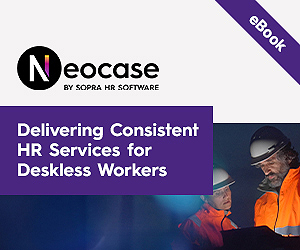
Frontline employees often have the greatest need for HR support—but the least access to it. The reason is simple: most HR systems were designed for desk-based employees.
If you're investing in HR digital transformation, it's essential to ensure that every employee—whether office-based, hybrid, or deskless—has equal access to HR services, information, and support.
This guide explores the key considerations for building a consistent, accessible, and connected HR service experience for your entire workforce.
You'll learn how to:
✅ Deliver consistent HR support across every location
✅ Reduce repetitive HR requests
✅ Improve self-service adoption
✅ Connect email, mobile, AI and employee portals
✅ Create a better employee experience for frontline workers
The ‘why’ generation
To properly engage with Gen Z workers, Adams urges managers to move away from “because I told you so” leadership and instead explain the reasoning behind decisions. Other HR leaders have echoed her findings. Marlo Loria, of Mesa Public Schools in Arizona, said Gen Z students are questioning everything from the value of college to taking on debt, while Derek Thomas of KPMG US noted younger recruits often challenge whether career advice is genuinely in their best interest.
Some HR executives caution against sweeping generalizations. Justworks Chief People Officer Jeri Doris, for example, rejects generational stereotypes, focusing instead on data from engagement surveys and conversations. She reports mission orientation scoring in the 85th percentile among her workforce, reflecting Gen Z’s desire to link tasks to broader purpose.
Adams said she worries about the “scary and fascinating” levels of self-imposed pressure among younger staff, from anxieties about artificial intelligence to accelerated timelines for promotions, travel, and personal milestones. “It’s like a lot of pressure that they’re putting on themselves,” she said.
Despite those concerns, Adams reported reduced attrition and stronger engagement scores from her initiatives. Cohesity is doubling its intern intake and remains committed to hiring strong performers she said. With Gen Z projected to make up 30% of the workforce by 2030, Adams urged employers to “be open and patient and not just expect them to be like us. They think different. I learn from them because the way they go about things is just different, and they have a fresh approach.”