USA
USA  United Kingdom
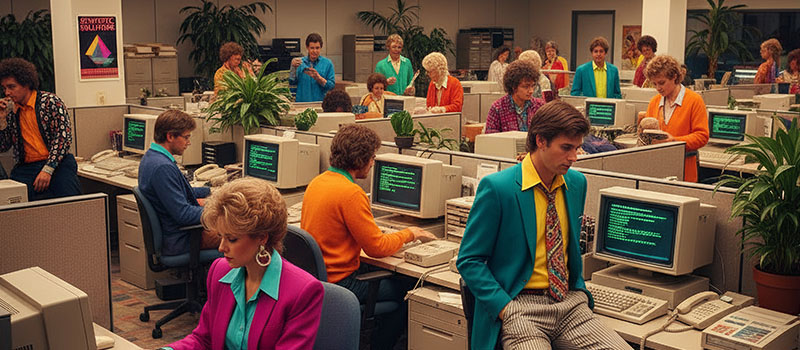
A new manager’s attempt to tighten dress code rules quickly unraveled when staff complied to the letter of a decades-old work handbook.
According to a Reddit post by user Olastun_bee, employees shifted overnight from business casual to full jackets, ties, nylons and even shoulder pads, following the standards outlined in a 1990s policy document.
“The handbook allows it,” one worker declared, showing up in suspenders. Others donned wedding suits or formal skirt-and-blouse ensembles. “Half of the staff sweated buckets because we weren't allowed to take our jackets off our bodies when sitting at our desks,” the Reddit poster wrote.

By midweek, the office looked more like a corporate museum than a functioning workplace. One commentator asked: “Did anyone mention to [human resources] that the dress code in the handbook was from the 90's?” The original poster replied, “Honestly, they probably noticed on their own... those shoulder pad suits and clip-on ties weren't fooling anybody.”
HR complaints and quick reversal
The situation soon escalated into formal grievances. According to the post, HR received complaints about “hostile working conditions due to the imposed dress code.” A week later, the directive was rescinded and replaced with instructions to use “common sense,” effectively restoring the original casual style.
Posters confirmed to Newsweek that the manager “tried to crack down with the handbook, we followed it exactly and it backfired. HR had a quick word with him, and after that, he backed off and never brought it up again.”
“It was one of those moments where the rulebook worked against the rule maker,” the user said.
Why HR still struggles to reach Deskless Employees
Frontline employees often have the greatest need for HR support—but the least access to it. The reason is simple: most HR systems were designed for desk-based employees.
If you're investing in HR digital transformation, it's essential to ensure that every employee—whether office-based, hybrid, or deskless—has equal access to HR services, information, and support.
This guide explores the key considerations for building a consistent, accessible, and connected HR service experience for your entire workforce.
You'll learn how to:
✅ Deliver consistent HR support across every location
✅ Reduce repetitive HR requests
✅ Improve self-service adoption
✅ Connect email, mobile, AI and employee portals
✅ Create a better employee experience for frontline workers
Experts weigh in
Experts cited in follow-on discussions pointed to wider lessons. Dr. Travis Bradberry wrote in a LinkedIn article that dress codes “work well in private high schools, but they're unnecessary at work. Hire professionals and they'll dress professionally.”
Harvard Business Review contributor Allison Shapira added that “the business dress code is evolving,” with many executives adopting “country club casual.” She noted that flexibility helps employees feel authentic. “It takes energy to not be your authentic self,” said Naima Judge, a managing director at Bank of America Private Bank. “If I can be more authentic, I can then use my energy to focus on my clients and uplift the people who report to me.”
Compliance leaders also weighed in, warning about risks of outdated policies. “Every time I read, ‘The Employee Handbook has not been updated since X,’ I shudder at the risk generated in not having an annual review program,” one director commented.