USA
USA  United Kingdom
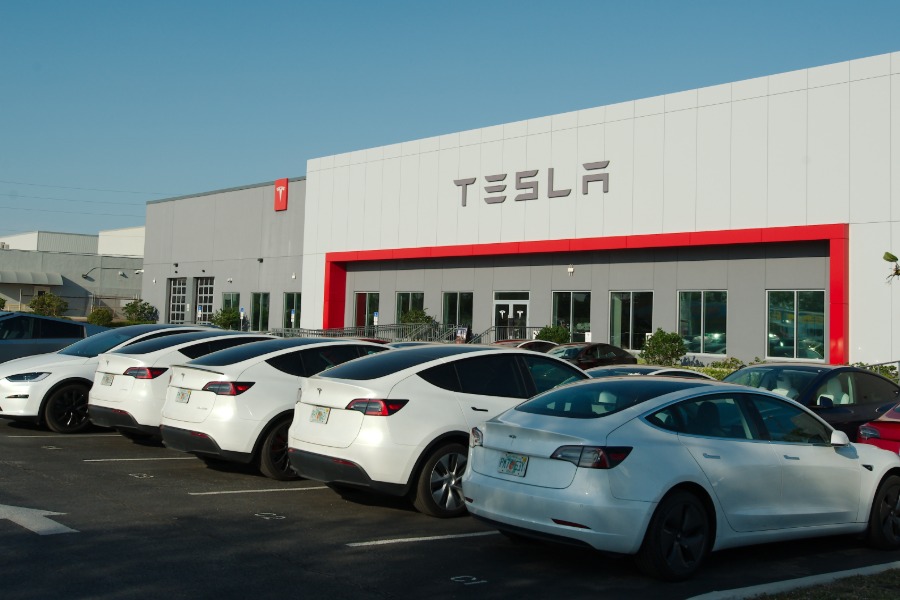
A group of former Tesla employees, including HR executives, have blasted their ex-employer in a federal lawsuit, alleging workplace bigotry, racism, brawling, sexual assaults, and drug use.
In a 159-page filing, the former Head of Security at Tesla’s plant in Fremont, California, claimed controversial CEO Elon Musk was involved in many of the hiring and firing decisions. Several of his ex-colleagues signed the lawsuit as co-defendants.
It’s not the first time the plant has been at the heart of HR scandals, after multiple lawsuits in recent years detailed claims of widespread racial harassment.
In April, the automaker settled a suit with a Black employee who said her manager at the Fremont facility used phrases such as “welcome to the slave house.”
Tesla plant accused of facilitating ‘sexual deviance’, racism, & drug use
The extensive lawsuit, first reported by The Independent, draws on the accounts of the security head, Ozell Murray, and his colleagues in HR, including Linda Peloquin, Adam Chow, Tiara Paulino, Sharnique Martin, and Gregory Vass.
Together, the group presented a range of concerning allegations about the conduct of employees, managers, and leadership at the factory, which employs over 22,000 workers.
Murray, a former police officer, claimed his team “routinely” seized drugs including cocaine and fentanyl, and regularly had to pull staff “off the manufacturing line” and send them home for being “alcohol-intoxicated and high on drugs.”
His team also confiscated guns and investigated “acts of sexual deviance” at the plant, the lawsuit alleged, going on to detail an environment where Black and brown-skinned employees are “besieged with constant racial abuse, stereotyping, and hostility.”
“Many who have worked there have likened the workplace to the Jim Crow South,” the complaint said, including the “repeated use of inarguably the most brutal and degrading racial slur in the history of humanity” – the N-word.
The lawsuit reported Black Tesla employees complained about seeing the word graffitied on walls across the plant, in bathrooms, and “even on new Tesla vehicles rolling off the production line,” as well as frequently finding nooses on their desks or equipment.
In one account included in the complaint, Murray recalled a colleague having to take medical leave after a Tesla employee called her the N-word. “Instead of offering encouragement, Murray’s supervisor… counseled him that Murray should be informing all new Black security personnel that the use of the ‘N-word’ was simply engrained [sic] in the culture at Tesla.”
According to the complaint, the plant has also failed to tackle a pattern of sexual assaults aboard company shuttle buses, “prevalent” bigotry, and brawls breaking out between workers.
The lawsuit said Tesla’s Fremont plant employs a workforce with a significant proportion of “blatant racists and misogynists” because staff are “hastily-hired and poorly-vetted.”
Ex-Tesla execs allege retaliation for speaking out
The lawsuit also detailed accusations of retaliation against staff members, including HR execs and employees who spoke up about workplace issues.
Murray and his peers claimed that some supervisors attempted to wield Tesla’s “zero tolerance” policy on workplace drug and alcohol use against employees – who, after investigation, did not appear intoxicated – in a bid to have them removed.
“As it turned out, many supervisors and managers were merely using the policy as a means to retaliate against their subordinates – and, in particular, when a line employee had turned down the supervisor or manager’s sexual advances,” the complaint continued. “Or, when the manager or supervisor wanted to retaliate against someone because of their race or ethnicity. Or, when the manager or supervisor wanted to retaliate against someone because of a complaint an employee had lodged against them.”
The co-defendants went on to claim that many others who reported issues were unfairly fired or forced to resign.
Why HR still struggles to reach Deskless Employees
Frontline employees often have the greatest need for HR support—but the least access to it. The reason is simple: most HR systems were designed for desk-based employees.
If you're investing in HR digital transformation, it's essential to ensure that every employee—whether office-based, hybrid, or deskless—has equal access to HR services, information, and support.
This guide explores the key considerations for building a consistent, accessible, and connected HR service experience for your entire workforce.
You'll learn how to:
✅ Deliver consistent HR support across every location
✅ Reduce repetitive HR requests
✅ Improve self-service adoption
✅ Connect email, mobile, AI and employee portals
✅ Create a better employee experience for frontline workers
“Healthy profits have always been more important to the Company than a healthy working environment,” they said. “For Tesla, more bodies on the manufacturing line meant more vehicles flying out the factory door – no matter how unclean the hands were that were assembling those cars.”
Murray, for example, claimed he was “outspoken” over safety and security concerns, leading him to be “fired under the pretextual guise of ‘poor performance,’” despite being promoted five times in six years and carrying a clean disciplinary record.
The co-defendants, including former members of Tesla’s HR team, also said they were ousted for reported “poor performance,” having each spoken out over serious employee wrongdoing or other workplace issues, despite never receiving negative performance reviews.
Musk’s ‘hands-on’ role under scrutiny
Elon Musk’s role as CEO of Tesla is also brought under scrutiny, including his “hands-on approach to managing, directing, and facilitating resolution of the manufacturing and workforce issues at the plant.”
The complaint accused Musk of attempting to handle HR issues himself.
“Musk would hold meetings with line-level employees from every function of the plant – from the manufacturing line to operations to HR – and issue directives right then and there to resolve the issues employees raised,” it said, claiming that major issues were then swept under the rug.
Moreover, the lawsuit alleged that Tesla even rehired some former employees fired over workplace violence or racism through a temp agency.
Workers who were “loopholed” did not have to pass a background check, meaning some employees had to “actually resume working with their attacker and tormentor,” the document claimed.
In one instance, this reportedly led to a worker fired for workplace violence returning to the Fremont plant and attacking another employee.
Murray and the co-defendants have sued Tesla for retaliation, wrongful termination, and failure to prevent unlawful discrimination, seeking compensatory damages, emotional distress damages, punitive damages, and exemplary damages.